HackerRank AI-Assisted Interview: Guarded vs Unguarded Modes
In a HackerRank AI-assisted interview, Coding questions run Guarded and Code Repos run Unguarded. What each mode allows, what your interviewer sees, and how to prepare.
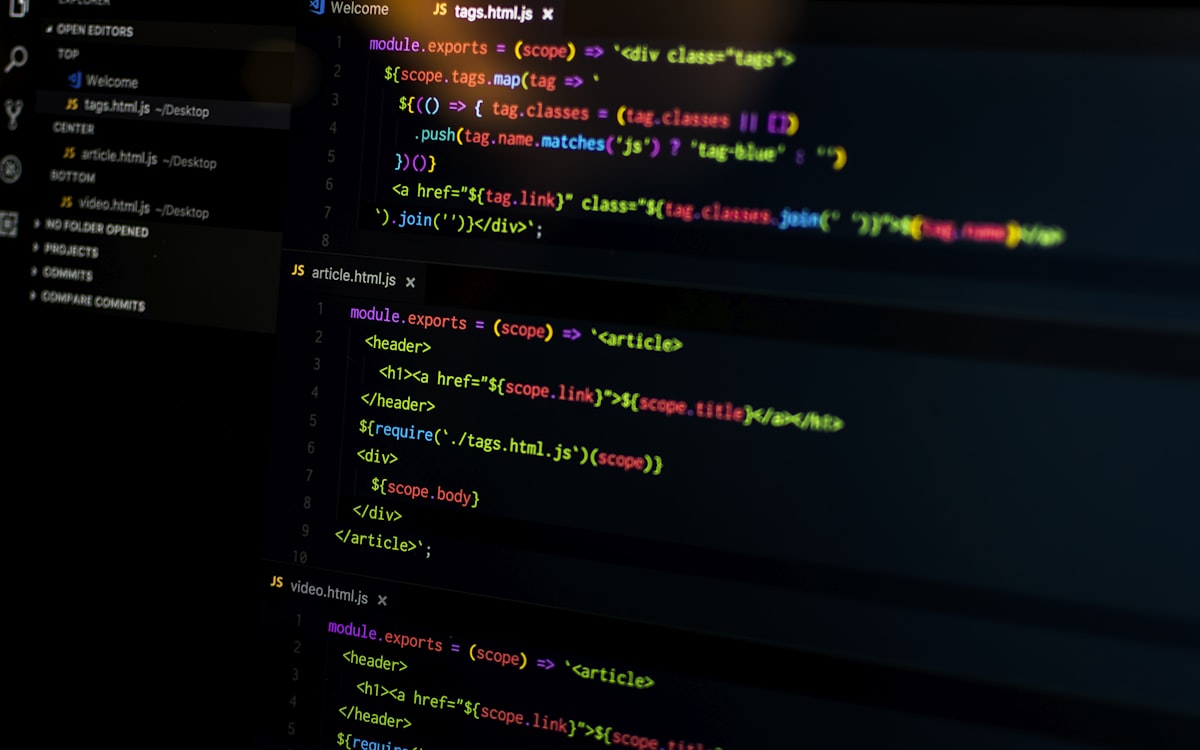
TL;DR: A HackerRank AI-assisted interview is a live coding interview in which the hiring company turns on HackerRank's built-in AI assistant. The question type decides how much that assistant can do: single-file Coding questions run in Guarded mode — syntax, error and concept help, no complete solutions — while Code Repository questions in the ADE run in Unguarded mode with Plan Mode, Agent Mode, inline completions and model switching. Your interviewer sees every prompt and every response, live and in the interview report. You are scored on how you use the assistant and whether you validate its output, not on whether you used it.
What a HackerRank AI-Assisted Interview Is
A HackerRank AI-assisted interview is a live technical interview with a human interviewer and an AI assistant built into the workspace. The assistant appears only when the hiring company enables it, and only on question types that support it: Coding, Projects (frontend, backend, full-stack, mobile, generative AI) and Code Repository. If the AI panel does not appear for a question, it has not been enabled for that question — the round runs as a standard interview, and an outside AI tool is unauthorized aid rather than part of the format.
It is also not HackerRank's AI interviewer, Chakra. Chakra is an autonomous agent that runs a screening round on its own. In an AI-assisted interview a person is still on the other side of the call; the AI sits inside your editor, and that person watches how you work with it.
Guarded vs Unguarded: the Question Type Decides
HackerRank's candidate documentation describes two modes, and the mode follows the question type rather than a setting you pick:
| Mode | Question type and what the assistant can do |
|---|---|
| Guarded | Single-file Coding questions. Ask Mode only: syntax, platform navigation, error explanations and programming concepts. No complete solutions, no Plan Mode, no Agent Mode, no inline completions, no model switching. |
| Unguarded | Code Repository questions in the Agentic Development Environment (multi-file). Ask Mode, Plan Mode, Agent Mode (each tool call needs Allow or Cancel), inline code completions and model switching. |
Two consequences candidates miss. First, "live interview" does not mean "unguarded": a single-file algorithm question stays guarded even though an interviewer is watching. Second, Plan Mode exists only in unguarded questions, so finding no Plan Mode on a coding question is the format working as designed, not a broken panel.
What the Interviewer Sees and What You Are Scored On
The interviewer can see your prompts and the assistant's responses in real time, and the interview report keeps the exchange. HackerRank asks interviewers to evaluate six things:
- How you define the problem and identify key requirements.
- How you select an approach and test assumptions.
- How you write, review and improve code.
- How you investigate issues and adapt your approach.
- How you use AI assistance and validate its output.
- How you communicate technical decisions and trade-offs.
That fifth line is what separates this format from a standard online assessment. The transcript is not a cheating log; it is the evidence for a scored dimension. Dense, solution-seeking prompts and near-verbatim acceptance of generated code read poorly against it, while catching a bad suggestion and correcting it reads well.
If you want the full Plan Mode → Agent Mode walkthrough, including a sample session and the exact moment to override the assistant, our HackerRank AI-assisted interview guide covers it step by step.
The Four Moves That Signal Strong AI Collaboration
Candidates who pass AI-Assisted interviews tend to do four things that weaker candidates don't.
1. Verbalize before prompting. Before sending a message to the AI, state your current thinking in comments or out loud. "I'm thinking this needs a hash map for O(1) lookup. Let me ask the AI if there's a simpler approach." This establishes that the insight is yours; the AI is just a sounding board.
2. Ask about approaches, not answers. "What are the time complexity trade-offs between BFS and DFS for this problem type?" is a strong prompt. "Write the solution to this problem" is a signal that you're stuck and hoping AI bails you out.
3. Validate and reject suggestions actively. When AI proposes code, read it, run it against edge cases in your head, and push back if it's wrong. Interviewers are impressed when they see you catch an AI error — it shows you understand the problem better than the tool does.
4. Keep code ownership visible. Write the scaffolding yourself. Use AI for specific pieces — an unfamiliar API, a tricky regex, a test case generator — then integrate manually. The diff between "AI wrote everything" and "human wrote the structure, AI filled in a specific piece" is obvious in the transcript.
Company-Specific HackerRank Patterns
Different companies structure their HackerRank assessments differently. Knowing the pattern in advance saves time you'd otherwise spend orienting.
Amazon assessments typically include a multi-file codebase (feature implementation or debugging) plus a work simulation section. The AI-Assisted format rewards candidates who quickly understand the existing code structure before making changes.
Google tends toward algorithmic problems even in the AI-enabled format. The expectation is that you can explain time/space complexity regardless of how the code was produced.
Microsoft commonly uses bug-fixing and feature-addition tasks in realistic codebases. The AI assistant is particularly useful here for navigating unfamiliar files — but you need to understand what you changed and why.
Goldman Sachs / financial firms often include strict time limits with moderate problem difficulty. Speed matters, and using AI for syntax and boilerplate (not logic) is the legitimate lever.
How to Use AceRound AI to Prepare for a HackerRank Interview
The HackerRank AI is available during the test. AceRound AI is for before it.
The preparation gap most candidates miss is that the skills measured in an AI-Assisted interview are different from raw DSA knowledge. You're being evaluated on:
- How clearly you can frame a problem
- Whether you can spot and correct AI errors
- How well you communicate technical reasoning in real time
These are skills you can train. Using an AI interview coach during mock sessions — where it surfaces follow-up questions, checks whether your explanations are coherent, and flags when you've gone quiet too long — builds exactly this muscle. The same habits carry into Karat interview preparation, where a human Interview Engineer scores your reasoning and AI collaboration in real time.
Specifically for HackerRank prep:
- Practice explaining your approach before coding, even when no one is watching
- Work through 20+ HackerRank practice problems so the editor, the timer and the problem formats are familiar before the round
- Simulate the AI-Assisted environment: use Copilot or Cursor while solving problems, and deliberately practice catching its mistakes
- For company-specific prep, check Glassdoor for recent HackerRank experiences at your target company
FAQ
What is a HackerRank AI-assisted interview?
A live coding interview in which the hiring company has turned on HackerRank's built-in AI assistant inside the workspace. It is not an AI interviewer: a human runs the round and can see your prompts and the assistant's responses. The assistant appears only on supported question types, and only when the company enables it.
Guarded vs unguarded in HackerRank — what is the difference?
The question type sets the mode. Single-file Coding questions run in Guarded mode: Ask Mode only, with help on syntax, errors, platform navigation and concepts but no complete solutions. Code Repository questions in the ADE run in Unguarded mode: Ask Mode, Plan Mode, Agent Mode, inline completions and model switching.
Does the interviewer see my AI prompts in a HackerRank interview?
Yes. HackerRank's candidate documentation states that the interviewer can see the assistant's prompts and responses in real time, and that the interview report also includes them. The exchange is part of the evaluation, not a hidden log.
Can I use AI in a HackerRank interview?
Only through the assistant the company enables. If the AI panel does not appear for a question, the company has not enabled it for that question, and the round runs as a standard interview; an outside AI tool there is unauthorized aid rather than part of the format. In a standard proctored assessment, HackerRank's AI-powered plagiarism detection reports 93% accuracy and flags paste events, so pasting generated code into a non-AI-enabled round carries the highest risk.
What happens if I use the AI too much in an AI-assisted interview?
You will not automatically fail, but the transcript is part of the score. Dense, solution-seeking prompts and near-verbatim acceptance of generated code read as weak on the "uses AI assistance and validates its output" dimension, while rejecting a wrong suggestion and explaining why reads as strong.
How do I prepare for a HackerRank AI-assisted interview in one week?
Practise the sequence the format scores: state a plan before you prompt, ask about constraints and trade-offs instead of full solutions, test generated code against edge cases, and say out loud when you reject a suggestion. Rehearsing on HackerRank practice problems with an AI editor trains the same habits.
Is the HackerRank AI interview hard?
Harder than a standard OA in one specific way: you have to perform your problem-solving process transparently, not just produce a correct answer. Candidates who are strong problem-solvers but poor communicators often underperform. Candidates who work methodically and narrate their thinking tend to do well.
Which AI model does HackerRank use?
HackerRank's candidate documentation lists Claude Haiku 4.5, Claude Sonnet 4.6, Claude Sonnet 5, Claude Opus 5, Claude Opus 5.5, Gemini-3.5 Flash, Kimi K3, GPT-5.6 Luna, GPT-6 Luna, GPT-5.6 Sol, GPT-6.1 Sol, GPT-5.6 Terra and GLM 5.2. The selector sits in Unguarded mode, and which models a company enables can differ.
How do I prepare for a HackerRank AI-assisted interview? Practise the sequence the format scores: state a plan before you prompt, ask about constraints and trade-offs instead of full solutions, test generated code against edge cases, and say out loud when you reject a suggestion. Rehearsing on HackerRank practice problems with an AI editor trains the same habits.
Author · Alex Chen. Career consultant and former tech recruiter. Spent 5 years on the hiring side before switching to help candidates instead. Writes about real interview dynamics, not textbook advice.
Related Articles
HackerRank AI-Assisted Interview Explained
A HackerRank AI-assisted interview lets you code with AI tools while the interviewer watches how you use them. Here's what's scored and how to prep.

LockedIn AI Review 2026: Pricing, Refunds, Is It Worth It?
LockedIn AI review: $69.99 Credits and $139.99 Unlimited plans on 4 Nov 2026, what the free plan covers, the no-refund rule and a hidden Trustpilot score.

VidCruiter Interview Tips: Retakes, Time Limits & What Trips People Up
VidCruiter one-way video interviews have fixed retake limits, hard time-per-question caps, and no pausing. Here's exactly how the format works and how to prepare.