Chakra AI Interviewer Tips: What HackerRank's AI Actually Scores
Chakra AI interviewer tips based on how HackerRank's autonomous interviewer actually works — scoring rubric, integrity flags, and honest ways to prepare.
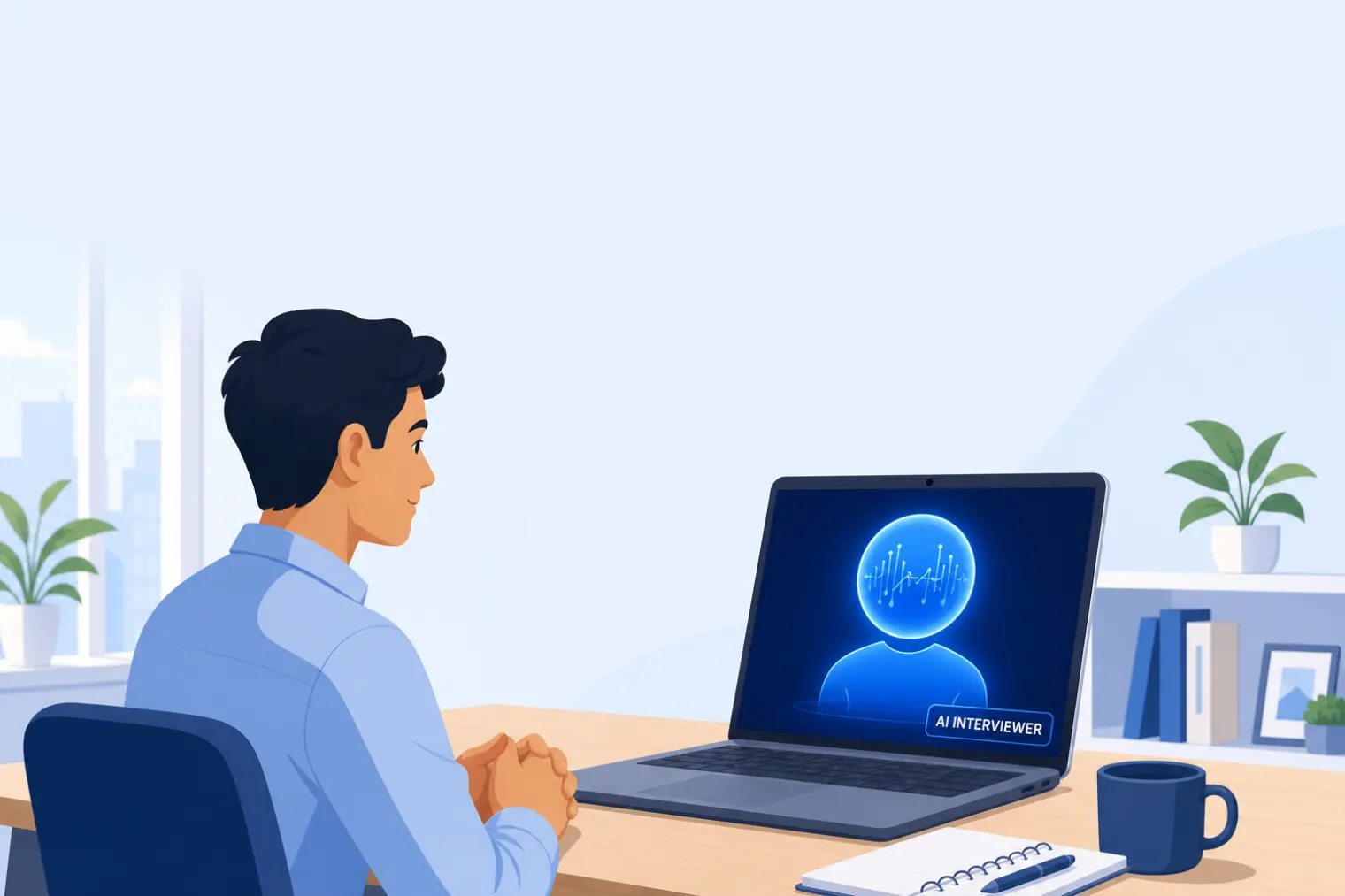
TL;DR: Chakra is HackerRank's own autonomous AI interviewer, not a separate startup — it runs adaptive, rubric-scored voice/video interviews, records everything, and flags tab-switching or off-screen behavior in real time. It's built to replace a first-round human screen, not make the final call. Prepare by giving specific, verifiable answers, staying on-topic when it redirects you, and fixing your interview environment before you start.
You open a link. No recruiter joins, no scheduling back-and-forth — just Chakra, asking you to walk through a project, and then asking a follow-up about the exact part you glossed over. If you've been sent a Chakra interview and you're wondering what's actually happening on the other side of that link, here's what the product itself is built to do, based on HackerRank's own documentation and launch materials.
What Chakra Actually Is
Chakra isn't a random AI startup — it's HackerRank's own autonomous interviewer product, launched by the same company behind the coding assessments a huge share of tech hiring already runs on. That matters, because it means Chakra plugs directly into pipelines that already use HackerRank for online assessments, and it's built with the same "we already know how to evaluate candidates at scale" premise.
The pitch, laid out on Chakra's YC launch page, is that it replaces the early-stage human phone screen — the 20-30 minute call a recruiter or hiring manager used to do just to confirm basic competence before investing more interview time. Chakra is meant to do that filtering job without a human on the call.
How the Interview Actually Works
According to HackerRank's own setup documentation, a Chakra interview is a live, conversational session — not a one-way recorded video drop like older async formats. Depending on the role, it can include voice/video conversation, a coding IDE panel, or a whiteboard component, all inside the same session.
The interview is adaptive: Chakra generates follow-up questions in real time based on what you just said, probing for depth on strong answers and clarifying vague ones. It's also built to stay on-script. In HackerRank's own demo material, the AI declines to get pulled into an off-topic tangent about career growth and steers the conversation back to the technical question it was asking — worth knowing if your instinct under pressure is to redirect toward safer ground.
What Chakra Records and Flags
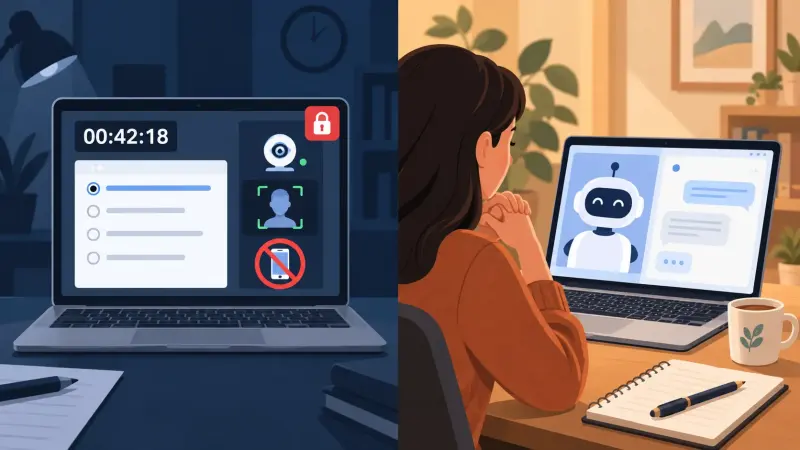
Chakra records full audio and video for the entire interview, and that footage — along with transcript excerpts tied to specific moments — gets attached to the report the hiring team reviews afterward. On top of recording, it runs live integrity monitoring during the session itself: tab-switching, extended time with your face off-screen, and a second face appearing in frame are the kinds of things it's built to catch.
The part candidates don't expect is that some of this shows up during the interview, not just in the report afterward — HackerRank's materials describe in-the-moment nudges like a warning not to switch tabs for the rest of the session. That's a meaningfully different experience than a silent, after-the-fact flag: you get a real-time signal that something you did registered, which is also your cue to correct course immediately rather than assume it went unnoticed.
There's no Chakra-specific privacy policy published separately from HackerRank's general terms as of this writing — if retention or data use matters to you, ask your recruiter or email [email protected] before your interview rather than guessing.
How Chakra Actually Scores You
Chakra's rubric is configured per role by the hiring team — the skills, topics, and seniority level it's evaluating for aren't identical across every job posting. What is consistent is the shape of the scoring: per-dimension ratings (things like technical accuracy, depth of reasoning, and communication clarity) rather than one overall pass/fail number, with the final report built as what HackerRank calls an "evidence-backed" summary — specific transcript moments cited next to each score, not just a verdict with no receipts.
That structure rewards a specific kind of answer. A generic, rehearsed line doesn't hold up well against a rubric built around evidence, because the natural next move for an adaptive AI is to ask you to back it up. A vague claim gets a probing follow-up; a specific one with a real decision or outcome attached tends to just get acknowledged and built on.
How to Actually Prepare
This isn't about tricking a system that's specifically built to catch answers that don't hold up under a follow-up. It's about giving yourself the best honest shot at a format with no human face giving you feedback cues while you talk.
- Bring 3-4 real examples with specifics attached. Name the actual tool, the actual decision, the actual number. "I optimized the deployment pipeline" invites a follow-up you can't answer; "I cut deploy time from 40 minutes to 12 by parallelizing the test stage" survives one.
- Stay on the question, especially when you want to redirect. Chakra is built to steer back to what it asked. Trying to pivot to a stronger, rehearsed talking point usually just costs you a turn instead of working.
- Fix your environment before you click join. Quiet room, single monitor if you can manage it, phone away. The system is built to flag tab-switching and off-screen time — don't hand it something ambiguous to react to.
- Treat a follow-up as normal, not a warning sign. Adaptive follow-ups are the interview working as designed, not evidence you gave a bad first answer.
- Remember it's a screen, not the final word. Chakra is positioned to replace an early human phone screen, not to be the last conversation in the process — treat it with real seriousness, but you're not one AI question away from a final rejection.
Practicing for a Format With No Human Feedback
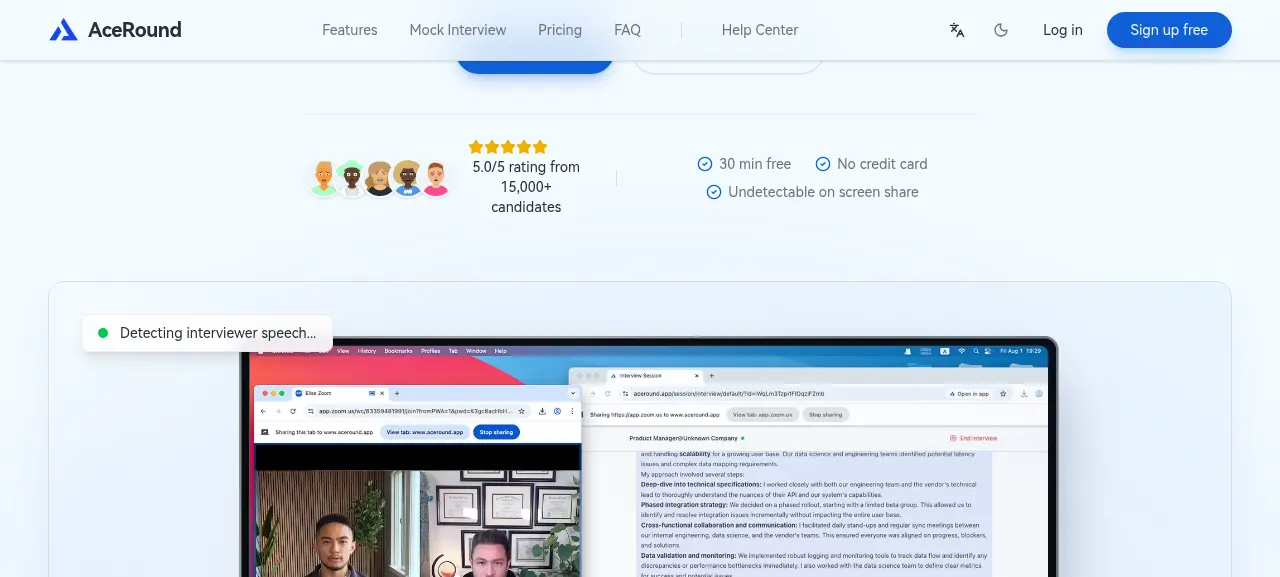
The genuinely hard part of any AI-conducted interview isn't the questions themselves — it's that there's no face on the other end nodding, frowning, or asking you to clarify mid-answer, so you have to structure your own answer without any of the usual cues. That's the specific gap AceRound AI is built to help with: real-time structure prompts while you're actually speaking, so you have something to anchor to instead of silence. It won't answer for you and it won't get past Chakra's follow-up logic — the point is staying organized in a format built to expose exactly that kind of gap, not gaming it.
If Chakra is one of several autonomous interviewers you're facing this cycle, our guides to Mercor AI interview tips and does HackerRank detect cheating cover related ground, and how to pass an AI interview covers the category more broadly.
FAQ
How do I pass a Chakra AI interview? Answer with specifics the rubric can score — name the exact tools, decisions, and outcomes instead of general claims — and stay on the topic Chakra asked about even when it tries to redirect you back to it. Treat every follow-up as a request for more depth, not a sign you got the first answer wrong.
Does Chakra AI record you? Yes. Chakra records full audio and video for the length of the interview, and the recording (plus transcript excerpts) is attached to the hiring team's report. It also runs live integrity monitoring during the session and can flag things like tab-switching or a second face in frame.
Is a Chakra AI interviewer review even possible — has anyone used it? Chakra is new enough that independent candidate reviews are thin; most public information so far comes from HackerRank's own product pages and launch materials. Treat vendor claims as vendor claims until more candidate-side accounts exist, and ask your recruiter directly if you want specifics on how your session will be scored.
Can Chakra tell if I switch tabs during the interview? Yes — Chakra's integrity monitoring is built to detect tab-switching, extended time off-screen, and multiple faces in frame, and it can surface a warning to you in the moment rather than only flagging it silently afterward.
Is Chakra the final hiring decision, or just a screening round? It's built as a first-round screen, not a final decision. HackerRank positions Chakra as a replacement for early human phone screens — candidates who score well on the rubric typically move on to a human-conducted round rather than facing a second AI interview.
What roles does Chakra interview for? HackerRank markets Chakra for both technical roles (software engineers, data scientists, DevOps, QA) and non-technical ones like product management and sales, with the interview format and evaluation rubric configured per role by the hiring team.
Author · Alex Chen. Career consultant and former tech recruiter. Spent 5 years on the hiring side before switching to help candidates instead. Writes about real interview dynamics, not textbook advice.
Related Articles
Does Harver Detect Cheating? What Its Proctoring Actually Checks
Does Harver detect cheating on its pre-employment assessments? A candidate look at Harver's Proctoring add-on, what gets logged after a flag, and what happens next.
Micro1's Zara AI Interview: What It Actually Tests (And Why Timing Gets Flagged)
Micro1's AI interviewer Zara has run 300,000+ interviews for remote roles. Here's why it flags response latency as a cheating signal, and what that means for AI prep.
Does CoCubes Detect Cheating During the Online Assessment?
CoCubes (an Aon platform) proctors off-campus drives with real AI monitoring — what it actually watches, what candidates report, and where prep helps.