The Byteboard Interview at Google, Waymo & Dropbox: What CoreEval Tests
Byteboard swaps algorithm trivia for a two-part take-home assessment. Here's what CoreEval measures, who uses it, and where AI tools actually fit.

TL;DR: Byteboard replaces algorithmic-trivia interviewing with CoreEval, a two-part take-home assessment: a roughly 40-minute Technical Reasoning exercise where you respond to a realistic engineering scenario in writing, followed by a roughly 70-minute Code Implementation exercise where you build part of a working system in your own environment. It's used in hiring pipelines at Google, Waymo, Dropbox, Bilt, Lyft, Betterment, and Robinhood. Because CoreEval is asynchronous and unsupervised, it's a genuinely different setup from a live proctored round — but evaluators are grading engineering judgment and your ability to explain your reasoning, not just whether the code compiles.
Search "Waymo interview" or "Dropbox interview" on Blind and you'll run into the same unfamiliar name over and over: Byteboard. Candidates who spent weeks grinding algorithm problems show up expecting a whiteboard puzzle and instead get sent a take-home link with a design scenario and a code editor. That mismatch between expectation and format is exactly why so many candidates are searching for what this thing actually is before they open the email.
Byteboard Isn't Testing What You Think
Byteboard was built by former Google engineers specifically to move hiring away from algorithmic-puzzle interviewing — the kind of round that rewards memorized tricks over real engineering ability — toward assessments that look like actual day-to-day work: reading a scenario, making tradeoffs, and writing code other people could maintain. Karat, the technical-interviewing company that runs Byteboard's assessments today, acquired Byteboard in early 2025, but the product kept its own brand and its own format rather than being folded into Karat's existing live-interview offering.
The practical result: no LeetCode-style algorithmic optimization puzzle is coming. If that's what you spent your prep time on, it's not wasted exactly, but it's not what's being measured here either.
CoreEval's Two Parts, Explained
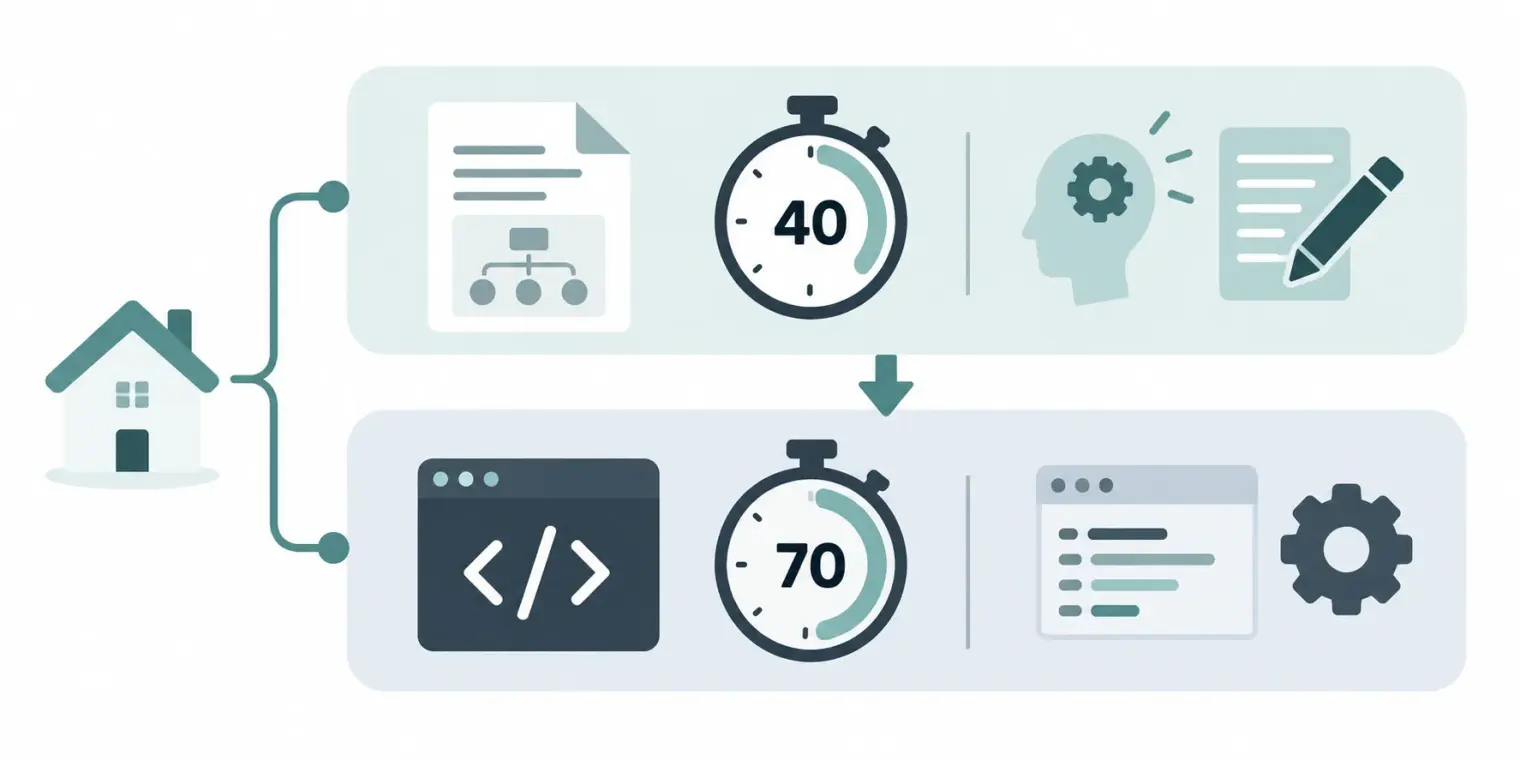
Technical Reasoning (roughly 40 minutes): you're given a realistic engineering scenario and asked to respond in writing — closer to producing a lightweight design document than answering an interview question. This section evaluates how you think through tradeoffs, identify edge cases, and communicate a plan, before a single line of implementation code exists.
Code Implementation (roughly 70 minutes): you actually build part of a working system, in your own development environment rather than a locked-down browser IDE. This is graded more like real engineering work — correctness, readability, test coverage, and reasonable structure — than like a puzzle with one clever intended solution.
Later in some hiring pipelines, there's also CodeCollab — a separate, synchronous pair-programming-style round where you're actually working alongside an interviewer in real time. It's worth knowing these are two different formats: CoreEval is the async take-home stage most candidates mean when they say "the Byteboard interview," and CodeCollab is a distinct, live round that shows up further into the process for some employers.
The Honest Answer on Proctoring and AI Tools
This is the part most candidate discussions get vague about, so here's the straight version: CoreEval is asynchronous — you do it in your own environment, on your own time, with nobody watching your screen live the way a synchronous platform would. That's structurally a different situation from a webcam-monitored, real-time coding round.
Whether a given employer explicitly permits outside tools during CoreEval isn't something Byteboard publishes as one universal rule — it varies, so the honest move is to read whatever instructions came with your specific invite rather than assume either way. What is consistent, based on how the assessment is actually graded: evaluators are scoring your engineering judgment and your ability to explain why you made the choices you made, not just whether your code runs. That's a meaningfully different bar than a keystroke-monitored live round, and it's also exactly why using an AI coding assistant during an asynchronous, own-environment assessment is a much more defensible position than doing the same thing during a proctored session — it more closely resembles how engineers actually work day to day than it does exam-style cheating.
That's precisely the stage AceRound AI's Coding Test Copilot is built for: it runs as a screen-based assistant in your own environment, which fits CoreEval's own-IDE, own-time format far better than it fits a locked-down browser test. For the separate live CodeCollab round — where a person is watching your process unfold in real time — that's a different scenario, and a mock interview beforehand to rehearse live pair-programming communication is the more honest form of preparation.
Who's Actually Sending You This Assessment
Byteboard's assessment has shown up in hiring pipelines at Google, Waymo, Dropbox, Bilt, Lyft, Betterment, and Robinhood, based on candidate accounts and Byteboard's own case studies — a mix of Big Tech, well-funded startups, and fintech rather than one narrow industry. If you got a Byteboard link, you're very likely applying somewhere that made a deliberate decision to move away from algorithmic-puzzle screening, which is worth knowing going in: showing up with only LeetCode-grind prep is preparing for a different interview than the one you're about to take.
If your pipeline pairs Byteboard with a more traditional platform elsewhere in the process, our guides to HackerRank's AI-assisted format and Karat's own interview format — Karat now being Byteboard's parent company — cover the other assessment styles candidates most often run into in the same hiring cycle.
FAQ
Is the Byteboard interview hard?
It's hard in a different way than a LeetCode-style round. There's no algorithmic trivia or whiteboard optimization puzzle to grind for — CoreEval instead asks you to reason through a realistic engineering scenario in writing and then implement part of it, which rewards clear communication and sound judgment as much as raw coding speed. Candidates who prepared only by grinding algorithm problems often find it harder than expected precisely because that prep doesn't transfer.
How do you prepare for a Byteboard interview?
Practice explaining your engineering reasoning in writing, not just producing working code — the Technical Reasoning portion specifically evaluates how you weigh tradeoffs and communicate a plan before you touch the keyboard. For the Code Implementation portion, work in your normal development environment ahead of time so the unfamiliar-tooling friction doesn't eat into your limited time, and prioritize readable, well-tested code over clever one-liners.
What's the difference between Byteboard's Technical Reasoning and Code Implementation sections?
Technical Reasoning is roughly a 40-minute exercise where you respond to a realistic engineering scenario in writing — similar to producing a lightweight design document — evaluated on judgment and communication rather than code. Code Implementation is a roughly 70-minute exercise where you actually build part of a working system, evaluated more like real day-to-day engineering work than an interview puzzle.
Can you use AI tools like ChatGPT or Copilot during a Byteboard assessment?
CoreEval is asynchronous and done in your own environment on your own time, which is a fundamentally different setup from a live, proctored round — nobody is watching your screen in real time the way they might be on a synchronous platform. Whether tool use is explicitly permitted varies by employer, so check whatever instructions came with your invite rather than assuming either way. What's consistent across accounts is that evaluators are grading judgment and the ability to explain your reasoning, not just whether the code runs — output you can't defend in a follow-up conversation tends to be where reliance on any outside tool, AI or otherwise, shows up as a problem.
Is Byteboard the same as LeetCode-style interviewing?
No, and that's the point of the product. Byteboard was built specifically to move away from algorithmic-puzzle interviewing toward scenarios that look more like actual engineering work — reading requirements, making design tradeoffs, and writing maintainable code — rather than testing whether you've memorized a particular data-structure trick.
What companies use Byteboard for interviews?
Byteboard's assessment has been used in hiring pipelines at Google, Waymo, Dropbox, Bilt, Lyft, Betterment, and Robinhood, among others. Byteboard itself was acquired by interview-scheduling and technical-assessment company Karat in early 2025 but continues operating under its own brand.
Author · Alex Chen. Career consultant and former tech recruiter. Spent 5 years on the hiring side before switching to help candidates instead. Writes about real interview dynamics, not textbook advice.
Related Articles
The SQL Technical Screen: What Interviewers Actually Watch You Do Live
The SQL technical screen is a live, shared-editor round, not a take-home. Here's the format, what interviewers watch for beyond correct output, and how to prep.

The Palantir Forward Deployed Engineer Interview: What Decomposition Tests
Palantir's FDE interview has a round most candidates never expect: decomposition. Here's what it actually tests, and why AI tools are banned in the room.

System Design Interview Questions: The 2026 Prep Guide
System design interview questions for 2026: the 5-step framework, how Amazon, Google, and Meta's rounds differ, and why GenAI questions are now common.