Veterinary Technician Interview Questions (2026)
Vet tech interviews mix clinical scenario questions with behavioral prompts about difficult clients and losing patients. Here's how to prepare for both.
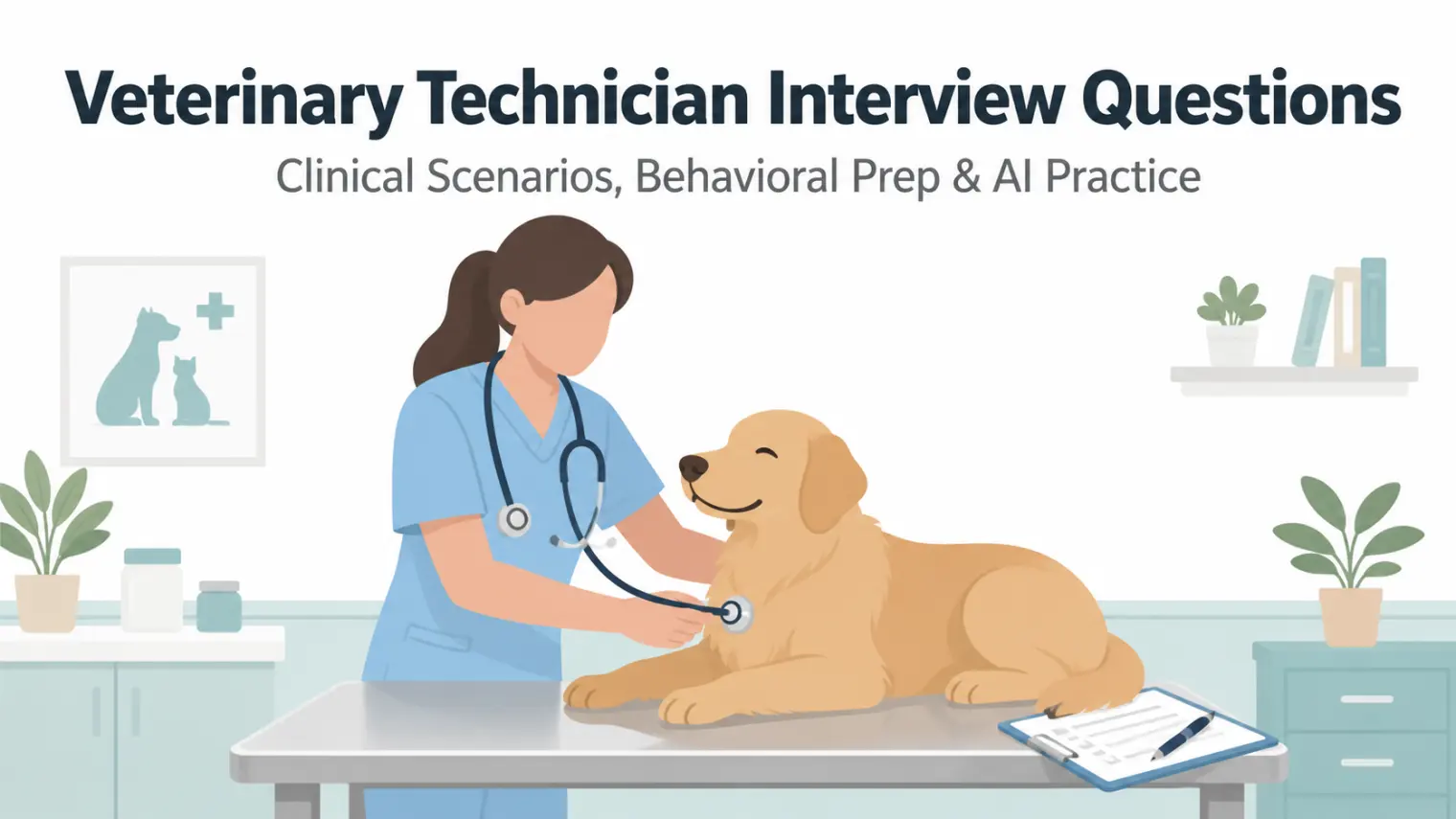
TL;DR: Veterinary technician interviews aren't just a list of "why do you want to work with animals" questions. Most clinics weave in clinical scenario walkthroughs (restraining a fractious cat, monitoring anesthesia, drawing a blood sample) alongside behavioral questions about difficult clients, losing a patient, and compassion fatigue. Reading a page of sample answers won't prepare you for a follow-up question mid-scenario — rehearsing your answers out loud does.
Your interview is in three days, and the job posting mentions you might be asked to "walk through" a restraint technique or an anesthesia-monitoring routine out loud. That's not a hypothetical — it's how most vet tech interviews actually work, and it's a different skill than memorizing a list of 30 questions off a career site.
Veterinary technician demand keeps climbing: the U.S. Bureau of Labor Statistics projects 9% job growth through 2034, well above the average for all occupations, with roughly 14,300 openings a year. Industry surveys report vacancy rates near 15% and burnout affecting the majority of working technicians — which means clinics are interviewing constantly, and they're specifically screening for people who can handle the emotional weight of the job, not just the clinical skills.
The Clinical Scenario Questions Interviewers Actually Ask
These aren't hypothetical exam questions — they're pulled from real candidate-reported interviews and hiring guides:
- "Walk me through how you'd restrain a fractious cat for a blood draw."
- "How do you monitor anesthesia parameters during a procedure, and what would make you flag a concern to the vet?"
- "Describe how you'd collect a urine or stool sample from an uncooperative patient."
- "What would you do if a scared animal bit, kicked, or scratched you mid-procedure?"
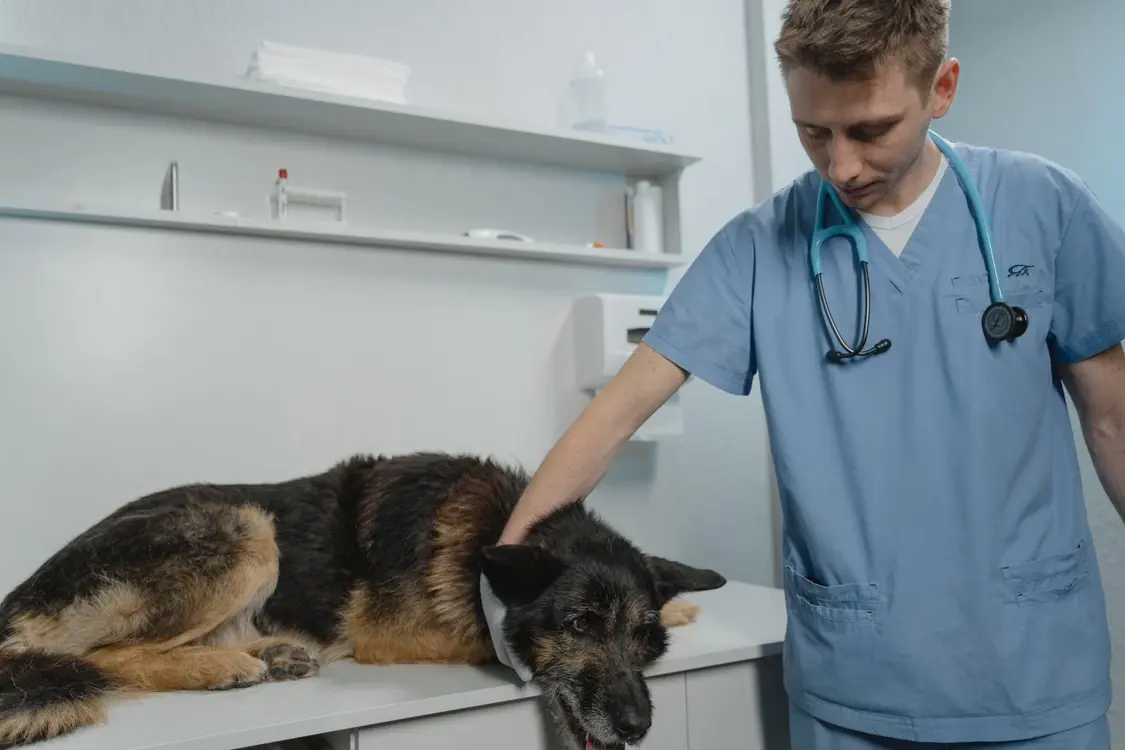
The format matters as much as the content. These are usually asked as a spoken walkthrough, not a written test — the interviewer wants to hear you talk through the steps in order, and they'll often follow up mid-answer ("what if the cat won't settle even with that hold?"). A candidate who has only read a sample answer tends to freeze on the follow-up, because they memorized the shape of the answer, not the underlying judgment.
The Behavioral Questions Hiding Inside the "Nice Vet Tech" Image
Ask working technicians what the hardest interview questions actually were, and the clinical scenarios rarely top the list. It's the people-and-loss questions that catch candidates off guard:
- "How do you respond to a client who says we're only in it for the money?" This is one of the most frequently reported real questions technicians say they got wrong on their first try — freezing or getting defensive reads worse than a calm, specific explanation of what the cost actually covers.
- "How do you handle losing a patient?" Clinics aren't looking for a rehearsed line about "caring deeply." They want to know you can stay functional for the next appointment and the rest of the team after a hard case, because it isn't a rare event in this field.
- "Tell me about a time you had to de-escalate an anxious or angry client." Client anger in veterinary settings is usually grief or fear wearing a different face — interviewers are checking whether you recognize that distinction.
- "What would make you reject an application before even offering an interview?" — a less common but real reverse-framing question some clinics ask to see how self-aware you are about weak candidates.
Answer these the way you'd answer any behavioral prompt: one specific story, not a philosophy statement. "I once had a client accuse us of overcharging for pre-anesthetic bloodwork. I walked her through exactly what the panel checks for and why we run it before every sedation, and she ended up thanking me for explaining it" lands harder than "I believe in good communication."
Why Reading Sample Answers Isn't the Same as Being Ready
A list of 30 questions with sample answers tells you what a good answer sounds like. It doesn't tell you whether you can produce one out loud, under mild pressure, when the interviewer asks a follow-up you didn't rehearse — which is exactly what happens with the scenario-walkthrough format above.
AceRound AI runs structured mock interviews and gives real-time suggestions during practice conversations, which is useful for drilling exactly this kind of role: run the anesthesia-monitoring walkthrough, the "difficult client" scenario, and the compassion-fatigue question back to back, and get a nudge if your answer skips the clinical detail or the follow-up you'd actually get asked. If the behavioral half is where you feel shakiest, the behavioral interview questions guide covers the STAR framework in more depth, and the medical assistant interview guide and social worker interview guide are useful adjacent references since both roles share the same patient/client-communication pressure.
Questions to Ask the Interviewer (This Matters More Than You'd Think)
Working technicians frequently compare notes on how to vet a clinic during the interview, not just after accepting the job — because burnout and short-staffing are common enough in this field that a few pointed questions can save you from a bad fit:
- "What's the technician-to-doctor ratio on a typical shift?"
- "Who covers overnight, weekend, or emergency coverage, and how is that rotated?"
- "How does the team support each other after a difficult case or a loss?"
Asking these signals you're evaluating the clinic as much as they're evaluating you — and a hiring manager who bristles at these questions is telling you something useful too.
If You're Interviewing Outside the US or Canada
The credentialing path behind this job title isn't identical everywhere, which matters if you're applying across borders. The US and Canada require an accredited program plus the VTNE licensing exam for Certified/Registered/Licensed Veterinary Technician status. Japan has run a formal national qualification since 2019 — 愛玩動物看護師 (Veterinary Nurse for Companion Animals) — with its own national exam and registry. Brazil recognizes a vocational-technical credential (técnico em enfermagem veterinária), though less standardized than US licensure. Turkey trains the role (veteriner sağlık teknisyeni) through vocational programs rather than a national board exam. In Korea and Vietnam, the role is closer to an informal, on-the-job clinic-assistant position without a dedicated licensing exam. The clinical-scenario and behavioral questions above translate directly regardless of country — confirm the credentialing expectation for the specific clinic before you assume a US-style interview structure.
Frequently Asked Questions
What are the most common veterinary technician interview questions?
Expect a mix of clinical scenario walkthroughs (restraining a fractious animal, monitoring anesthesia, drawing blood or a urine sample) and behavioral questions about difficult clients, losing a patient, and compassion fatigue. Clinics weight the scenario questions heavily because they reveal actual hands-on judgment, not memorized theory.
How do you answer "how would you handle a frightened or aggressive animal"?
Name a specific restraint or calming technique you've actually used — a particular hold, reading body language cues, using a muzzle or towel-wrap for a small animal — rather than a general "I'd stay calm" answer. Interviewers are checking for hands-on technique, not composure alone.
What do you say when a client accuses the clinic of being in it for the money?
Acknowledge the emotion first, then explain the actual cost driver in plain language — the specific test, medication, or procedure and why it matters for the animal's outcome — without getting defensive. This is one of the most commonly reported real interview questions in the field.
How do you handle losing a patient or a difficult euthanasia?
Use one real, specific memory with how you supported the client and the team afterward, not a general statement about caring for animals. Interviewers are listening for whether you can stay functional and compassionate on a bad day, since it happens regularly in this job.
Do I need a certification to work as a veterinary technician?
It depends on the country. The US and Canada require accredited program completion plus a licensing exam (VTNE) for Certified/Registered/Licensed Veterinary Technician status. Requirements vary elsewhere — confirm what the specific clinic and country require before the interview.
What questions should I ask the interviewer at a vet tech interview?
Ask about technician-to-doctor ratios, who covers overnight or emergency shifts, and how the clinic supports staff after a difficult case. These questions signal you're evaluating clinic culture, not just trying to get an offer — and the answers help you avoid a burnout-heavy workplace.
Author · Alex Chen. Career consultant and former tech recruiter. Spent 5 years on the hiring side before switching to help candidates instead. Writes about real interview dynamics, not textbook advice.
Related Articles
Meesho SDE-1 Interview Process for Freshers: Three 2025 Accounts Compared
Meesho SDE-1 campus accounts from 2025 disagree on test length, round order and design format. Here is what each reported and how to prep for any of them.

Atlassian Software Engineer Interview: Karat Screen, Craft Round and the Values Interview
How Atlassian's engineering loop works, from the Karat screen to the values round, what is official and what candidates report, including the AI-assisted rounds.

LinkedIn's AI-Enabled Coding Interview: What Candidates Report and How to Prepare
LinkedIn reportedly swaps one coding round for a CoderPad session with an AI panel. Here is the reported format, what gets scored, and what is unconfirmed.