Social Worker Interview Questions: How to Handle the Scenarios They Actually Ask
Social worker interview questions rarely stop at 'tell me about yourself' — real panels test live ethical judgment with scenarios. See what's actually asked and how to prepare.

TL;DR: Social worker interview questions go beyond standard behavioral prompts. Panels lean heavily on live, multi-part scenarios — a home visit that feels unsafe, a client whose choices put them at risk, a colleague crossing an ethical line — because they're testing how you reason under pressure, not whether you memorized a script. Below are real scenario questions candidates have actually faced, what they're scored against, and how to practice the part that generic question lists skip: thinking out loud in real time.
A post on r/socialwork sums up the format better than any guide: a candidate describes a home visit question where an elderly client doesn't answer the door, then — mid-answer — the interviewer adds a twist ("the police won't respond, what do you do now?"). There's no slide in a prep packet that covers that follow-up. It's not a trick question; it's the actual job, compressed into an interview.
That's what makes social work interviews different from a typical behavioral round, and it's why a list of 50 questions to memorize only gets you halfway there.
What Makes a Social Worker Interview Different
Most interview guides treat every industry the same: pick a question, write a model answer, move on. Social work interviews don't work that way, because the job itself is built around applying a values framework — client self-determination, dignity and worth, confidentiality, social justice — to messy, real situations with no clean policy answer.
Interviewers know this, so they don't just ask what you'd do. They ask you to reason through it live, then usually add a twist to see if your answer holds up. The NASW Code of Ethics is the values framework almost every scenario question is implicitly graded against, whether the interviewer names it or not — and licensure pathways set by boards like the ASWB reinforce why risk-assessment and mandated-reporting judgment get tested so directly.
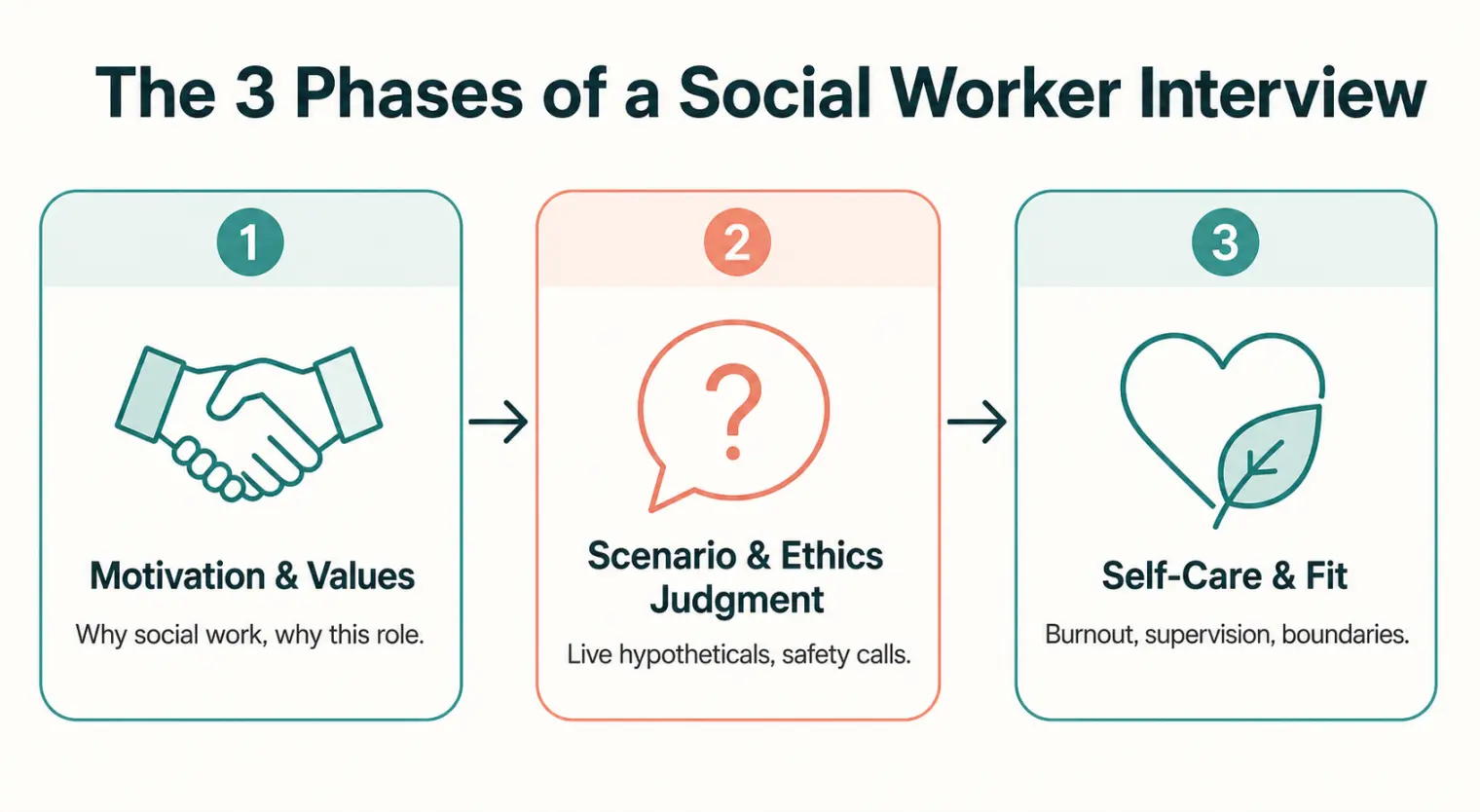
Real Social Worker Interview Questions (and What They're Testing)
Motivation and values
- "Why social work, and why this population or setting?" Panels penalize generic answers ("I want to help people") and reward specificity — a placement, a client population you've already worked with, a reason tied to this agency's actual work.
- "What draws you to this specific role?" Tests whether you researched the agency's caseload and mission, not just its name.
Scenario and ethical-dilemma questions
This is where social work interviews diverge hardest from generic behavioral rounds. Real examples reported by candidates on r/socialwork:
- "You go to a home visit to see an elderly client. After knocking several times, there's no answer. [Twist:] You alert your supervisor and call 911, but police are reluctant to respond. What do you do?" — tests safety judgment and escalation, not just protocol recall.
- "A client who is homeless wants an apartment so his belongings won't get stolen. You help him get one. [Twist:] He loses it after his first weekend there. Do you help him find another? Why?" — tests harm-reduction philosophy versus enabling, a genuine values tension with no single right answer.
- Mandated reporting dilemmas — a client discloses something that may or may not clear the legal threshold to report. Panels are scoring whether you can name the competing duties (confidentiality vs. duty to protect) before landing on an action.
The pattern: every one of these arrives as a multi-part hypothetical, often with a follow-up twist delivered after your first answer — which is exactly the part static question lists can't simulate, because they're printed on a page.
Self-care and sustainability
- "What do you do for self-care?" One Reddit user who got this in multiple interviews put it bluntly: "when employers ask about self-care, I've found that to be a red flag that they aren't able to support their employees in living a balanced life." Fair or not, panels ask it constantly, because caseload burnout drives turnover costs they want to avoid.
- "How do you handle vicarious trauma?" One candidate reported this catching them off guard in a clinical-role interview — and not knowing how to answer cost them the job. A vague "I go for walks" reads as unprepared; naming a real, specific practice (peer consultation, a supervision habit, a boundary you actually enforce) reads as sustainable.
Cultural competency and supervision
- "Describe a time you worked with a client from a background very different from your own." Tests self-awareness about bias, not a rehearsed diversity statement.
- "How do you handle disagreement with a supervisor's case decision?" Common in clinical and school-based roles — tests whether you can advocate for a client while staying within the chain of supervision.
How to Structure an Answer Panels Actually Score Well
Because these questions are graded against a values framework, the strongest structure isn't pure STAR (Situation, Task, Action, Result) — it's values-first STAR:
- Name the tension. State the competing values or duties up front ("this is a case where client self-determination and safety are in tension").
- Walk the reasoning, not just the conclusion. Panels are scoring how you think, so narrate the steps — what you'd check first, who you'd consult, what would change your decision.
- Land on a concrete action. Vague answers ("it depends") score worse than a clear action with acknowledged trade-offs.
- Handle the twist without restarting. When the interviewer adds a follow-up, treat it as new information to fold into your existing reasoning, not a signal that your first answer was wrong.
If you want a deeper structural walkthrough of STAR before adapting it, our STAR method guide covers the base format this builds on. For the broader "what would you do if" question style these scenarios belong to, see our guide to situational interview questions.
How AI-Assisted Practice Actually Helps Here
One honest caveat up front: many social work interviews — especially clinical and school-based roles — happen in person or over video with real-time eye contact expected, so a screen overlay isn't the right tool mid-interview for those formats. Where AI-assisted prep genuinely helps is in rehearsal, before you're in the room.
1. Practice the twist, not just the opening scenario. Load a scenario question into an AI mock-interview tool and have it fire a follow-up twist after your first answer — the exact pattern that catches candidates off guard, and the one thing a printed question list can't simulate. AceRound AI can run this back-and-forth so you build the habit of extending your reasoning instead of freezing.
2. Pressure-test your values reasoning. Say your answer to an ethical dilemma out loud, then ask an AI tool to challenge it the way a panelist would ("you said you'd respect his choice — what if that choice puts a third party at risk?"). This surfaces gaps in your reasoning before a real panel does.
3. For phone or video-first interviews, real-time support is fair game. If your interview is a phone screen or a video call where discreet on-screen support is realistic, real-time AI assistance can help you stay structured on values-first STAR under pressure — the honest limit is simply that it isn't built for in-person panel formats.
4. Build a real self-care answer, not a generic one. Practice the "what do you do for self-care" question until you have one specific, true answer you can say without hesitation — hesitation on this question reads worse than the content of the answer itself.
Frequently Asked Questions
What is the hardest social worker interview question?
Candidates most often cite live safety or harm-reduction scenarios with no clean answer — for example, a home visit where something feels wrong but there's no clear policy violation, or a client whose choices put them at risk but who has the legal right to make them. The difficulty isn't recalling a policy, it's reasoning out loud through competing values (safety, autonomy, dignity) while someone watches you think.
Why do interviewers always ask social workers about self-care?
It's a screening question, not small talk. Panels use it to check whether you have a real, specific practice for managing vicarious trauma and burnout, since caseload-related turnover is expensive for agencies. A vague answer like "I go for walks" reads as under-prepared; a specific one tied to your actual coping strategy reads as sustainable.
How do I answer an ethical dilemma question in a social work interview?
Name the competing values first (for example, client self-determination versus duty to protect), then walk through your reasoning step by step, then state what you'd actually do and why. Panels are grading the reasoning process against a values framework like the NASW Code of Ethics, not looking for a single "correct" answer.
What questions are asked in a social work interview?
Expect three categories: motivation and values (why social work, why this population or setting), scenario or hypothetical judgment (crisis response, mandated reporting, harm reduction, home-visit safety), and self-care or sustainability (how you handle vicarious trauma, supervision, and boundaries).
Can I prepare for social work interview scenario questions in advance?
You can't memorize the exact scenario, but you can prepare the reasoning pattern: name the values in tension, think through two or three response paths, and practice saying your reasoning out loud under time pressure. That's the skill being tested — not whether you can recite a memorized "correct" answer.
Related reading: our STAR method guide for the base answer structure, and situational interview questions for the broader "what would you do if" format these scenarios belong to.
For the values framework these questions are graded against, see the NASW Code of Ethics and Indeed's overview of common social worker interview questions.
Author · Alex Chen. Career consultant and former tech recruiter. Spent 5 years on the hiring side before switching to help candidates instead. Writes about real interview dynamics, not textbook advice.
Related Articles
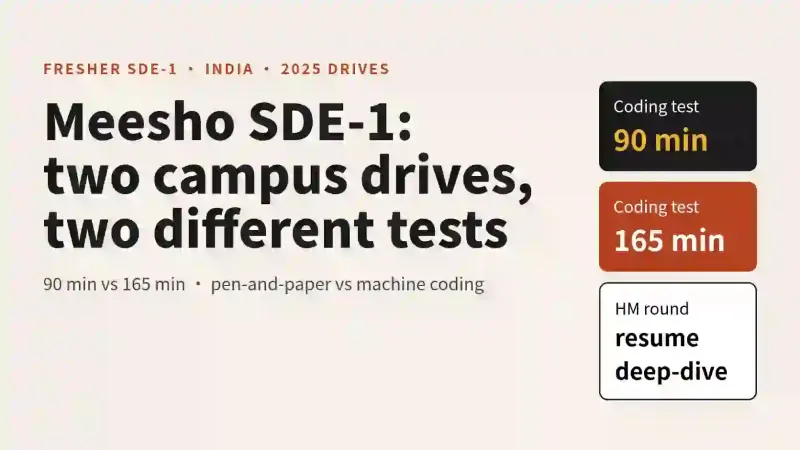
Meesho SDE-1 Interview Process for Freshers: Three 2025 Accounts Compared
Meesho SDE-1 campus accounts from 2025 disagree on test length, round order and design format. Here is what each reported and how to prep for any of them.
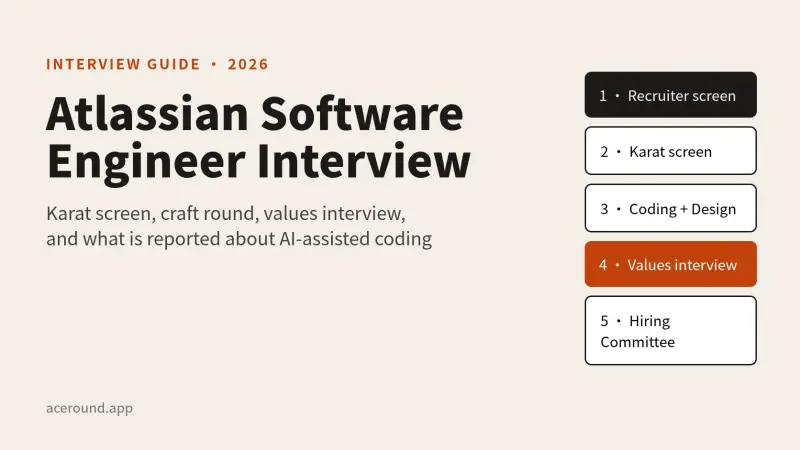
Atlassian Software Engineer Interview: Karat Screen, Craft Round and the Values Interview
How Atlassian's engineering loop works, from the Karat screen to the values round, what is official and what candidates report, including the AI-assisted rounds.
LinkedIn's AI-Enabled Coding Interview: What Candidates Report and How to Prepare
LinkedIn reportedly swaps one coding round for a CoderPad session with an AI panel. Here is the reported format, what gets scored, and what is unconfirmed.