Best Interview Coder Alternatives in 2026: Beyond LeetCode Copilots
Looking for an Interview Coder alternative that covers behavioral and non-coding interviews? Compare your real options before your next interview.
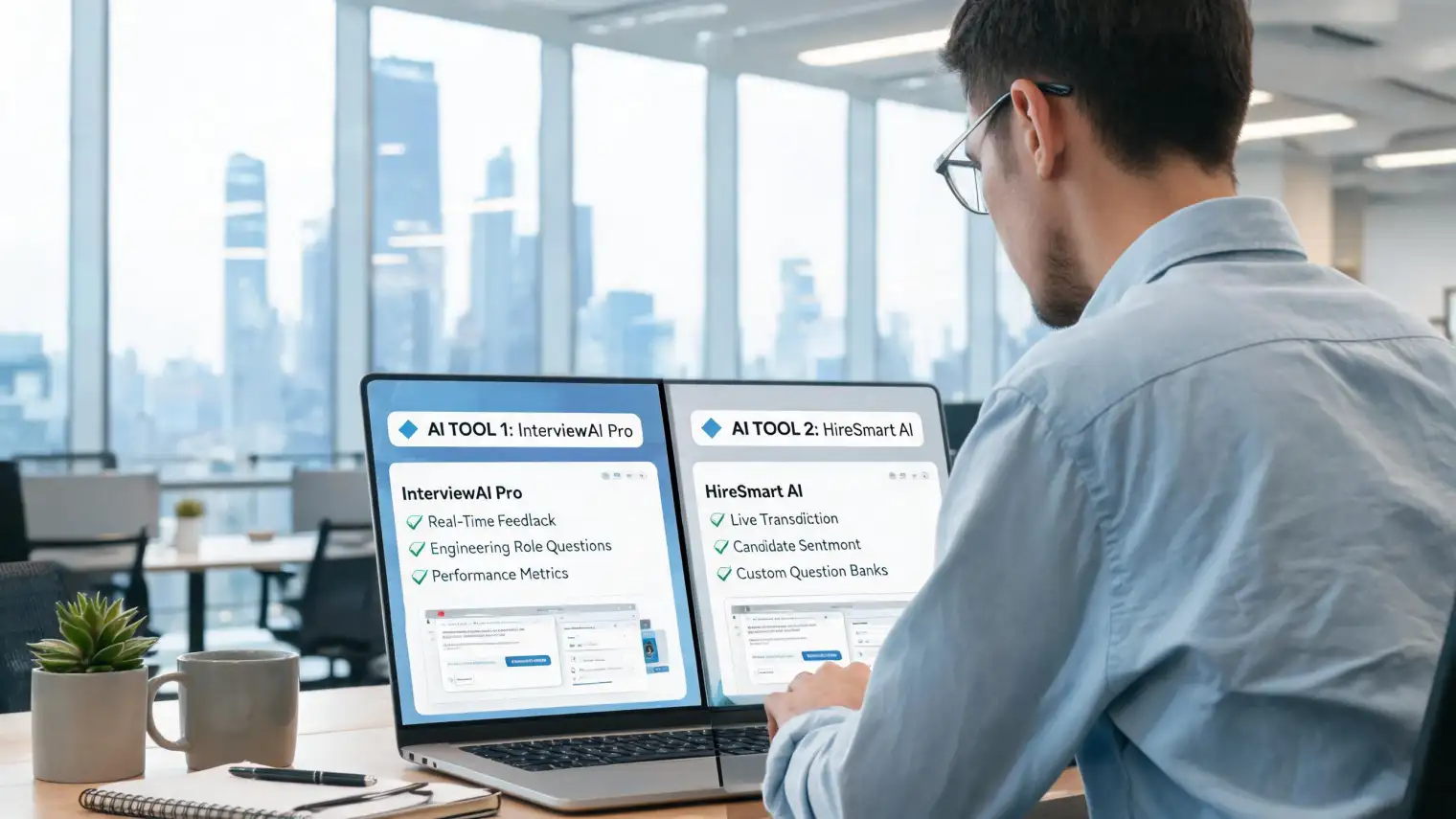
TL;DR: Interview Coder is a real-time LeetCode copilot that overlays coding solutions during technical screens. People look for Interview Coder alternatives because it's expensive ($299–$799), coding-only, has triggered lifetime bans at companies including Adobe, and doesn't help with the behavioral, system design, or non-engineering rounds that make up most interviews. AceRound AI covers all interview types in real time — not just coding. This article compares your actual options clearly.
In 2025, a Columbia University student named Roy Lee built Interview Coder and used it during Amazon's technical screen. The story blew up on Hacker News and TechCrunch. Amazon rescinded his offer. Columbia suspended him for a year. Lee called companies hypocrites for banning AI in interviews while mandating AI in daily work — and the comment section largely agreed.
That controversy made Interview Coder famous. It also made it clear that the category of "AI interview copilots" had arrived, along with the real question: which ones are worth the risk, which are genuinely useful, and what do you actually need for your interview?
What Is Interview Coder and Why It's Controversial
Interview Coder is a desktop overlay tool that listens to your interviewer's audio, captures the coding problem on your screen, and generates a solution that appears as an overlay on your monitor. During screen sharing, the overlay is invisible to the interviewer — they see only your IDE.
The legitimate version of this value proposition is: candidates who know the answer but freeze under live coding pressure get a real-time safety net. The problematic version is that it can effectively take the technical interview on someone's behalf.
Why it's controversial beyond the ethics question:
- Detection risk is real and inconsistent. Some versions trigger screen share pop-ups visible to interviewers. One documented case resulted in a lifetime Adobe ban after the tool's UI was captured during screen share. Detection depends heavily on the proctoring setup the company uses.
- Price is steep. At $299–$799, it's positioned as a short-term interview cost, not a recurring subscription. That framing works until the offer falls through or is rescinded.
- It only handles coding rounds. LeetCode-style DSA problems are one part of technical hiring. System design rounds, behavioral questions, PM case interviews, finance assessments, consulting cases — none of these are addressed by Interview Coder.
Why People Actually Search for Interview Coder Alternatives
The search "Interview Coder alternative" is driven by three distinct groups:
- Software engineers who want coding interview help but are worried about detection risk — they want something more reliable and lower-stakes
- Candidates who aren't software engineers — PM, finance, consulting, operations, sales candidates who saw the viral coverage and realized they need equivalent help, but Interview Coder literally doesn't do what they need
- Non-native English speakers in technical roles — candidates who can solve the problem but struggle to articulate the approach in English under pressure, who need help with communication as much as solution generation
The third group is arguably the largest and most underserved. An AI coding interview assistant that generates solutions in silence doesn't help a Korean developer who solves the LeetCode problem perfectly but then struggles to explain time complexity clearly in English.
AceRound AI: The Best Interview Coder Alternative for Non-Coding Interviews
AceRound AI is a real-time interview AI copilot designed for the full interview — behavioral questions, system design walkthroughs, technical explanations, and situation-based questions — across all job types.
What makes it meaningfully different:
It covers every interview type, not just coding. Behavioral rounds ("tell me about a time you disagreed with your manager"), product sense questions ("design a feature for Instagram"), finance case questions, consulting frameworks — AceRound handles all of these in real time. Interview Coder handles one type of question in one type of interview.
Built for non-native English speakers. AceRound is explicitly designed for candidates who are technically competent but face an additional cognitive load of working in a second or third language during high-stakes conversations. Real-time prompts help with both structure and phrasing — not just solution generation.
Lower detection profile for a different reason. AceRound's overlay works on live video calls (Zoom, Google Meet, Teams) where screen monitoring is near-zero unless you share your screen voluntarily. For the specific fear that drove the Adobe ban case — a visible UI pop-up during screen share — AceRound's architecture is designed to avoid that problem.
Doesn't require a client-visible window during OA. For online assessments that use browser-based proctoring (HackerRank, Codility), neither AceRound nor Interview Coder is the right tool — browser-locked assessments are a different problem category that neither solution was built for.
AceRound AI runs both pre-interview mock sessions and real-time assistance during live interviews. Non-engineers are specifically encouraged — the AI interview assistant guide walks through setting up for different interview types. Try it before your next interview.
Other Interview Coder Alternatives Worth Knowing
The market has grown significantly since the Roy Lee story broke. A few tools worth understanding:
Cluely — A broader AI interview assistant that gained viral attention and then lost trust in early 2026 after a security breach exposed 83,000 user accounts, including interview session data. The breach is documented here. Privacy risk should be a genuine criterion when evaluating tools in this category.
GhOst / Interview Solver — Similar overlay tools for coding interviews. Positioned as stealth alternatives to Interview Coder. Priced lower but with comparable functionality and similar detection risk profiles.
Final Round AI — Covers more interview types than Interview Coder, including behavioral rounds. Has stronger brand recognition in the US market. Higher price point. Useful comparison if you're an experienced software engineer in the US job market specifically. See our AceRound vs Final Round AI comparison for a detailed breakdown.
Natively — Open-source, self-hosted AI interview copilot. Free but requires technical setup. No data privacy risk because data stays local. Worth knowing for technically sophisticated users who want full control.
Coding Interview AI Beyond LeetCode: The Comparison That Actually Matters
The question most comparison articles miss: what kind of interview are you actually preparing for?
| Interview Coder | AceRound AI | Final Round AI | Cluely | |
|---|---|---|---|---|
| LeetCode / DSA rounds | ✅ Core feature | ⚠️ Basic support | ✅ Good | ✅ Good |
| Behavioral questions | ❌ | ✅ Core feature | ✅ Good | ✅ Good |
| System design | ❌ | ✅ Good | ✅ Good | ⚠️ Basic |
| Non-tech roles (PM, finance, consulting) | ❌ | ✅ | ⚠️ Limited | ⚠️ Limited |
| Non-native English speaker support | ❌ | ✅ Designed for | ⚠️ | ⚠️ |
| Price | $299–799 | Subscription | Subscription | Subscription |
| Detection risk (live video rounds) | Low–Medium | Low | Low | Low (breach risk) |
| Data privacy | Unknown | Standard | Standard | ❌ (breach history) |
If you're a software engineer preparing specifically for LeetCode-style OAs, Interview Coder does what it says on the box — with the detection and ethics risks that come with it.
If you're anyone else — or a software engineer who also needs to do well in behavioral and system design rounds — you need a more complete tool.
What to Look For in an Interview Coder Alternative
Given the category's mixed history (bans, a data breach, viral controversies), here are the criteria worth actually evaluating:
Interview type coverage. Most of your interview is not a LeetCode problem. Even for software engineering roles, behavioral and system design rounds are often weighted as heavily as the coding screen. A tool that only helps with coding round is useful for maybe 30% of your interview.
Detection risk by interview format. The risk profile is different for a browser-locked OA versus a Zoom video call. Understand which you're preparing for before choosing a tool.
Data privacy. You're feeding your interview content — sometimes sensitive information about your current role, salary expectations, and compensation history — into these tools. The Cluely breach showed this is not theoretical. Check whether the tool stores session data and where.
Behavioral vs. solution generation. There is a real difference between a tool that helps you structure and articulate what you already know versus one that generates answers wholesale. Both exist in this category. The former builds skills; the latter creates a gap between your interview performance and your actual job performance.
Honest limitations. Any tool that claims it's undetectable in all scenarios should be treated skeptically. Context matters: overlay tools are effectively invisible during live Zoom calls, but the same tool may behave differently in a browser-locked assessment environment.
FAQ
Has anyone actually been caught or banned using Interview Coder?
Yes. Documented cases include a lifetime Adobe ban after the tool's pop-up was captured during screen share, and Roy Lee's Amazon offer rescission and Columbia suspension. Detection is inconsistent — some candidates report using it without incident. The risk is real, not hypothetical.
Does anyone know exactly how Interview Coder is detectable but alternatives are not?
Interview Coder's detection risk is mostly tied to UI elements appearing during screen share — pop-ups, window borders, overlay edges — rather than any protocol-level detection. Tools that handle screen visibility more carefully have lower surface-area risk. None of these tools are universally undetectable across all proctoring environments.
Should I switch from Interview Coder to GhOst or another coding alternative?
If your concern is primarily detection during coding rounds, the alternatives (GhOst, Interview Solver) have similar functionality and similar risk profiles. If your concern is that you need help in non-coding rounds, the switch should be to a different category of tool entirely — one designed for behavioral and verbal interviews.
Is AceRound AI undetectable?
AceRound operates as a screen overlay that is excluded from screen-share capture in live video calls — the same mechanism used by notification systems. During a Zoom or Google Meet interview where you're not sharing your screen, the overlay is not visible to the interviewer. For browser-locked assessments, AceRound — like all tools in this category — is not designed for that environment.
Is using an AI interview copilot the same as cheating?
This is genuinely contested. The full ethics breakdown is worth reading. The short version: the spectrum ranges from "AI-assisted practice before the interview" (universally accepted) to "AI generating answers you present as your own in real time" (more controversial). Where you land depends on how you use the tool and what your relationship is to the answer it suggests.
Author · Alex Chen. Career consultant and former tech recruiter. Spent 5 years on the hiring side before switching to help candidates instead. Writes about real interview dynamics, not textbook advice.
Related Articles
OpenAI's AI Interview Policy: Banned, Required, or Team-Dependent
OpenAI sells AI coding agents, then bans most candidates from using one. Here's the round-by-round policy, including the new agentic round that flips it.
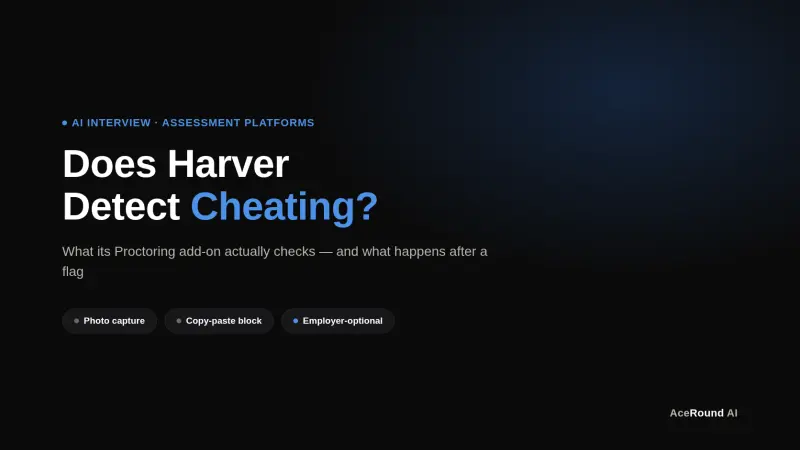
Does Harver Detect Cheating? What Its Proctoring Actually Checks
Does Harver detect cheating on its pre-employment assessments? A candidate look at Harver's Proctoring add-on, what gets logged after a flag, and what happens next.
Micro1's Zara AI Interview: What It Actually Tests (And Why Timing Gets Flagged)
Micro1's AI interviewer Zara has run 300,000+ interviews for remote roles. Here's why it flags response latency as a cheating signal, and what that means for AI prep.