Dental Hygienist Interview: What to Expect
Dental hygienist interviews mix behavioral prompts with clinical scenario tests. Here's the 3-part answer framework top candidates use.
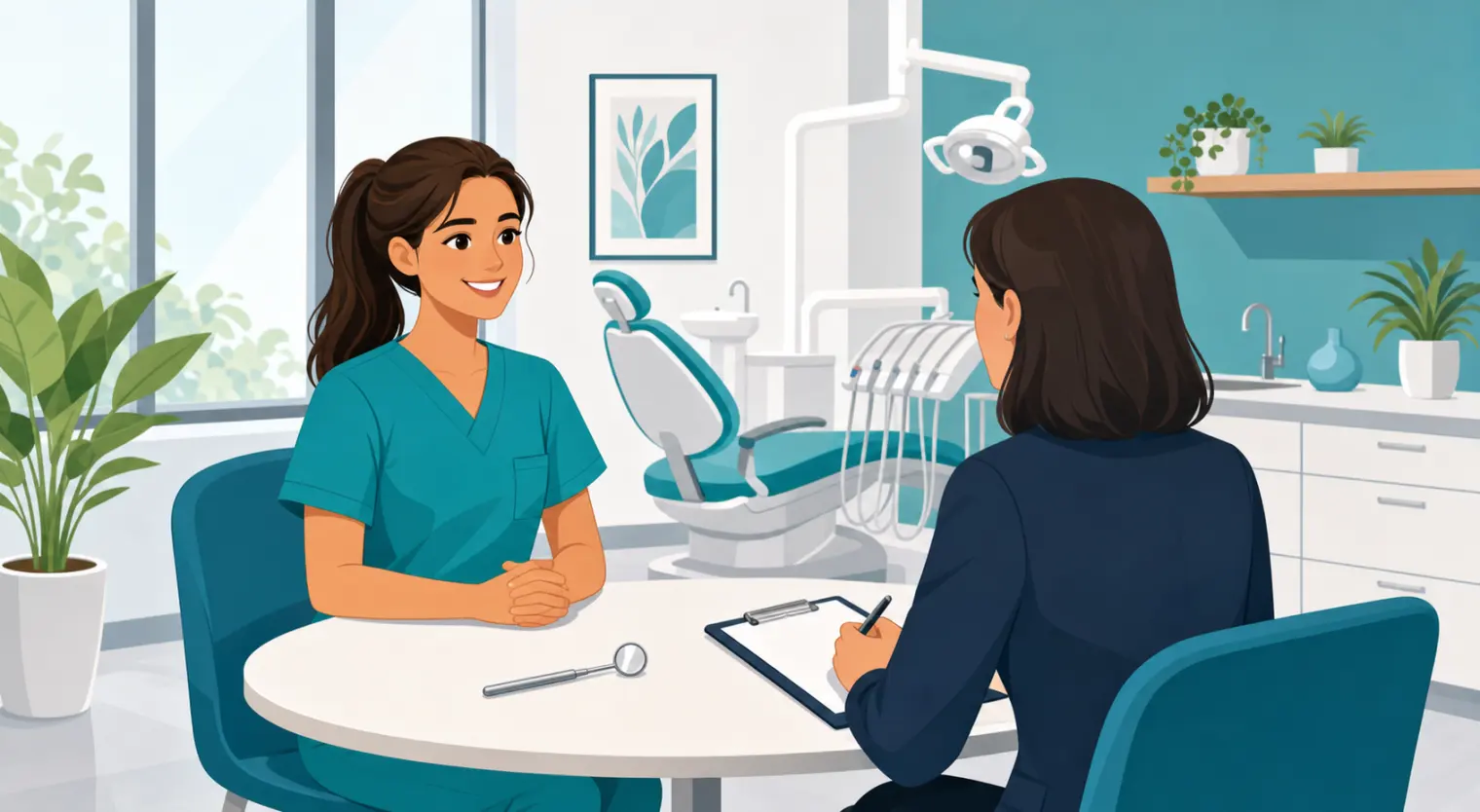
TL;DR: A dental hygienist interview isn't just a question bank — most practices weave in clinical scenario tests ("a patient refuses X-rays, what do you do?") that a memorized list of 35 answers won't cover. The candidates who stand out use a simple 3-part structure — state the clinical fact, explain the patient-centered reasoning, name the protocol you'd follow — instead of reciting a script. Practicing that structure out loud, with real follow-up pressure, matters more than collecting more sample answers.
The U.S. Bureau of Labor Statistics reports a median dental hygienist salary of $94,260 with 7% projected growth through 2034 — faster than average for all occupations. That growth means more practices hiring, more interviews scheduled, and more candidates walking in prepared with the same generic answer bank pulled from a career site. The problem: those question banks train you to recite, and most hygienist interviews are designed to catch recitation.
A hiring dentist doesn't just want to hear that you know what gingivitis is. They want to watch you handle an anxious patient mid-scaling, or explain — out loud, in real time — what you'd do if you spotted something the dentist missed on an X-ray. That's a different skill than memorizing "top 20 dental hygienist interview questions," and it's the gap this guide addresses.
What Makes Dental Hygienist Interviews Different From a Generic Q&A List
Search "dental hygienist interview questions" and you'll get near-identical listicles: 20-35 questions sorted into background, technical, and "tell me about yourself" buckets, each with a sample answer. That's useful as a starting inventory, but it misses two things that actually decide whether you get hired.
First, many hygienist interviews include a working or scenario-based component — not always literal chairside evaluation, but verbal walkthroughs of clinical judgment calls: how you'd handle a frightened patient, what you'd say to someone who hasn't flossed in months, how you'd manage an infection-control lapse you noticed. These aren't behavioral questions in the "tell me about a conflict" sense — they're clinical-judgment questions dressed as conversation.
Second, the behavioral questions that do get asked are usually patient-facing, not coworker-facing. Generic behavioral prep focuses on workplace conflict with managers or teammates. Dental hygienist interviews weight patient-communication conflict much more heavily — because that's the actual daily friction of the job.
The Clinical Scenario Questions Interviewers Actually Ask
These aren't hypothetical — they're pulled from real candidate-reported questions on hiring platforms and clinician forums:
- "How do you handle a frightened, uncooperative, or stressed patient in your dental clinic?"
- "Can you describe the signs and symptoms of gingivitis? What advice do you give to patients with gingivitis?"
- "Do you have experience with X-rays and other diagnostic tests?"
- "Can you tell me about a time when you had to resolve a conflict with a client? What happened, and how did you handle it?"
Notice the pattern: each one asks for a clinical fact and a communication judgment call in the same breath. A candidate who only answers the clinical half ("gingivitis is inflammation of the gums caused by plaque buildup") sounds like they memorized a textbook. A candidate who only answers the communication half ("I'd stay calm and reassure them") sounds like they're avoiding the clinical substance. The interviewers who ask these questions are listening for both halves, every time.
A 3-Part Framework for Clinical Scenario Answers
The candidates who handle these questions well — without sounding scripted — tend to structure the answer the same way, whether or not they've been coached to:
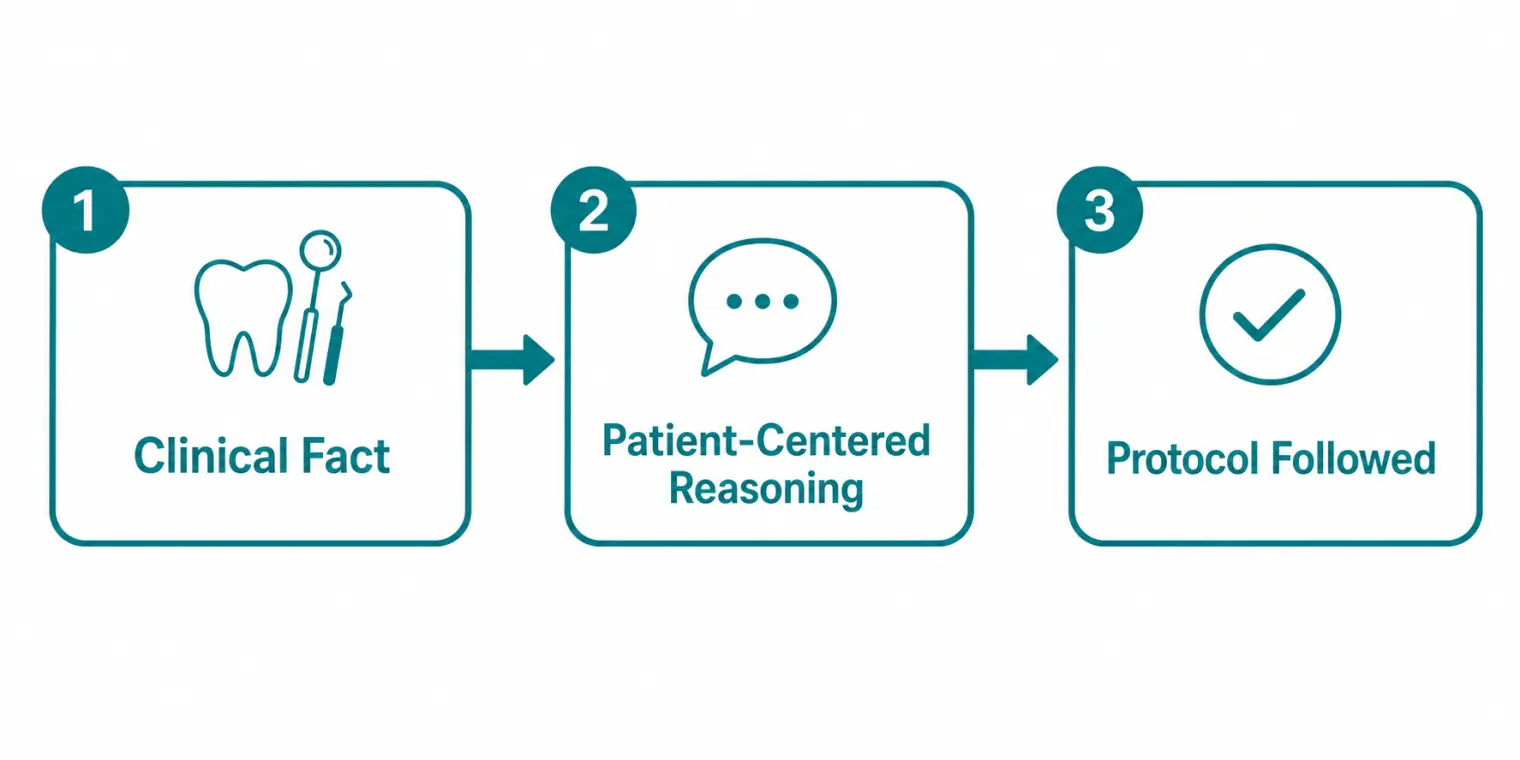
- State the clinical fact. Name what's actually happening, in plain language a patient could follow if they were listening. ("This patient's gum tissue is inflamed and bleeding on probing, which points to early gingivitis.")
- Explain the patient-centered reasoning. Connect the fact to how it affects this specific patient's comfort, fear, or understanding — not a generic textbook consequence. ("Given how anxious they already seemed about the appointment, I want to explain this without making it sound alarming.")
- Name the protocol you'd follow. End with the concrete action: what you document, who you escalate to, what you tell the patient to do next. ("I'd note it in the chart, recommend a shorter recall interval, and give them the plaque-control demonstration before they leave.")
This structure works because it answers all three things a hiring dentist is actually screening for at once: do you know the clinical material, can you talk to a nervous human being about it, and do you follow the procedural steps that keep the practice out of liability trouble. Reciting a sample answer gets the first part right and usually skips the other two.
The Behavioral Questions Hiding Inside "Clinical" Questions
Some of the hardest moments in a dental hygienist interview aren't labeled as behavioral at all — they show up disguised as clinical scenarios. "What would you do if you noticed something the dentist missed?" is really asking about professional courage and communication under hierarchy. "How do you handle a patient who's rude to you?" is really asking about emotional regulation during physically intimate, uncomfortable procedures.
Treat these the same way you'd treat a classic behavioral prompt — with a specific example, not a general philosophy — but keep the clinical vocabulary intact. "I once noticed early bone loss on a bitewing that hadn't been flagged. I brought it to the dentist privately between patients rather than in front of anyone, framed it as 'can you take a look at this,' and they confirmed it and adjusted the treatment plan" lands better than "I believe in speaking up when I notice something."
If You're Interviewing Outside the U.S.
The role itself doesn't map identically everywhere, which matters if you're job-hunting across borders. In Japan and Taiwan, dental hygienist is a distinct licensed profession (歯科衛生士 and 口腔衛生師 respectively) with its own degree path, so the clinical-scenario framing above translates directly. Korea licenses 치과위생사 through its own national exam, and candidates trained abroad go through the Korea Health Personnel Licensing Examination Institute. In Brazil and much of Latin America, the closer equivalent is a "Técnico em Saúde Bucal" working under a dentist's supervision, with a narrower independent scope than a U.S. RDH. In Vietnam and Turkey, the role often functions more like a dental assistant/nurse under direct dentist supervision — worth confirming the actual job title and scope before you walk in assuming a U.S.-style interview structure. In mainland China, oral care is delivered primarily by dentists and assistants rather than a separately licensed hygienist role, so if you're applying there, expect the interview to be framed around a dental-assistant scope instead.
How Real-Time Practice Closes the Gap a Question Bank Can't
Reading through a list of sample answers tells you what a good answer sounds like. It doesn't tell you whether you can produce one, under mild pressure, the first time an interviewer asks a follow-up you didn't rehearse. That's a rehearsal problem, not a knowledge problem — and it's the same reason actors run lines out loud instead of just reading the script silently.
AceRound AI runs structured mock interviews and gives real-time suggestions during the actual conversation, which is useful for exactly this kind of role: you can drill "anxious patient" and "conflict with a coworker" and "explain a diagnosis in plain language" back to back, and get a nudge toward the 3-part structure above if your answer skips the clinical half or the communication half. If the behavioral side is where you feel shakiest, the behavioral interview questions guide covers the STAR framework in more depth, and the medical assistant interview guide is a useful adjacent reference since many of its patient-communication scenarios overlap with hygienist interviews.
FAQ: Dental Hygienist Interview Questions
How do you handle a frightened, uncooperative, or stressed patient in a dental clinic? Name a specific technique, not a general attitude — tell-show-do pacing, offering breaks at defined intervals, adjusting your language for a pediatric versus adult patient. Interviewers are checking whether you have an actual method, since "I'd stay calm" is what everyone says.
Can you describe the signs and symptoms of gingivitis, and what advice do you give patients? Cover the clinical signs (redness, swelling, bleeding on probing) briefly, then spend more time on the advice half — this is the part interviewers are actually weighing, since patient education is the daily core of the job.
Do you have experience with X-rays and other diagnostic tests? Answer with specifics: which systems you've used (digital sensors, panoramic units), what you're trained to flag versus what you'd escalate to the dentist, and one example of a finding you caught.
How do you resolve a conflict with a patient? Use a real, specific story with a beginning, middle, and resolution — not a philosophy statement. Interviewers can tell the difference within one sentence.
What should I wear to a dental hygienist interview? Business professional, not scrubs, unless the posting specifically asks you to come ready for a working interview — confirm in advance if you're unsure, since practices vary.
Where do you see yourself in five years? Tie your answer to clinical growth within the practice (expanded functions, specialty certifications, mentoring newer hygienists) rather than a vague "growing professionally" — dentists are listening for whether you plan to stay.
Author · Alex Chen. Career consultant and former tech recruiter. Spent 5 years on the hiring side before switching to help candidates instead. Writes about real interview dynamics, not textbook advice.
Related Articles
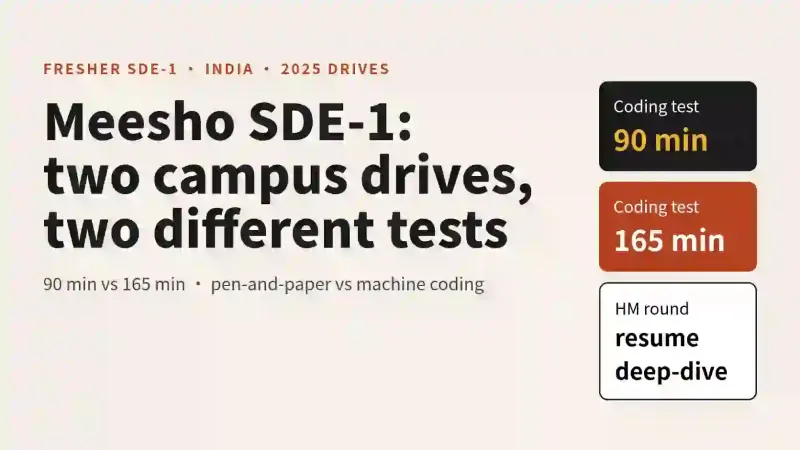
Meesho SDE-1 Interview Process for Freshers: Three 2025 Accounts Compared
Meesho SDE-1 campus accounts from 2025 disagree on test length, round order and design format. Here is what each reported and how to prep for any of them.
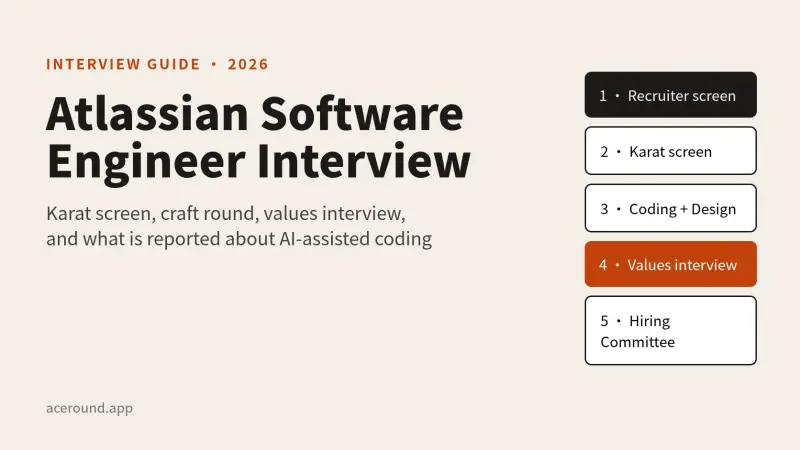
Atlassian Software Engineer Interview: Karat Screen, Craft Round and the Values Interview
How Atlassian's engineering loop works, from the Karat screen to the values round, what is official and what candidates report, including the AI-assisted rounds.
LinkedIn's AI-Enabled Coding Interview: What Candidates Report and How to Prepare
LinkedIn reportedly swaps one coding round for a CoderPad session with an AI panel. Here is the reported format, what gets scored, and what is unconfirmed.