Microsoft Growth Mindset Interview Questions: A Real Prep Guide
Microsoft names growth mindset as a hiring criterion on its careers site. Here's how it shows up across the loop, real candidate questions, and how to answer them.

TL;DR: Microsoft names growth mindset as an official hiring criterion on its own careers site — but unlike Amazon's Leadership Principles, it isn't one isolated round. It's evaluated throughout the loop and weighted most heavily in the final AA (senior leader) interview. This guide covers where the term actually comes from, the real behavioral questions candidates report, and how to build an answer that doesn't sound like it was lifted from a corporate values page.
Search "Microsoft growth mindset interview" and most results treat it like Google's Googleyness or Amazon's Leadership Principles — a formal, named round with its own rubric. It isn't, quite. That gap between how confidently some prep guides describe it and what Microsoft actually says about it is worth clearing up before you walk in and try to perform a round that isn't structured the way you were told.
Where "Growth Mindset" Actually Comes From
This isn't a vague values buzzword invented by a prep site. Microsoft's own careers page on how it hires explicitly lists growth mindset alongside respect, integrity, and accountability as what candidates are evaluated on, and its interview tips page frames the ideal candidate as a "learn-it-all," not a "know-it-all."
The phrase traces directly to CEO Satya Nadella, who introduced it after reading Carol Dweck's book Mindset early in his 2014 tenure and has repeated the framing consistently since — including in his memoir Hit Refresh and in company town halls. Multiple business press accounts describe it as the cultural reset Nadella used to move Microsoft away from the internal competitiveness and stack-ranking culture of the pre-2014 era. This is a real, deliberately stated cultural value with a decade of institutional weight behind it — not marketing copy.
What's genuinely unverified is the specific claim some prep sites make: a formally labeled "growth mindset interview" as one distinct stage with its own published rubric. That structure doesn't appear in Microsoft's own materials. What does appear, consistently, in candidate reports is a final round with outsized influence over the outcome.
The AA Round Is Where It Concentrates
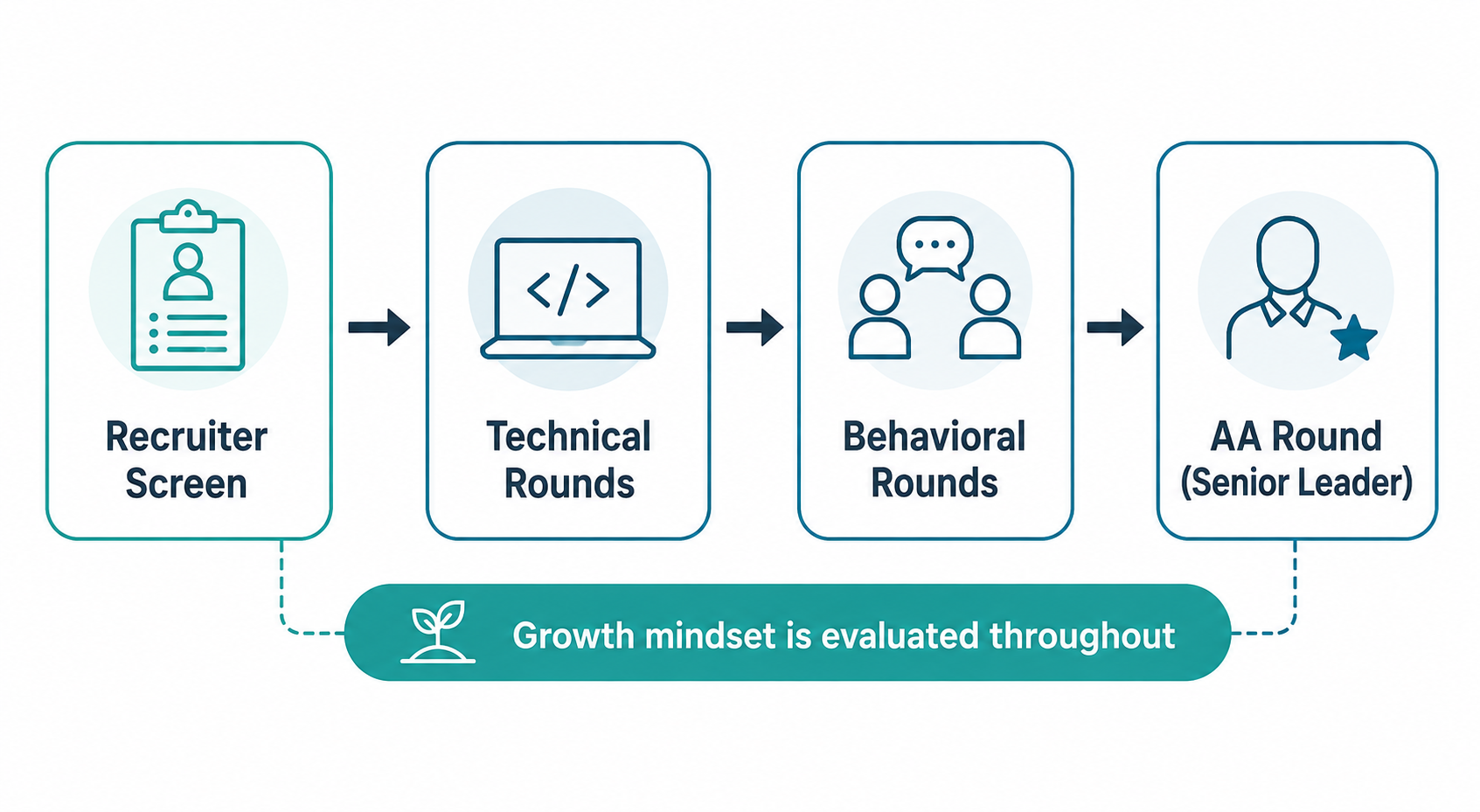
Microsoft's loops typically run: a recruiter screen, one or more technical rounds, one or more behavioral rounds, and then a final interview widely referred to as the AA round — "As Appropriate." It's conducted by a senior leader who wasn't part of your earlier interviews, and it functions similarly to Amazon's Bar Raiser: this person has real, sometimes deciding, influence over whether you get an offer.
The AA interviewer leans more heavily toward culture fit and growth mindset than the technical rounds before it. That doesn't mean growth mindset is absent earlier in the loop — a hiring manager or technical interviewer can and does ask about how you learn — but it's the AA round where an unconvincing answer is most likely to sink an otherwise strong loop.
Real Questions Candidates Report
Growth mindset rarely shows up as a labeled question. It shows up as a behavioral prompt built to reveal it:
- "Tell me about a time you showed a growth mindset."
- "Tell me about a time you had to learn a new technology quickly."
- "Tell me about a time you failed and what you learned."
- "Tell me about a time you were wrong."
- "Describe a situation where you received difficult feedback and how you responded."
One reported real-world example from a candidate interviewing for a Solution Sales Professional role captures how it gets layered into a single question rather than asked in isolation: "What is growth mindset? Why do you think you fit for this role? How did you communicate to the client the project was delayed? How did you handle the situation?" — a definitional check, a fit check, and a failure-recovery story, all in one prompt.
Notice the common thread: every version is really asking the same thing. What do you do when you're not already good at something?
How to Build an Answer That Doesn't Sound Rehearsed
The failure mode here isn't a bad story — it's a safe one. Candidates who prep for "growth mindset" specifically tend to reach for a story where they were already competent and improved somewhat, because it feels less risky than admitting real incompetence. That instinct produces the exact answer that reads as rehearsed to an interviewer who's heard hundreds of them.
What actually lands:
- Start from genuine incompetence, not a minor gap. "I'd never touched Kubernetes and had two weeks to ship a migration" works. "I was already pretty good at frontend but picked up a new framework" doesn't — there's no real struggle in it.
- Name what you got wrong along the way, not just the end state of having learned it. The specific mistake is what makes the story verifiable rather than generic.
- Describe the mechanism, not just the outcome. "I worked hard and figured it out" tells the interviewer nothing about how you think. "I found the three engineers who'd actually run this in production and asked them what breaks first" tells them exactly how you operate when you don't know something.
- Let the discomfort show. A growth mindset story where you were never actually uncomfortable being wrong isn't a growth mindset story — it's a competence story wearing a growth mindset label.
If you're building this alongside prep for other big-tech culture-fit rounds, the underlying discipline is the same one covered in the Googleyness guide and the Amazon Leadership Principles playbook — each company names its own version of "will this person be good to work with," and the STAR structure that works for one transfers directly to the others with different vocabulary layered on top.
Where AI Practice Helps
The hardest part of a growth-mindset story isn't writing it — it's telling whether the version in your head actually sounds honest out loud, or whether it drifts into the safe, rehearsed register the moment you're nervous. That's difficult to self-diagnose from a script.
AceRound AI runs mock behavioral sessions that specifically follow up on vague or overly polished answers the way a real AA-round interviewer would — asking "what specifically did you get wrong there?" when a story skips the messy part, or "how did you actually figure that out?" when an answer stays at the level of "I worked hard." Practicing the follow-up, not just the opening answer, is what surfaces whether a story holds up or was only ever built to be recited once.
It won't replace the judgment of an actual senior leader in an AA round, and no AI session replicates the specific weight of knowing this person has veto power. What repeated practice does well is force the rehearsed version of your story to fail early, in a low-stakes setting, instead of failing for the first time when it counts. For the broader behavioral-round structure this builds on, the behavioral interview questions guide covers STAR fundamentals if you're starting from scratch.
FAQ
Is growth mindset an actual named interview round at Microsoft?
Not a standalone stage the way Amazon has named Leadership Principles rounds. Microsoft's own careers site lists growth mindset as one of the qualities it evaluates candidates on, and it's woven through the whole loop rather than isolated into one interview — it shows up most heavily in the final "As Appropriate" (AA) round with a senior leader.
What does Microsoft mean by growth mindset?
It traces to CEO Satya Nadella, who introduced the framing after reading Carol Dweck's book Mindset early in his tenure. Microsoft's shorthand is wanting "learn-it-alls, not know-it-alls" — people who treat their current skill level as a starting point rather than an identity, and who respond to being wrong by updating rather than defending.
What is the Microsoft AA round?
AA stands for "As Appropriate" — a final-stage interview with a senior leader who wasn't part of your earlier rounds. It functions similarly to Amazon's Bar Raiser: this person has real influence over whether you get an offer, and their focus leans more heavily toward culture fit and growth mindset than the technical rounds that came before it.
What questions come up in a Microsoft growth mindset interview?
Common patterns: "tell me about a time you showed a growth mindset," "tell me about a time you had to learn a new technology quickly," "tell me about a time you failed and what you learned," and "describe a time you received difficult feedback and how you responded." All are variations on the same underlying question: what do you do when you're not already good at something?
How do I answer a growth mindset question well?
Pick a story where you were genuinely bad at something first, not one where you were already competent and improved slightly. Be specific about what changed in how you approached the problem, not just that you "worked hard," and be honest about what you got wrong along the way — a growth mindset story with no real struggle in it reads as rehearsed rather than true.
Author · Alex Chen. Career consultant and former tech recruiter. Spent 5 years on the hiring side before switching to help candidates instead. Writes about real interview dynamics, not textbook advice.
Related Articles

The Amazon Bar Raiser Interview: What They Actually Do (2026 Guide)
Amazon's Bar Raiser interview explained: what the role actually is, how the veto really works, how Amazon selects Bar Raisers, and how to prepare for one.
Predictive Index Test: How to Actually Prepare for the PI Cognitive and Behavioral Assessment
The Predictive Index test is really two assessments. Here's what the 12-minute Cognitive test and the untimed Behavioral checklist actually measure, score, and allow.
Off-Campus OA Prep for Product-Based Companies: Amazon, Flipkart, Microsoft, and Zoho Compared
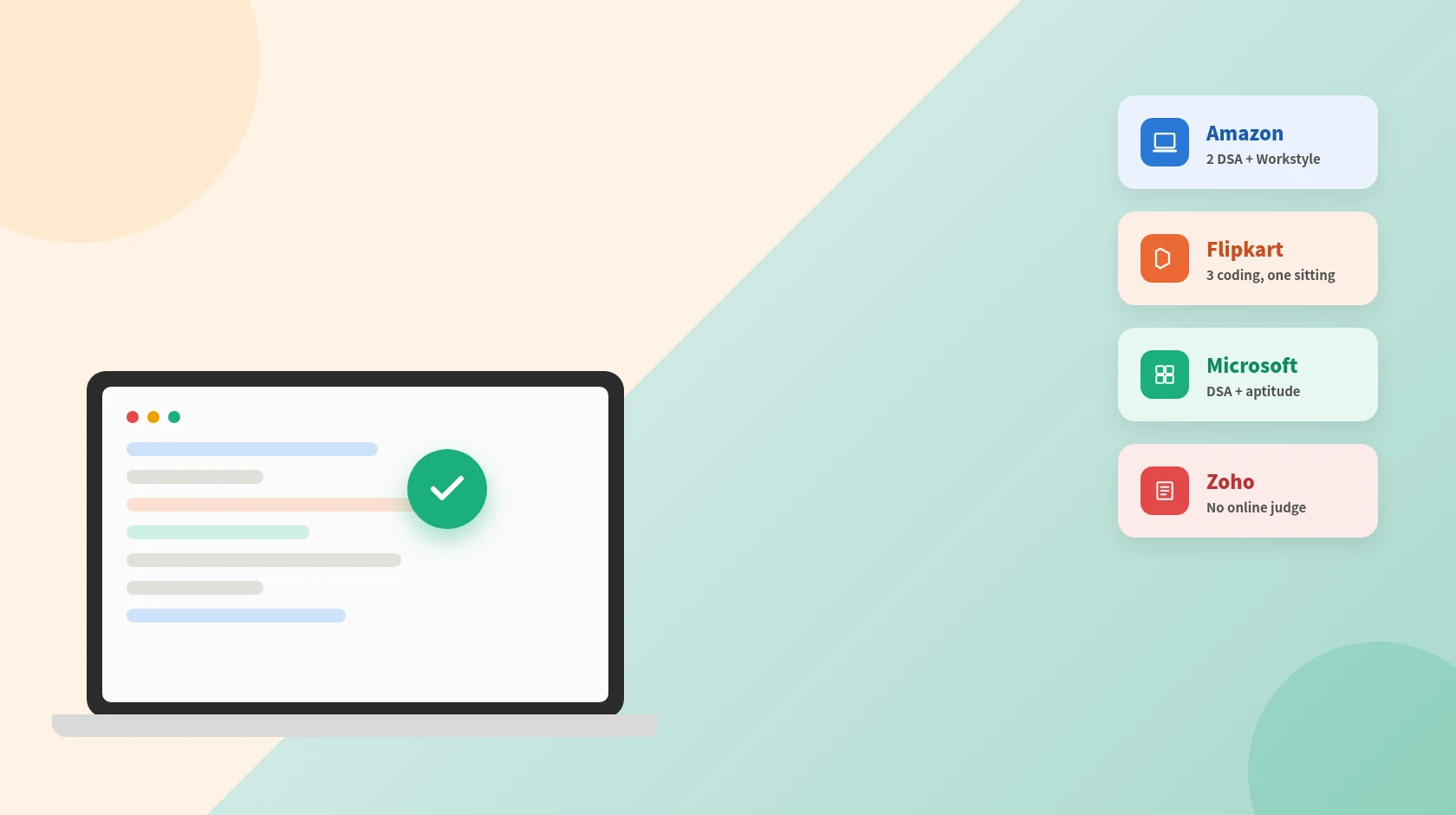
Amazon, Flipkart, Microsoft, and Zoho run off-campus OA very differently. Here's what each one actually tests, and how to prepare for the one you'll face.