Claims Adjuster Interview Questions (2026)
Claims adjuster interviews run in two stages - a one-way recorded video screen, then a live panel. Here's how to prep for both, with real questions.

TL;DR: Most claims adjuster interview questions now come in two very different formats: a one-way recorded video screen (no live interviewer, hard timer, one take) followed by a live panel round with unit managers or a claims director. The recorded stage tests whether you can deliver a clear answer to a camera under time pressure; the live stage tests judgment - fraud red flags, damage calculation, and how you handle an unhappy client. Prepping only from a list of sample answers misses the format entirely.
You get the interview invite and it's not a Zoom link with a person's name attached - it's a Progressive or GEICO-style link asking you to record answers to eight questions, one at a time, with a countdown timer and no retakes. If that catches you off guard, you're not alone: this two-stage format (async video screen, then live panel) is now standard at several of the largest US insurers, and almost nothing published for candidates explains how to prepare for the recorded half differently from the live half.
The timing matters too. The industry itself is flagging a hiring gap: PwC's insurance-workforce research and Insurance Business America both point to a wave of retirements pulling experienced adjusters out just as claims volume keeps climbing, and the U.S. Bureau of Labor Statistics still counts roughly 21,600 openings a year for the role even with headcount projected to shrink slightly - almost all of that demand is backfilling people who retired with years of pattern-recognition judgment nobody wrote down. That's the subtext behind a lot of the behavioral questions below: insurers are explicitly worried about losing the "gut check" skill for spotting a fraudulent claim, and they're interviewing for it directly.
Stage One: The One-Way Recorded Video Screen
This is the part that trips people up, because it isn't really an interview - it's a solo recording session. A typical setup: 6-8 questions, delivered one at a time, a short prep countdown before each one, then a hard recording limit (often 60-90 seconds) with no do-overs. Progressive's version runs about 30 minutes end to end; other insurers use a similar HireVue-style flow for the first screen.
What's different about prepping for this stage versus a live interview:
- You don't get a follow-up to rescue a vague answer. In a live interview, an interviewer might ask "can you give me a specific example?" Here, if your first take is generic, it's the only take. Front-load the specific detail instead of building up to it.
- The timer changes how you should structure an answer. A 90-second limit means you don't have room for a long wind-up. Lead with the point, then the one piece of evidence, then stop.
- Eye contact with a lens, not a face, feels unnatural for most people the first few times. Practicing out loud in front of your own camera before the real recording - not just reading answers silently - is the single biggest gap between candidates who sound stiff and candidates who sound like themselves.
Stage Two: The Judgment Questions the Live Panel Actually Asks
If you clear the recorded screen, the live round - usually with unit managers, then a director - shifts almost entirely to judgment and behavioral questions. These are the ones adjusters most often report getting asked, pulled from candidate accounts and hiring guides:
- "What are some of the red flags that indicate a fraudulent claim?"
- "How would you calculate damages for an automobile accident?"
- "Imagine a client is unhappy with the assessment you provided. What would you do?"
- "Tell me about a time you had to share bad news with a client and there wasn't anything you could do to fix the situation."
- "What would you expect a typical day at this job to be like?"
- "Describe your process for ensuring you don't miss any important information when appraising property damage."
Notice the pattern: almost every one of these is designed to surface the exact skill insurers say they're worried about losing to retirement - pattern recognition on fraud, and calm, consistent judgment under an upset client. A generic "I'm detail-oriented and good with people" answer doesn't land here. What does land is naming an actual process (a checklist, a sequence of sources you'd check, a specific fraud pattern) or a real story with a concrete outcome.
Why "I'd Stay Calm and Professional" Isn't a Real Answer
Every one of the questions above has a version of this generic answer available, and every experienced interviewer has heard it a hundred times. The fix isn't a better line - it's specificity. For the fraud-red-flags question, that means naming actual patterns (timeline mismatches, damage-to-story mismatches, suspicious timing near a policy's effective date) instead of "I'd be suspicious if something felt off." For the unhappy-client question, it means describing the actual conversation structure - acknowledge, explain the line items, offer the escalation path - instead of "I'd stay calm and professional."
This is exactly the kind of interview AceRound AI is built for - it listens during a live practice conversation or the real call and surfaces a real-time nudge if your answer is drifting generic, so you catch it before the interviewer does, and it works the same way for rehearsing the recorded-video stage out loud. If the STAR structure behind the behavioral half feels shaky, the behavioral interview questions guide covers the framework in more depth, and the insurance agent interview guide is a useful adjacent read since both roles get tested on the same client-trust dynamics. If you're coming from a broader financial-services background, the financial analyst interview guide covers how to translate that experience into insurance-specific language.
Questions to Ask the Interviewer
Adjusters who've been through a few of these interviews consistently recommend asking about the actual workload, since caseload and catastrophe (CAT) coverage expectations vary a lot by employer and aren't always in the job posting:
- "What's a typical open-claim caseload per adjuster on this team?"
- "How does the team handle CAT (catastrophe) surge periods - extra staffing, mandatory overtime, or something else?"
- "What does the path from field adjuster to senior or independent adjuster usually look like here?"
Asking these signals you're thinking about the job past the offer stage, and the answers tell you a lot about whether the caseload is sustainable.
If You're Interviewing Outside the US
The two-stage recorded-then-live format described above is most established at large US carriers (Progressive, GEICO, Allstate, Travelers). Licensing requirements also vary significantly by country and, within the US, by state - most US states require a claims adjuster license (with reciprocity agreements covering many states), while other countries regulate the role differently or fold it into a broader insurance-industry credential. The fraud-detection and damage-assessment judgment questions above translate directly regardless of location, but confirm the specific licensing and interview-format expectations for your country and employer before you assume a US-style process.
Frequently Asked Questions
What are some of the red flags that indicate a fraudulent claim?
Interviewers want specific patterns, not a vague answer about "trusting your gut." Mention things like inconsistent timelines between the claimant's story and the police or medical report, damage that doesn't match the described cause, claims filed right after a policy's effective date or right before it lapses, and a claimant who's unusually eager to settle fast without documentation. Naming 2-3 concrete patterns shows you've actually handled claims, not just read about fraud.
How would you calculate damages for an automobile accident?
Walk through your actual process in order: photo and report the scene damage, pull repair estimates (often multiple, from different shops), cross-reference against actuarial/total-loss thresholds, and factor in diminished value where it applies. Adjusters say interviewers are listening for the sequence and the sources you'd check, not a single dollar figure.
Imagine a client is unhappy with the assessment you provided. What would you do?
Acknowledge the frustration first, then walk them through the specific line items and the policy language behind the number - what the estimate covers, what it doesn't, and why. Staying calm without getting defensive matters more than being "right" in the room; escalating to a supervisor when a client explicitly asks is also a fine, expected answer.
Tell me about a time you had to share bad news with a client and there wasn't anything you could do to fix the situation.
Use one real, specific story - a denied claim, a lower-than-expected payout, a coverage gap the client didn't know about - and focus on how you delivered it plainly and stayed available for follow-up questions, rather than softening the news into vagueness. Interviewers are checking whether you can hold a hard conversation without either caving or going cold.
What would you expect a typical day at this job to be like?
A realistic answer names the actual mix: reviewing new claim assignments, phone or video calls with claimants and repair shops, site visits or virtual inspections, writing up estimates and file notes, and following up on claims still in negotiation. Adjusters say this question is really testing whether you understand the job isn't just paperwork - it's a full day of conversations with people who are often having a bad week.
Describe your process for ensuring you don't miss any important information when appraising property damage.
Name a concrete system - a standard inspection checklist you work through room by room or panel by panel, photo documentation before touching anything, cross-checking against the policy's coverage limits and exclusions - rather than "I'm just very thorough." The specific system is what signals real field experience.
Author · Alex Chen. Career consultant and former tech recruiter. Spent 5 years on the hiring side before switching to help candidates instead. Writes about real interview dynamics, not textbook advice.
Related Articles
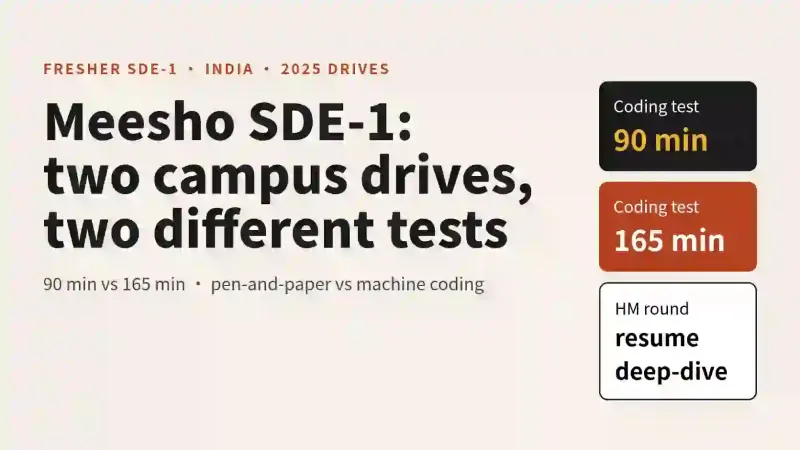
Meesho SDE-1 Interview Process for Freshers: Three 2025 Accounts Compared
Meesho SDE-1 campus accounts from 2025 disagree on test length, round order and design format. Here is what each reported and how to prep for any of them.
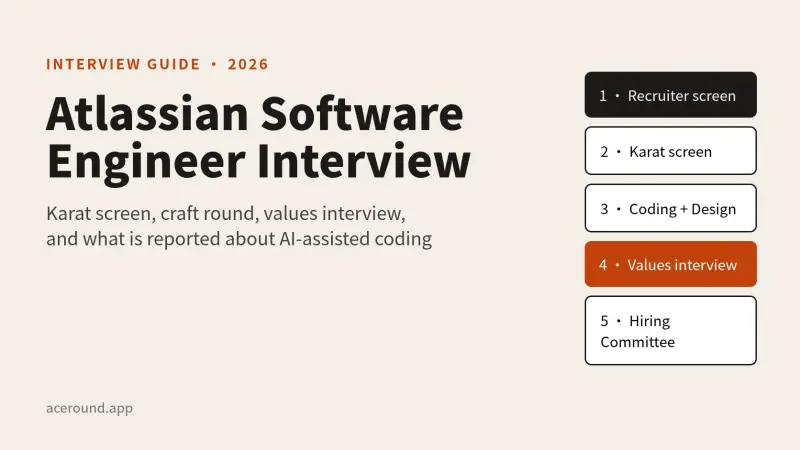
Atlassian Software Engineer Interview: Karat Screen, Craft Round and the Values Interview
How Atlassian's engineering loop works, from the Karat screen to the values round, what is official and what candidates report, including the AI-assisted rounds.
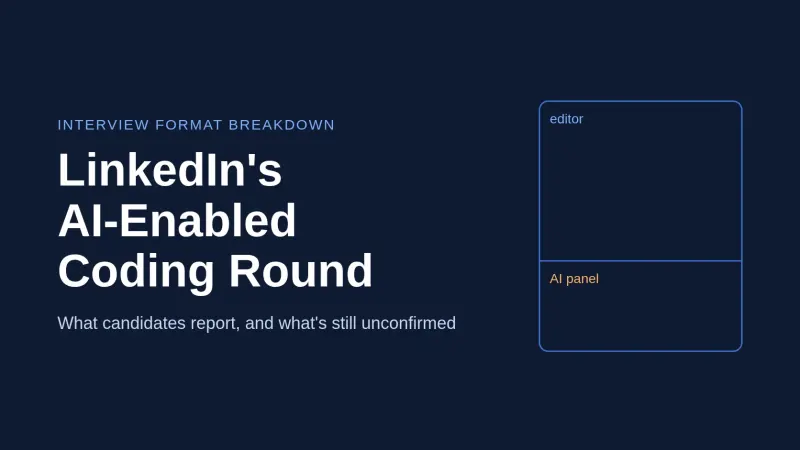
LinkedIn's AI-Enabled Coding Interview: What Candidates Report and How to Prepare
LinkedIn reportedly swaps one coding round for a CoderPad session with an AI panel. Here is the reported format, what gets scored, and what is unconfirmed.