Does Willo Detect Cheating? What Real Talk Actually Flags
Does Willo detect cheating in one-way video interviews? A plain-English look at Willo's Real Talk anti-cheat feature, what it flags, and its false positives.
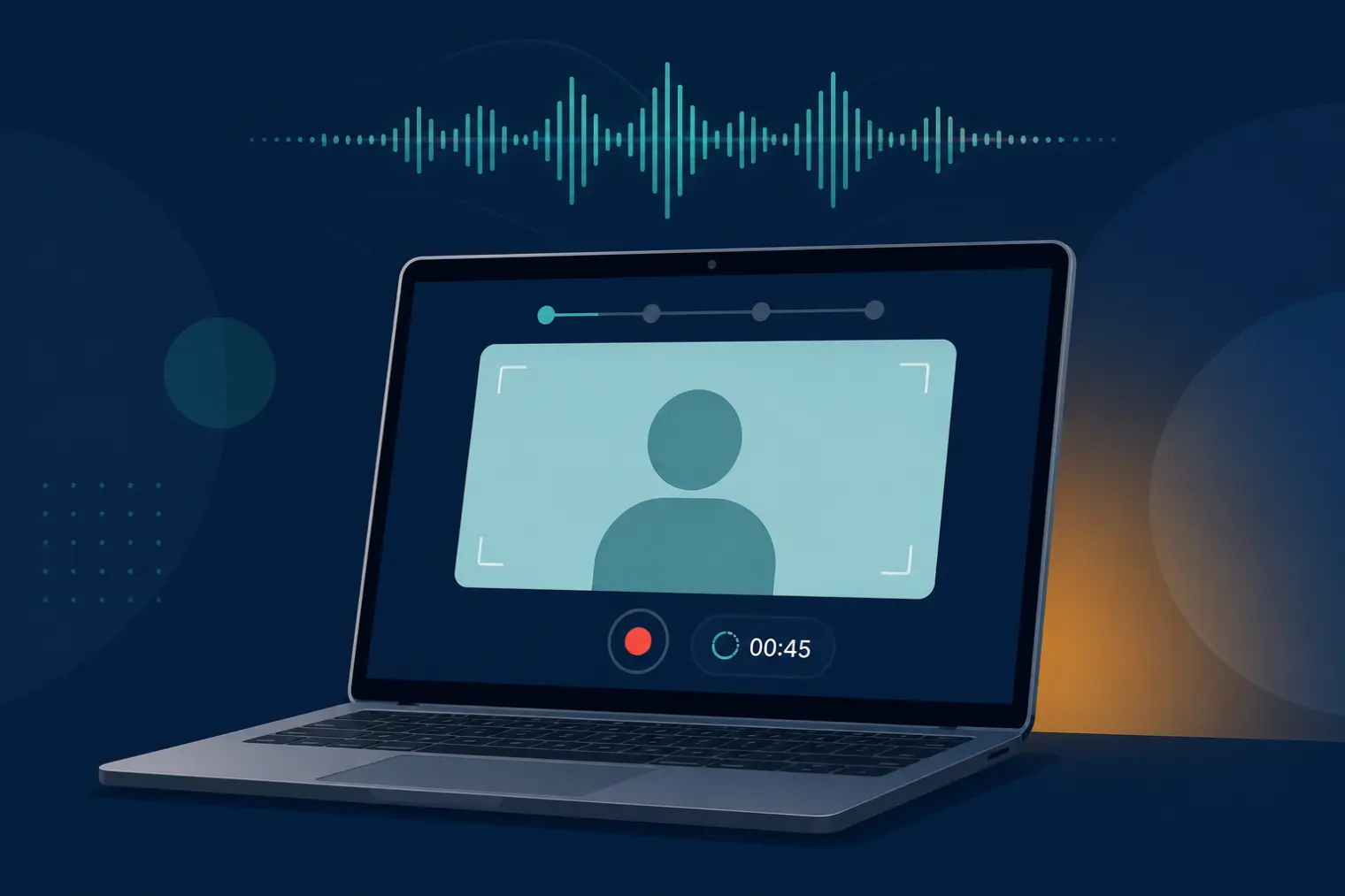
TL;DR: Willo's anti-cheat system, called Real Talk, is a speech-pattern detector — it flags answers as Naturally Spoken, Potentially Scripted, or Potentially AI-Generated based on how natural your delivery sounds, not by watching your screen or tracking your eyes. It's off by default and only enabled per employer, and Willo's own documentation admits it false-positives on non-native speakers and heavily rehearsed answers. Here's what does Willo detect cheating actually means in practice, straight from Willo's own docs.
You got the email: complete a one-way video interview through Willo within a few days. No live interviewer, just a countdown timer and a list of questions. Somewhere in the fine print, or maybe nowhere visible at all, there might be an anti-cheat system watching your answer — and Willo won't tell you which employers have it turned on.
Search "does Willo detect cheating" and almost everything you find is Willo's own content, written for the companies buying the product, not for you. There's no independent, candidate-facing explanation of what the system actually checks. So we read Willo's own support documentation on anti-cheat settings and its published comparison of detection methods to figure out exactly what's real.
What Willo's Anti-Cheat Is Actually Built From
Willo compares itself against a handful of categories in its own published methodology: response authentication, ID verification, code-plagiarism checks (relevant mainly for technical roles), and proctoring. According to Willo's own comparison, screen recording and webcam gaze-tracking are methods it associates with other vendors in the category — Willo's own product centers on two things: Real Talk (its speech-authentication feature, documented here) and optional ID verification.
That's a meaningfully narrower surface area than platforms that record your screen or track where your eyes point during the session. If you're taking a Willo interview, the thing most likely to be watched is how you're speaking — not what's on your monitor.
Real Talk: The Feature That Actually Matters Here
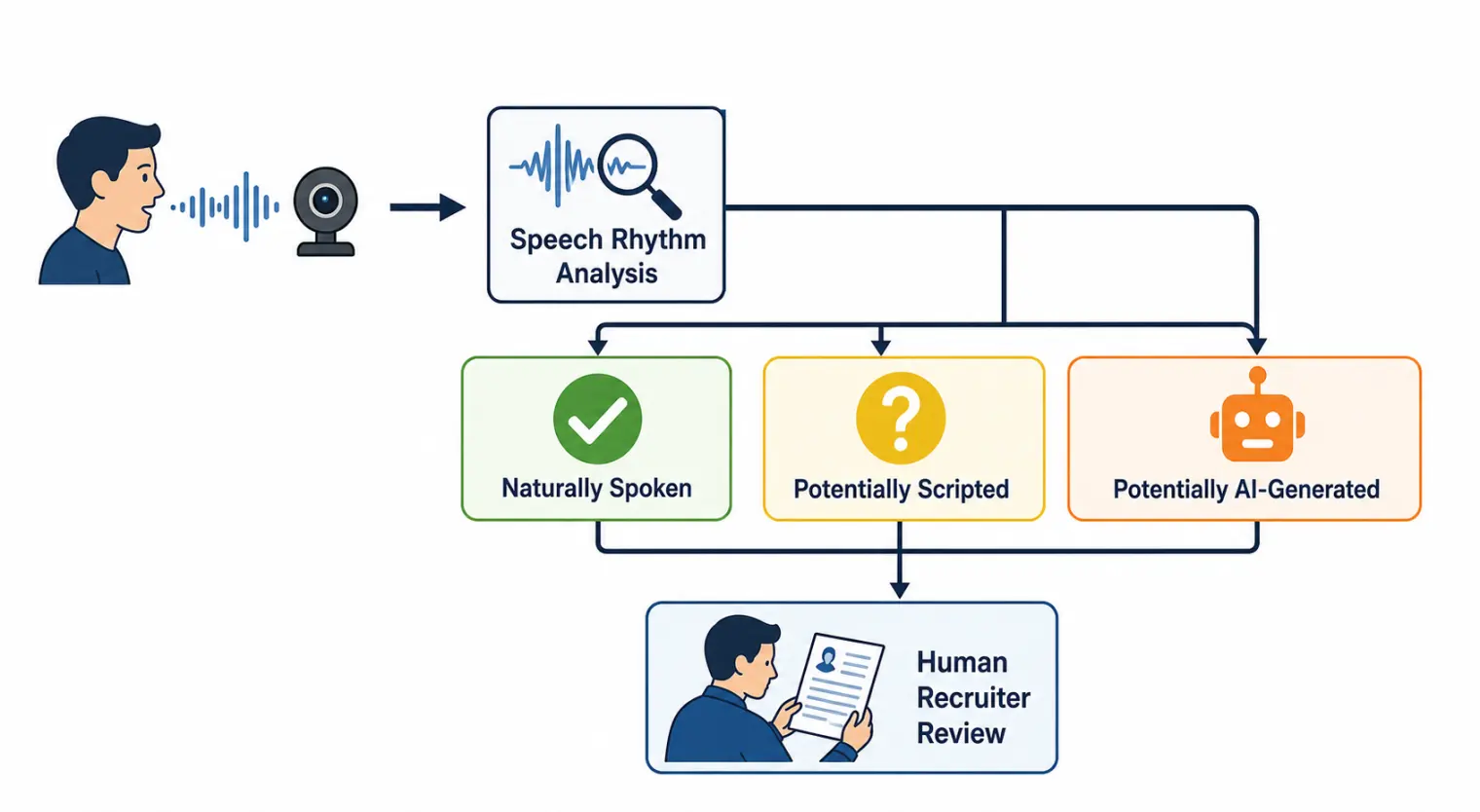
Real Talk analyzes the rhythm and naturalness of your spoken delivery and sorts each answer into one of three tiers:
- Naturally Spoken — reads as an unscripted, in-the-moment answer.
- Potentially Scripted — flagged for sounding rehearsed or read.
- Potentially AI-Generated — flagged for patterns associated with AI-generated or AI-assisted speech.
This is a speech-pattern signal, not a lie detector and not a webcam-based check. It's built to catch a specific failure mode — someone reading a fully pre-written script off a second screen, word for word — by listening to how mechanical or naturally paced the delivery sounds.
The Part Willo's Own Docs Admit: False Positives Are Real
This is the detail almost nobody explains plainly, and it comes straight from Willo's own support documentation: a flag can be triggered by "strong preparation, a non-native speaking style, or simply how someone naturally communicates" — not only by someone actually reading a script. In other words, the same feature meant to catch scripted answers can also catch a candidate who over-prepared, or whose natural speech cadence just doesn't match whatever the model considers "typical."
Willo also deliberately doesn't publish exactly how the detection works. Its own docs state it directly: the company won't specify precisely what anti-cheat stops candidates from doing, "for obvious reasons." That opacity is by design, not an oversight — but it also means you can't know in advance whether your normal, honest speaking style happens to land in a flagged bucket.
Is Anti-Cheat Even Turned On for Your Interview?
Willo's support documentation confirms anti-cheat detection is off by default and only switched on per employer, at that employer's request. There's no candidate-visible indicator showing whether it's active for the specific interview link you were sent. The practical takeaway: assume it could be on, behave the way you'd behave either way, and don't build a strategy around guessing whether you're being monitored.
Does a Flag Mean You Failed?
No — Willo positions these flags as a signal for a recruiter to look at, not an automatic rejection. Given that Willo's own documentation admits false positives happen with strong preparation or non-native speech patterns, a "Potentially Scripted" tag most realistically means a human is going to watch that portion of your recording a little more closely, not that a decision has already been made against you.
How to Actually Approach a Willo Interview
None of this is a reason to try to "beat" the system — it's a reason to understand it. Speak conversationally rather than reciting memorized paragraphs verbatim, since that's the exact pattern Real Talk is built to notice. If you're the kind of candidate whose accent or natural rhythm doesn't sound like typical American broadcast English, know that a false flag isn't a reflection of a mistake you made — it's a known limitation the company itself has acknowledged.
Where a tool like AceRound genuinely helps is in the preparation stage before you hit record on a one-way interview — structured mock practice that gets you comfortable enough with your own material that your delivery sounds natural rather than memorized, which is exactly the difference Real Talk is trying to measure in the first place.
Willo is one of many one-way video interview platforms in circulation — if your pipeline runs a different one, our breakdown of what one-way AI video interviews actually score and our SHL detection explainer cover how the scoring and monitoring approach differs across the category.
Author · Alex Chen. Career consultant and former tech recruiter. Spent 5 years on the hiring side before switching to help candidates instead. Writes about real interview dynamics, not textbook advice.
Related Articles
OpenAI's AI Interview Policy: Banned, Required, or Team-Dependent
OpenAI sells AI coding agents, then bans most candidates from using one. Here's the round-by-round policy, including the new agentic round that flips it.
Does Harver Detect Cheating? What Its Proctoring Actually Checks
Does Harver detect cheating on its pre-employment assessments? A candidate look at Harver's Proctoring add-on, what gets logged after a flag, and what happens next.
Micro1's Zara AI Interview: What It Actually Tests (And Why Timing Gets Flagged)
Micro1's AI interviewer Zara has run 300,000+ interviews for remote roles. Here's why it flags response latency as a cheating signal, and what that means for AI prep.