"Why Should We Hire You When AI Can Do This Job?" — How to Actually Answer
A growing number of interviews now ask why a company should hire a human when AI could do the job. Here's the answer structure that actually works, not reassurance or panic.
TL;DR: "Why should we hire you when AI can already do this job?" is a fast-growing 2026 interview question, and reassurance ("AI can't replace human creativity") or panic don't land anymore — both are overused. The strongest answer names the accountability gap: AI doesn't own outcomes, can't be held responsible when it's wrong, and has no context for organizational history or judgment calls under ambiguity. Prove it with one specific example where you caught or corrected AI output, not a generic claim.
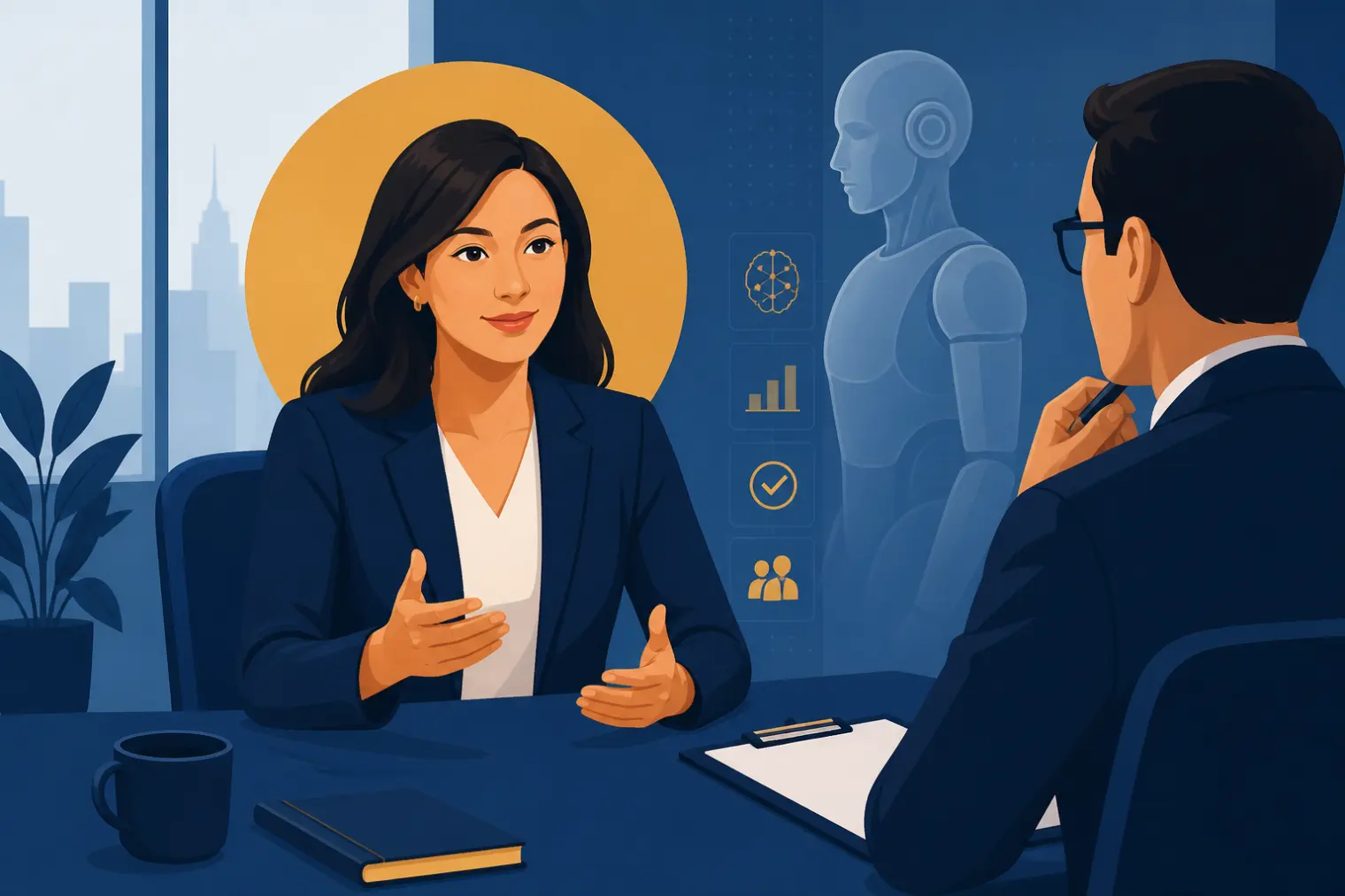
The interviewer pauses, then asks it plainly: "Honestly, why should we hire you for this when AI can already do most of what you're describing?" It's not a trick question anymore — it's becoming a standard one. Greenhouse's 2026 Candidate AI Interview Report puts the number at 63% of job seekers already interviewed by AI in some form, up 13 points in just six months, and that same pressure is spilling into how interviewers frame the classic "why you" question for human candidates too.
Most advice on this question falls into one of two failure modes: reassurance ("AI can't replicate human empathy and creativity") or doom ("your job probably isn't safe, but here's how to cope"). Both are saturated, both sound rehearsed, and neither gives you something concrete to say in the room.
Why This Question Exists Now
This isn't idle philosophizing from interviewers. Bloomberg has reported that Shopify now requires managers to explicitly justify why a task can't be done by AI before approving a new hire, and describes JPMorgan's CFO citing a "very strong bias" against headcount growth industry-wide. When that pressure exists inside a company, it doesn't stay in the budget meeting — it shows up as a question to the candidate sitting across the table, sometimes phrased gently ("how do you see AI changing this role?") and sometimes not.
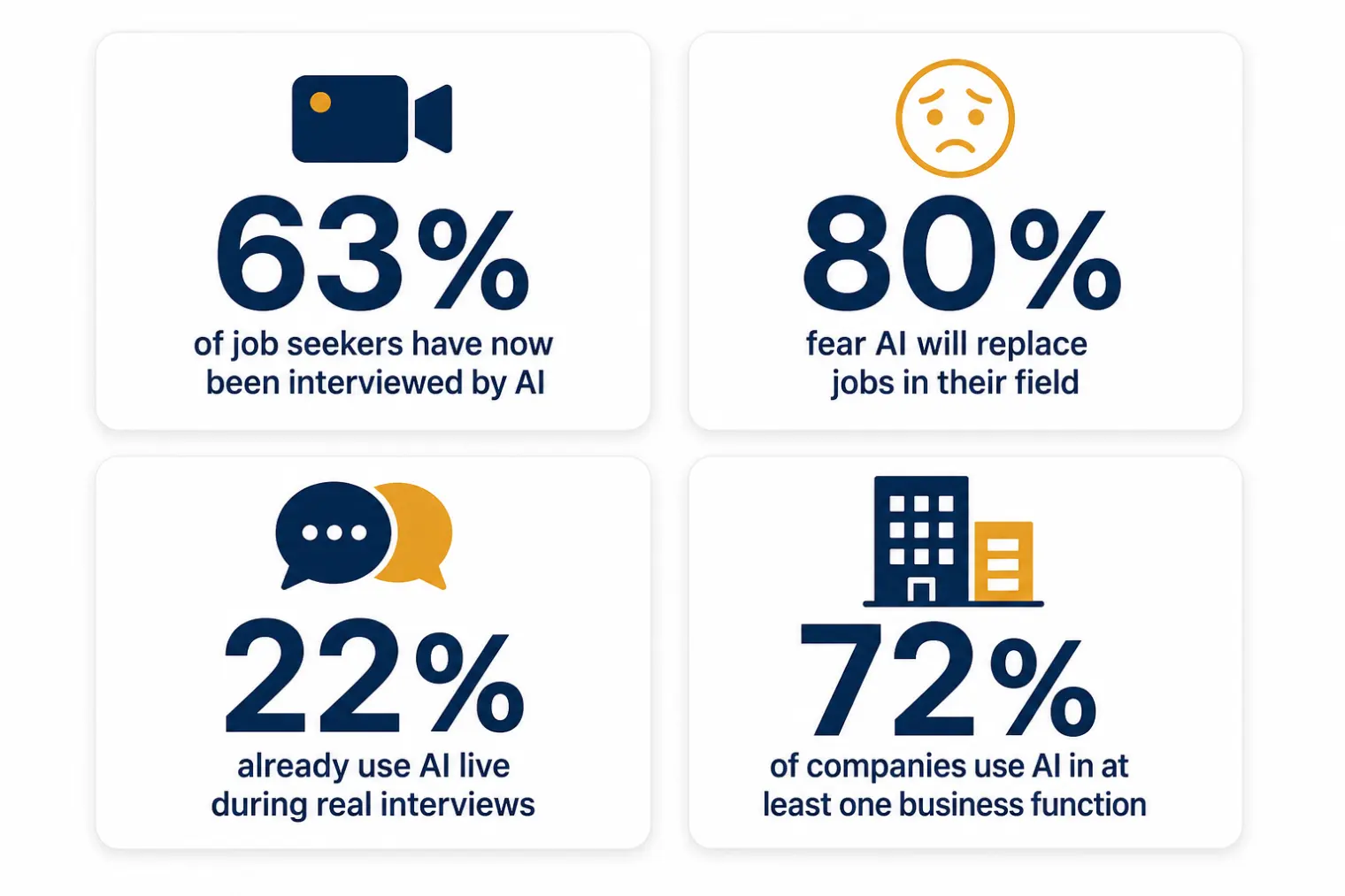
The anxiety is measurable on the candidate side too: Resume Genius's 2026 Job Seeker Insights Report found that 80% of job seekers fear AI will eventually replace jobs in their field, even as many of the same respondents admit to relying on AI tools themselves. That contradiction — fearing the tool you use daily — is exactly why generic reassurance answers fall flat. The interviewer isn't asking whether AI is scary. They're asking you to name, specifically, what you provide that AI output alone doesn't.
What the Question Is Actually Testing
Strip away the framing and this is an accountability question, not a capability question. AI can generate a draft, a recommendation, a summary, a first pass at almost anything you'd list on a resume. What it cannot do is own the outcome — sit in the room when a decision goes wrong, explain the historical context nobody wrote down, or make a judgment call under ambiguity where the "right" answer depends on organizational trust rather than pattern-matching against training data.
That's the argument to make — but only if you can back it with a specific instance, not a general claim. "AI lacks accountability" said in the abstract sounds exactly like every other answer the interviewer heard this month. The same point, anchored to one real moment, sounds like evidence.
A Structure That Actually Works
- Open with a specific moment, not a philosophy. "Last quarter I was using [tool] to draft a client proposal, and it recommended a pricing structure that technically matched the brief but would have violated a commitment we'd made to that client eighteen months earlier — something no model had context for." Fifteen seconds, concrete, verifiable-sounding.
- Name the exact gap the moment revealed. Not "AI made a mistake" — be precise: the model had no access to relationship history, no stake in the outcome, and no one to answer to if the proposal had gone out wrong. That's the accountability gap, made specific instead of abstract.
- Connect it to the role, not to AI in general. Tie the gap directly to what the job actually requires — client trust, cross-team context, judgment calls that aren't written down anywhere a model could read them.
- Close by naming your own AI fluency as part of the answer, not a confession. Resume Genius's data shows 22% of candidates already use AI live during real interviews — you don't need to hide that you use these tools daily. Saying so directly, and pairing it with the moment you caught what the tool missed, is more convincing than pretending you work AI-free.
What Not to Do
Don't lead with what AI can't do in the abstract — "AI lacks creativity, empathy, critical thinking" is the single most repeated line on this topic in 2026, and an interviewer who's heard it a dozen times this cycle will tune out before your second sentence. Don't overcorrect into anxiety either; sounding defensive about your own replaceability reads as exactly the lack of confidence the question is probing for. And don't pretend you've never used AI tools professionally — with a McKinsey-cited 72% of companies now using AI in at least one business function, claiming total non-use sounds evasive rather than reassuring.
Practice It Before You Need It
This is a question that rewards having said the words out loud before the interview, not just having thought them through. The specific-moment structure above only works if you can deliver it in under 45 seconds without sounding like you're reading a script — which usually takes two or three timed run-throughs, not zero. If you're building this out alongside other questions in the AI-literacy cluster, our guides on how to answer "how do you use AI in your work?" and what to say when you've disagreed with an AI recommendation cover the adjacent skill-and-judgment angles interviewers increasingly ask in the same round.
For live practice, AceRound AI runs mock-interview sessions where you can rehearse this exact answer under time pressure until the structure holds up without sounding memorized — which is, itself, a small demonstration of the point you're making: you already work alongside AI daily, and you know exactly where to draw the line between what it drafts and what you decide.
FAQ
Is this a real question interviewers are asking, or is it rare?
It's real and growing. Greenhouse's 2026 Candidate AI Interview Report found 63% of job seekers have now been interviewed by AI in some form, up 13 points in six months, and Bloomberg has reported that companies like Shopify now require managers to justify why AI can't do a job before approving a new hire. That pressure shows up in interview questions, even when it isn't phrased this bluntly.
Should I be honest that I use AI tools myself?
Yes. Resume Genius's 2026 survey found 22% of candidates already use AI live during real interviews, and hiding your own AI use tends to backfire if it comes up naturally later. The stronger move is naming specific tools and specific moments where you caught or corrected AI output — that's evidence of judgment, not a confession.
What's the difference between this question and "why should we hire you?"
The generic version asks you to prove fit against other human candidates. This version asks you to justify your existence against a machine that can produce similar output for a fraction of the cost — it's an identity question wrapped in a fit question, and answering it like the generic version misses what's actually being tested.
What's the one thing I should never say in this answer?
Don't lead with what AI can't do. Every interviewer has heard "AI lacks creativity/empathy/critical thinking" a hundred times this year and it reads as a script, not an argument. Lead with a specific moment where your judgment caught something AI output missed, and let the accountability point follow from that example.
Does this question mean the role is at risk of being automated?
Not necessarily — sometimes it's genuine curiosity about your self-awareness, and sometimes it reflects real internal pressure to justify headcount, as reporting on companies like Shopify and JPMorgan has described. Either way, treat it as a chance to show you understand exactly where the human check has to sit, not as an accusation to defend against.
Author · Alex Chen. Career consultant and former tech recruiter. Spent 5 years on the hiring side before switching to help candidates instead. Writes about real interview dynamics, not textbook advice.
Related Articles
OpenAI's AI Interview Policy: Banned, Required, or Team-Dependent
OpenAI sells AI coding agents, then bans most candidates from using one. Here's the round-by-round policy, including the new agentic round that flips it.
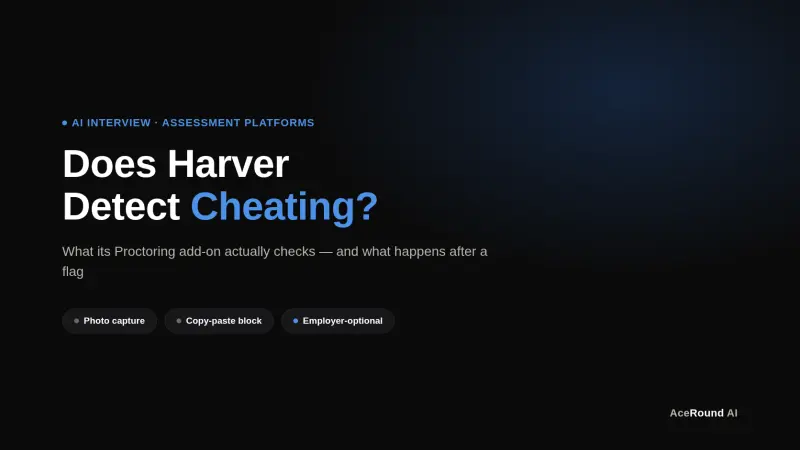
Does Harver Detect Cheating? What Its Proctoring Actually Checks
Does Harver detect cheating on its pre-employment assessments? A candidate look at Harver's Proctoring add-on, what gets logged after a flag, and what happens next.
Micro1's Zara AI Interview: What It Actually Tests (And Why Timing Gets Flagged)
Micro1's AI interviewer Zara has run 300,000+ interviews for remote roles. Here's why it flags response latency as a cheating signal, and what that means for AI prep.