Infosys HackerRank Test: SP vs DSE Coding Format, and What Comes After
What the Infosys HackerRank coding test actually looks like for SP and DSE tracks, whether it's proctored, and what the interview round after really asks.
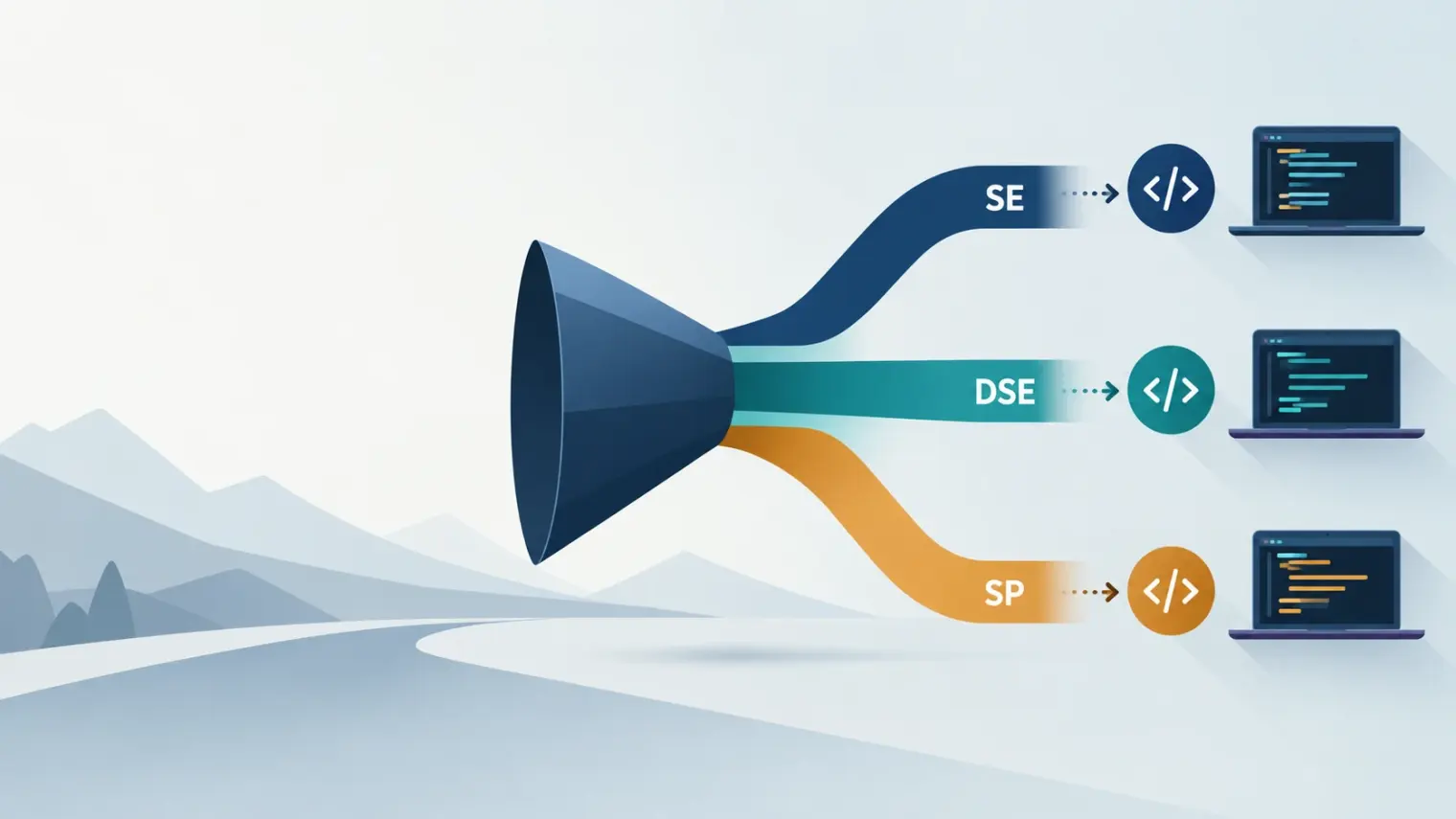
TL;DR: "The Infosys test" isn't one thing. SE, SP, and DSE are three different hiring tracks with three different bars, and most prep content flattens them into one generic "Infosys coding questions" list. SP and DSE run 2-3 HackerRank problems in about 3 hours plus a pseudo-code section; SE runs a longer combined aptitude test with much lighter coding. The round is proctored through HackerRank's standard employer-configurable stack — assume it's watched. The technical and HR interview that follows is a separate, conversational stage, and it's the one most candidates under-prepare for relative to how much it actually decides.
Infosys is running one of its largest fresher cycles in years, with HackWithInfy 2026's Grand Finale landing in November — right inside the October-to-December Placement Phase 2 window when most IT-services hiring happens. Search "Infosys HackerRank test questions" right now and what comes back is mostly static question dumps that don't distinguish which track they're written for. That's the gap this covers: what the coding round actually looks like depending on where your application sits, whether it's watched, and what happens once you clear it.
Infosys Runs Three Different Fresher Tracks, Not One Test
- SE (Systems Engineer) — the mass-recruitment track. The online test is broad rather than deep: aptitude, verbal, reasoning, a pseudocode section, and one or two lighter coding questions. Coding is not the main filter here.
- SP (Specialist Programmer) — Infosys's competitive-programming track, often sourced through the HackWithInfy contest or applied to directly. This is where the HackerRank coding round is the main event, and difficulty runs highest of the three.
- DSE (Digital Specialist Engineer) — targets AI/ML, cloud, and data roles specifically. Strong DSA is table stakes, but SQL, DBMS, and domain-specific questions get weighted in alongside it.
There's also Infosys BPM, a separate, non-technical track with a much lower coding bar — worth knowing it exists so you don't panic-prep for DSA if that's the track your application actually landed on.
The mistake nearly every generic "Infosys interview questions" list makes is treating these as one funnel. They're not. Knowing which track you're actually in changes what you should spend the next few weeks practicing.
What the SP/DSE HackerRank Round Actually Looks Like
For the SP and DSE tracks, the pattern that recurs across recent candidate reports: 2-3 coding problems on HackerRank inside roughly a 3-hour window, commonly staged as one easy problem (arrays, searching, sorting), one medium (greedy), and one hard (dynamic programming or graphs). Recent hiring cycles added a dedicated pseudo-code section on top of that — reading and reasoning about code logic without writing runnable code, which tests a different muscle than solving a fresh DSA problem. DSE candidates should also expect SQL and DBMS questions (joins, normalization, indexing) folded into the same assessment window, reflecting the data/cloud lean of that track.
This is meaningfully harder than what SE candidates see. If your application is routed to SE, the coding bar is lower and the aptitude-plus-verbal-plus-reasoning sections carry more weight; treating it like an SP-level DSA gauntlet is over-preparing for the wrong section.
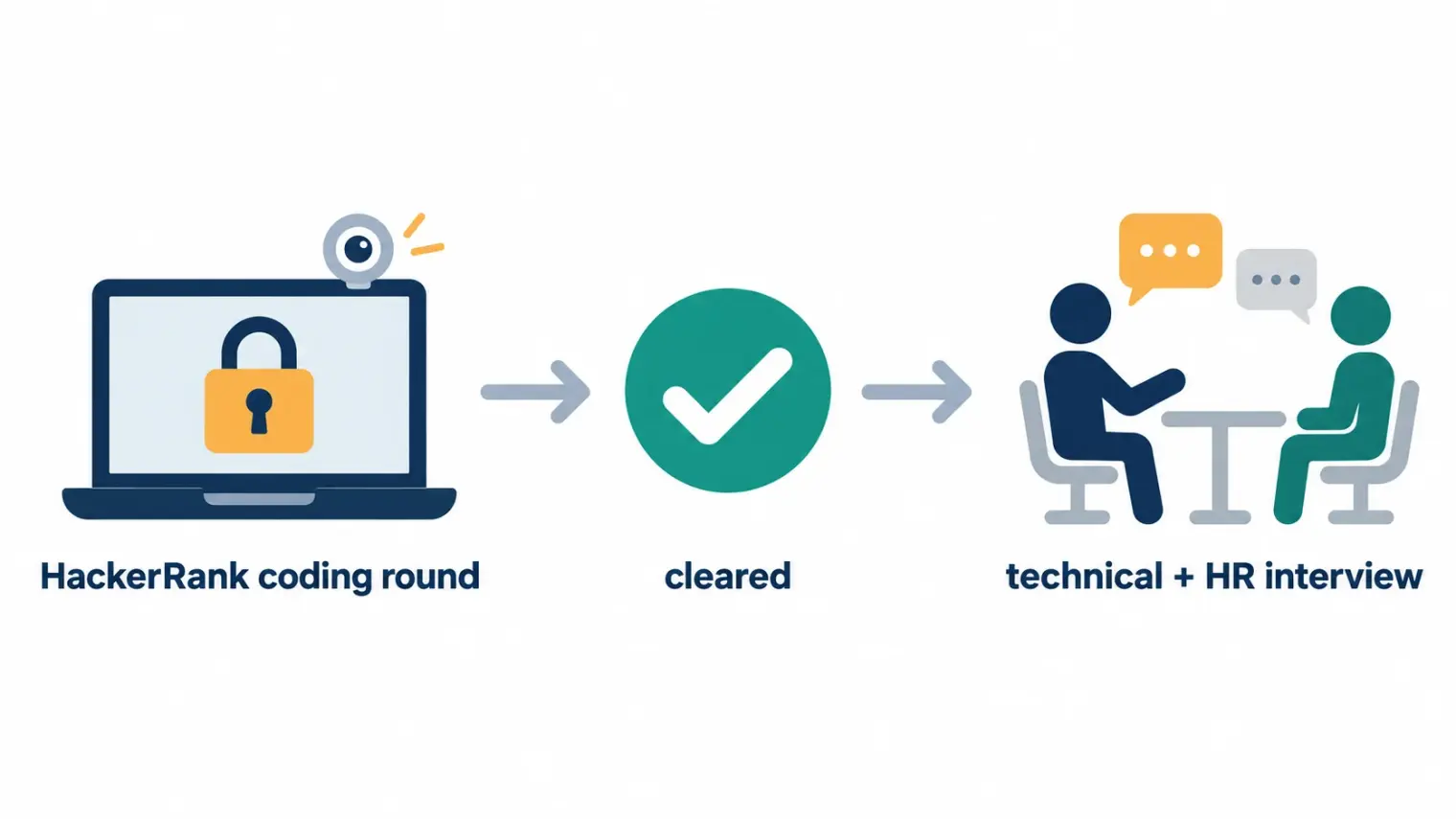
The coding round sits after the initial aptitude screen and before the technical and HR interviews — it's the DSA gate in the middle of the pipeline, not the last step.
Is It Proctored, and Does It Detect AI?
Infosys doesn't publish its own proctoring specifics, so don't take any article — including this one — as a confirmed list of exactly what's enabled on your specific drive. What's verifiable is that Infosys runs this round on HackerRank's platform, and HackerRank sells employers a layered set of options for exactly this kind of high-stakes assessment: Secure Mode (fullscreen lock, copy-paste and multi-monitor blocking, tab-switch alerts), Proctor Mode (webcam and gaze-anomaly checks), and Desktop App Mode (OS-level lockdown via a native application). On top of that, HackerRank runs its own code-similarity and AI-pattern detection across submissions — our breakdown of how HackerRank's detection actually works covers the mechanics in more depth than is useful to repeat here.
The honest takeaway: a mass fresher drive at this scale, with a coding-focused track competing for a limited number of SP/DSE seats, is exactly the kind of assessment employers configure with the stricter options turned on. Assume it's watched, not that a standard browser tab has no visibility into your session.
The Interview Round After You Clear It
Clearing the coding round routes you into 3-5 further rounds, depending on track: a technical interview built around your resume and final-year project — the follow-up questions target why you made specific technical choices, not just what you built — core CS fundamentals weighted by track (OOP and DBMS across the board, OS and networking more heavily for DSE), sometimes a live DSA follow-up question, and a closing HR round covering "why Infosys," relocation and shift flexibility, and background.
This is the stage most candidates under-prepare for relative to how much it decides. By the time you're here, everyone in the room has already cleared the same coding bar — the technical interview and HR round are where a cleared coding round either turns into an offer or doesn't, and reports from candidates suggest Infosys filters a real share of people out even at the HR stage on fit and communication, not just technical depth.
Where AI Preparation Actually Fits
The proctored coding round is not something to try to route around live — see the section above. Where preparation genuinely helps is in the two stages around it: building comfort with the format before you sit the test, and rehearsing the conversational interview round that follows it.
AceRound AI's Coding Test Copilot is built for timed practice against a format that matches a real assessment window — useful for calibrating pace against a 3-problem, 3-hour SP/DSE-style round before you're inside the real one, done entirely before test day. For the technical-plus-HR interview that follows, the mock interview mode lets you run through the verbal, think-aloud version of a project walkthrough and the CS-fundamentals follow-ups that actually get asked, so the live panel isn't the first time you've said the answer out loud. If TCS or Wipro are also in your pipeline this season, our TCS, Infosys, and Wipro interview prep guide covers how those two compare to what's above.
FAQ
What is the format of the Infosys HackerRank coding test?
For the SP and DSE tracks, candidates commonly report 2-3 coding problems on HackerRank inside a roughly 3-hour window, plus a separate pseudo-code section added to recent hiring cycles. Difficulty is typically staged easy-medium-hard: one array/searching/sorting problem, one greedy-style problem, and one DP or graph problem. The broader SE track runs a longer combined test with aptitude, verbal, reasoning, pseudocode, and only one or two lighter coding questions, so "the Infosys test" means different things depending on which track your application sits in.
What is the difference between Infosys SP and DSE for freshers?
SP (Specialist Programmer) is Infosys's competitive-programming-focused track, often fed by the HackWithInfy contest, with the highest coding bar and reported packages around 9.5 LPA. DSE (Digital Specialist Engineer) targets AI/ML, cloud, and data roles specifically, mixes strong DSA with domain and SQL/DBMS questions, and top performers have reported packages up into the low-20 LPA range. Both sit well above the mass-recruitment SE (Systems Engineer) track, which has a lower coding bar and much higher hiring volume.
Does the Infosys HackerRank test include a pseudocode section?
Recent hiring cycles added a dedicated pseudo-code section alongside the HackerRank coding problems, on top of what SE candidates already see in their combined aptitude test. It tests your ability to read and reason about code logic without writing runnable code, which is a different skill from solving a DSA problem cold, and it's one of the most commonly under-prepared parts of the process.
How hard is the Infosys HackerRank test for freshers?
It scales with track. SE's coding questions are comparatively light next to the aptitude and communication sections that dominate that track. SP and DSE are a different order of difficulty — candidates consistently describe the hard problem in the 3-question set as DP or graph-level, closer to a mid-tier competitive-programming problem than a standard placement question, and HackWithInfy itself exists specifically to surface candidates who can handle that bar.
Is the Infosys HackerRank coding round proctored, and can it detect AI use?
Infosys doesn't publish its own proctoring specifics, but it runs on HackerRank's platform, which offers layered options employers can enable: Secure Mode (fullscreen lock, copy-paste and multi-monitor blocking, tab-switch alerts), Proctor Mode (webcam and gaze checks), and Desktop App Mode (OS-level lockdown). HackerRank also runs code-similarity and AI-pattern detection on submissions. Treat a high-stakes drive like this one as actively monitored rather than assuming a standard browser test has no visibility into your session.
What does the Infosys technical interview ask after you clear the coding round?
Expect 3-5 total rounds: a technical interview built around your resume and final-year project (why you made specific technical choices, not just what you built), core CS fundamentals matched to your track (OOP and DBMS broadly, OS and networking more for DSE), sometimes a live DSA follow-up, and a closing HR round on "why Infosys," relocation flexibility, and background. Reports suggest Infosys filters out a meaningful share of candidates even at the HR stage, so generic answers cost more here than candidates expect.
Author · Alex Chen. Career consultant and former tech recruiter. Spent 5 years on the hiring side before switching to help candidates instead. Writes about real interview dynamics, not textbook advice.
Related Articles
Virtual Onsite Interview Loop: How to Survive 4-6 Back-to-Back Rounds
What a virtual onsite interview loop is, why round 4 is where candidates fall apart, and how to prepare for 4-6 back-to-back video rounds in one day.
Interviewing While Employed: How to Actually Prepare With Zero Time
Job searching while employed means near-zero prep time, not just staying discreet. Here's a 20-minute prep script, plus what the counteroffer statistics actually show.
CTC Negotiation for Freshers in India: What's Actually Negotiable
Most fresher CTC negotiation advice ignores that TCS, Infosys, and Wipro set fixed pay bands. Here's what's really negotiable, and where lowball offers hide.