Correctional Officer Interview Questions: The Full Hiring Pipeline
Correctional officer interview questions and the real 9-stage hiring pipeline, with real oral board questions and an honest map of where interview prep actually helps.
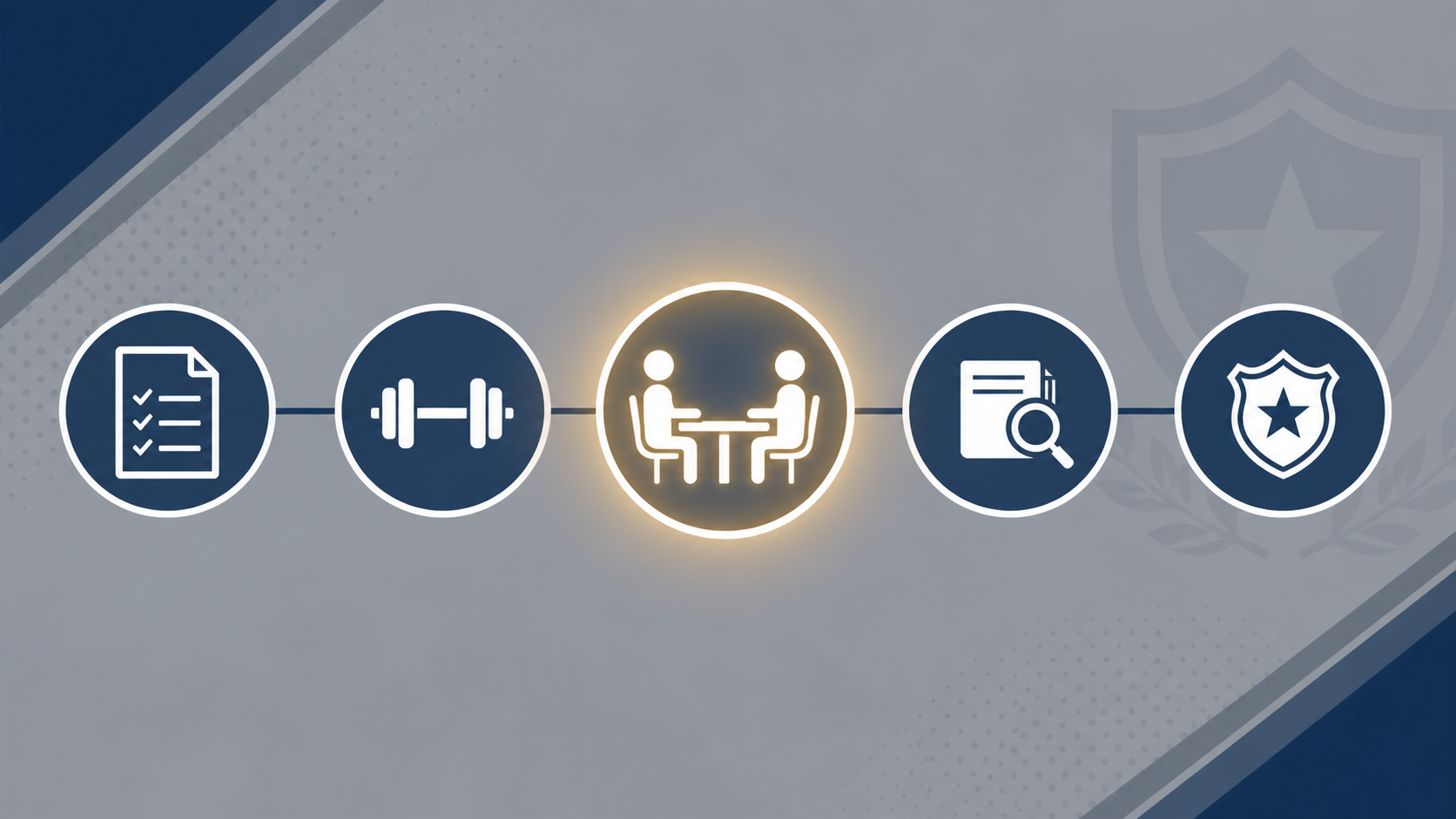
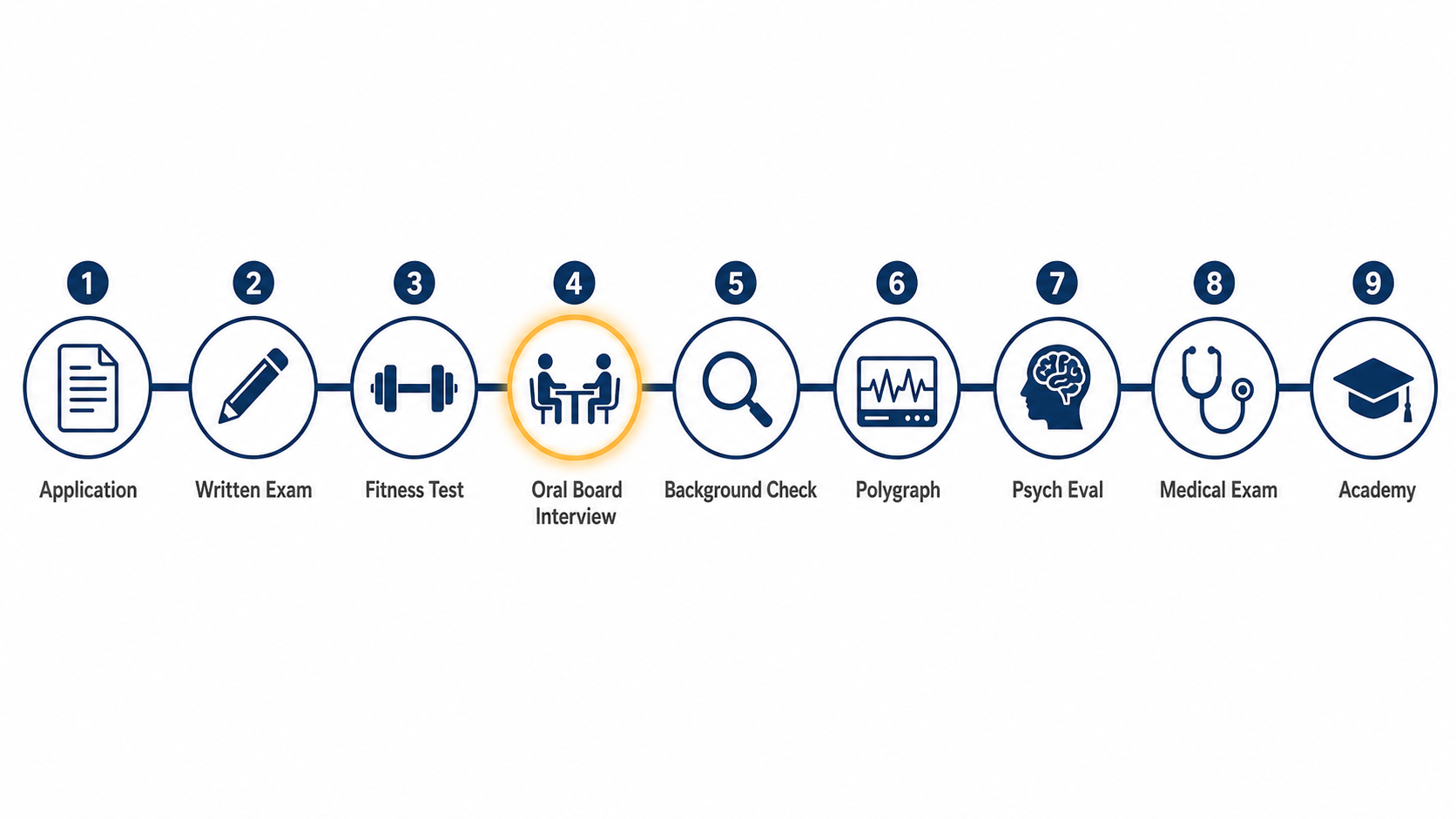
TL;DR — Correctional officer hiring isn't one interview, it's a 9-stage pipeline: application, written exam, fitness test, oral board interview, background investigation, polygraph, psych evaluation, medical exam, then the academy. The oral board is the only stage that's a conversation — and the only one where interview prep, AI-assisted or otherwise, actually applies. Everything else is a test, a file review, or a licensed exam that no amount of interview coaching touches.
Search "correctional officer interview questions" and almost every result hands you the same list: "Why do you want to be a correctional officer," "What are your strengths and weaknesses," maybe a scenario question if you're lucky. What none of them mention is that the interview is one stop on a hiring pipeline with as many as nine stages — and that knowing which stage you're actually preparing for changes what "preparation" even means.
The real pipeline, stage by stage
Cross-checking hiring pages from several state and county corrections departments turns up a consistent sequence:
- Application / minimum qualifications — age, education, and a clean enough record to not be automatically disqualified.
- Written exam — a standardized multiple-choice test, usually around an hour, testing reading comprehension and judgment rather than legal knowledge.
- Physical fitness/agility test — strength, endurance, and agility benchmarks specific to the job.
- Oral board interview — a structured panel interview, sometimes split into an early "pre-background" screen and a later final interview.
- Background investigation — a deep check of criminal history, employment history, references, and financial and personal associations.
- Polygraph examination — covering criminal history, drug use, theft, and general integrity.
- Psychological evaluation — a written test battery plus a one-on-one session with a staff psychologist.
- Medical exam and drug screen.
- Academy training — several weeks of formal training before final appointment.
Only one of those nine stages is a conversation you can prepare for the way you'd prepare for a normal job interview. The rest are exams, investigations, or clinical evaluations — and no amount of interview coaching moves a polygraph result or a background check.
That's also the honest answer to why so few applicants make it all the way through: agency estimates put full completion of the pipeline at roughly 3-4% of initial applicants. Most people don't wash out in the interview — they wash out in the background investigation or the psych eval, stages where "preparation" mostly means having a clean, consistent history rather than a good answer.
What the oral board actually asks
The oral board is the stage worth preparing for directly, and real state DOC candidate guides publish a fairly consistent format. Questions cluster into a few types:
- Motivation and self-assessment: "Why do you want to be a correctional officer?" / "What are your strengths and weaknesses?"
- Facility-specific: some agencies run a mandatory facility tour before the interview and then ask directly, "What did you think of the facility tour?"
- Scenario/situational: "How would you handle an inmate who refuses a direct order?" / "How would you de-escalate a physical altercation between two inmates?"
- Integrity: "Tell me about a time you faced an ethical dilemma at work and how you resolved it." / "What would you do if you saw a coworker violating policy?"
- Stress tolerance and teamwork: "Tell me about a time you had to stay calm under significant pressure." / "How well do you work with officers you don't get along with?"
One detail candidates consistently underestimate: several official guides note that panels draw follow-up questions directly from your own background investigation file. If your background check flags something, expect the panel to ask about it specifically — a generic answer prepared in advance won't cover a question about your own history.
Where AI interview prep actually helps — and where it structurally can't
It's worth being blunt about this rather than implying a tool can help you "pass" the whole process. An AI interview assistant like AceRound listens during a live conversation and surfaces quick prompts — useful for exactly one stage here: the oral board, where you're being scored on how you communicate under a panel's scrutiny in real time. It has no relevance whatsoever to the written exam (a proctored test), the fitness test (a physical benchmark), the polygraph (a compliance instrument), the background investigation (a records check), or the psych evaluation (a licensed clinician's assessment). If you're weighing whether that kind of help even makes sense for your interview format, the same logic applies across other public-safety hiring pipelines and physically demanding roles — the interview is one stage, and treating it as the whole process is the most common preparation mistake.
If you're further along and specifically prepping for a scenario-heavy panel format, EMT and paramedic interviews use a similar structured-scenario approach worth reviewing for technique, even though the subject matter is different.
FAQ
What questions are asked in a correctional officer interview? A mix of motivation questions (why do you want this job, what are your strengths and weaknesses), integrity questions (tell me about an ethical dilemma, what would you do if a coworker broke policy), scenario questions (an inmate refuses a direct order, two inmates start fighting), and stress-tolerance questions (staying calm under pressure, working with people you don't get along with). Panels often ask follow-ups tied to your own background investigation file.
How many stages are in the correctional officer hiring process? Typically nine: application screening, a written exam, a physical fitness test, an oral board interview, a background investigation, a polygraph exam, a psychological evaluation, a medical exam, and academy training. Some agencies split the interview into an early pre-background screen and a later final interview, making it ten.
What percentage of correctional officer applicants actually get hired? Only a small fraction. Industry estimates put full completion of the pipeline — clearing the exam, fitness test, interview, background check, polygraph, and psych eval — at roughly 3-4% of initial applicants, which is why agencies budget for high attrition at every stage rather than just the interview.
Can an AI interview assistant help you prepare for a correctional officer interview? Only for the oral board stage — the one part of the pipeline that's verbal, scenario-based, and about communication under a panel's scrutiny. It has zero relevance to the fitness test, polygraph, background investigation, psych evaluation, or medical exam, because none of those are conversations you can be coached through in the moment.
What's the hardest part of the correctional officer hiring process? For most candidates it's not the interview itself — it's the background investigation, which digs into criminal history, financial records, past employment, and personal associations, and disqualifies the largest share of applicants. The interview is the one stage where preparation reliably moves the needle; the background check mostly depends on what's already true about your history.
Do correctional officer interview panels really ask about your background file? Yes. Several state DOC guides note explicitly that oral board questions are drawn in part from each candidate's own background investigation, so expect specific follow-ups about your history rather than only generic behavioral questions.
Author · Alex Chen. Career consultant and former tech recruiter. Spent 5 years on the hiring side before switching to help candidates instead. Writes about real interview dynamics, not textbook advice.
Related Articles

Actuary Interview Questions: Where an AI Copilot Helps and Where Exams Still Decide
Real actuary interview questions — behavioral, technical, and brain teasers — plus an honest look at where live AI interview help applies and where SOA/CAS exams remain the real gatekeeper.
EMT & Paramedic Interview Questions Decoded
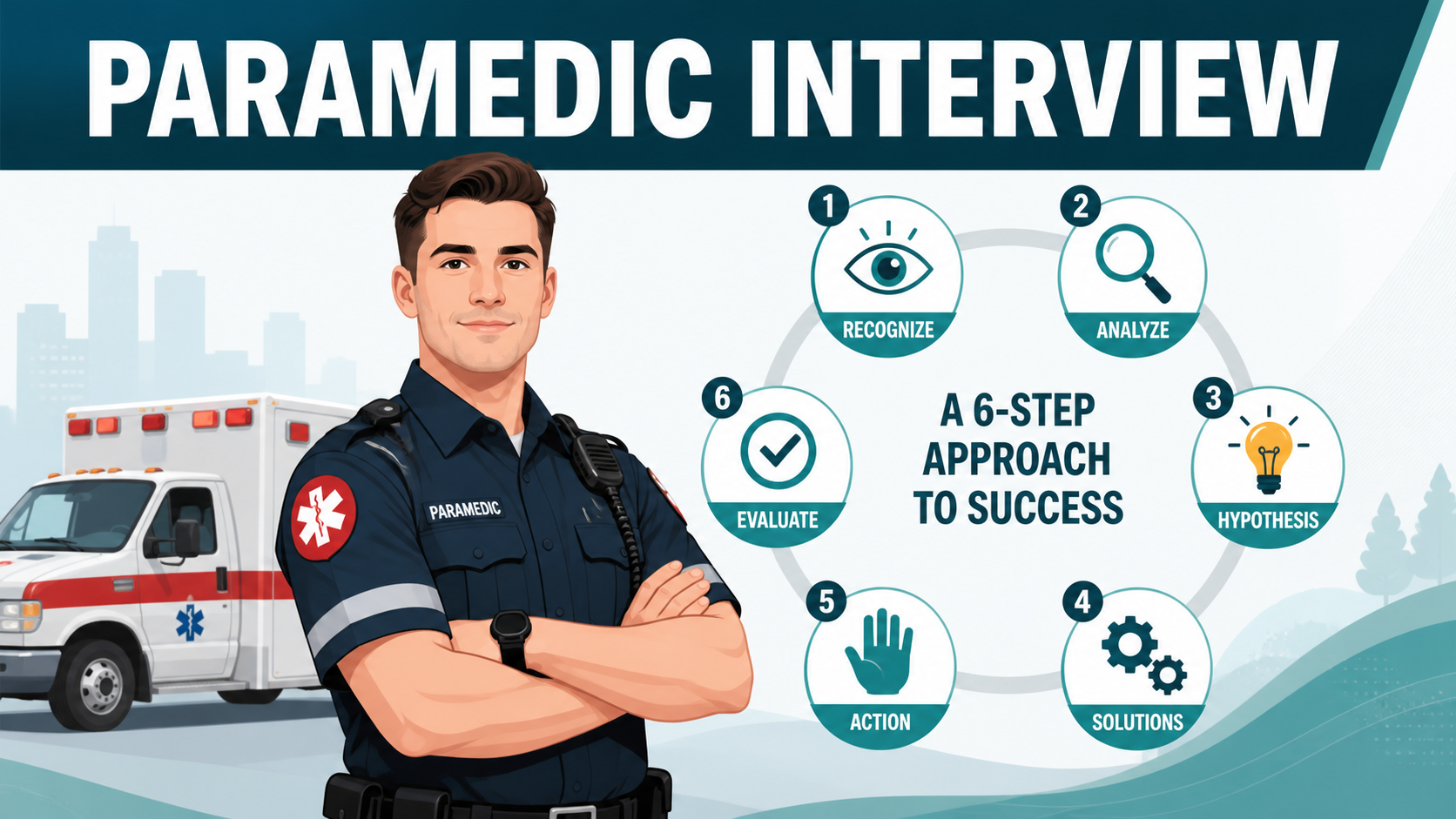
EMT and paramedic interview questions decoded: the clinical-judgment framework hiring panels are really scoring, with sample scenario answers.

US Remote Interview Tips for Candidates in India and the Philippines
US company remote interview tips for candidates in India and the Philippines: timezone math, connectivity backup plans, and what US interviewers actually score.