How Do You Handle Ambiguity? The Interview Answer That Actually Works
Answer 'how do you handle ambiguity' with a Clarify-Frame-Decide-Communicate framework, plus sample answers for tech, consulting, and startup roles.

TL;DR: When an interviewer asks how you handle ambiguity, they're testing whether you can move a project forward without a full brief — not whether you like uncertainty. The strongest answers use a simple four-step structure: Clarify what you can, Frame 2-3 possible approaches, Decide and state your reasoning, then Communicate progress before you're asked. Skip the "I'm comfortable with change" cliché and give one specific story instead.
Amazon's official "Bias for Action" leadership principle tells interviewers to reward candidates who move forward "even in the face of ambiguity" rather than waiting for perfect information. Google has spent over a decade hiring for what former SVP of People Ops Laszlo Bock called "Googleyness," which explicitly includes comfort with ambiguity as a scored trait. If two of the most selective employers on earth name this as a formal hiring criterion, it's not a throwaway question — it's one interviewers are trained to weight heavily.
Most candidates answer it badly anyway. They either freeze up trying to recall a "big enough" example, or they give a vague reassurance like "I'm a flexible person who thrives under pressure" that tells the interviewer nothing about how they actually operate. This guide fixes both problems.
Why "How Do You Handle Ambiguity" Is a Named Hiring Competency
This isn't a generic personality question — at several major employers it's a scored, documented criterion.
Amazon ties ambiguity directly to its Bias for Action leadership principle: "Speed matters in business... we value calculated risk taking." Amazon interviewers are instructed to probe for candidates who made defensible decisions with incomplete data, not candidates who escalated until someone else decided for them.
Google built ambiguity tolerance into what it internally calls "Googleyness" — a scored dimension in its structured interview process that looks for comfort operating without a fixed playbook, because most roles at Google involve genuinely undefined problems, not documented procedures.
McKinsey and other consulting firms use ambiguity as a core screen in the Personal Experience Interview, because client engagements routinely start with an underspecified problem statement that the consultant has to shape before they can solve it.
The reason interviewers care isn't abstract. Organizational psychologists have studied "tolerance of ambiguity" as a workplace trait since the 1960s, and the research consistently links it to better performance in roles with high uncertainty — see this peer-reviewed review in PMC on the construct. In practice, interviewers are trying to predict one thing: will you stall out or make a defensible call when the brief is incomplete?
The Clarify → Frame → Decide → Communicate Framework
Generic "use the STAR method" advice doesn't tell you what to actually say when someone asks "tell me about a time you dealt with ambiguity." You need a structure specific to this question, layered inside STAR.
1. Clarify — Before acting, what did you do to reduce uncertainty that was cheap to reduce? This might be one clarifying question to a manager, a quick look at existing data, or a five-minute conversation with someone closer to the problem. Skipping this step makes you look reckless, not decisive.
2. Frame — Name two or three plausible approaches, briefly. This shows the interviewer you didn't just guess — you considered real alternatives before picking one.
3. Decide — Pick one approach and state why, in one sentence. The reasoning matters more than the choice itself. Interviewers aren't grading whether you picked the "right" option in hindsight; they're grading whether your reasoning was sound given what you knew.
4. Communicate — Describe how you kept stakeholders updated as new information appeared, rather than disappearing until the work was done. This is the step candidates skip most often, and it's the one that separates "handled ambiguity well" from "got lucky."
Wrap this inside a standard STAR shape — Situation (1 sentence), then the four steps above as your Action, then Result (with a number or observable outcome if you have one). Target 90–120 seconds spoken, and practice it out loud before the interview, not just in your head — the words that sound fine in your head often come out clunky the first time you say them aloud.
Sample Answers by Role Type
Ambiguity means something different depending on the job. Generic answer banks give one example for every role, which is why they sound rehearsed. Match your story to the kind of ambiguity the role actually involves.
Big Tech / Product Engineering (undefined scope)
"I was asked to 'improve onboarding' with no metric attached and two competing stakeholder opinions about what 'better' meant. I clarified by pulling our existing funnel data instead of asking product for a spec — it showed a 40% drop at account verification, which nobody had flagged. I framed two options: redesign verification, or add a progress indicator as a cheaper first test. I decided to ship the progress indicator first because it was a one-week build versus a six-week redesign, and I could validate the hypothesis before committing more engineering time. I posted a two-line update in our team channel after each daily check of the metric. Drop-off fell 12% in the first week, which justified the larger redesign afterward."
Consulting / Case-Driven Roles (underspecified problem)
"A client engagement opened with 'we need to grow revenue' — no target, no timeline, no agreed definition of which business unit. I clarified scope in the first working session by asking the sponsor to rank three candidate business units by urgency rather than asking them to define the whole strategy upfront. I framed three angles: pricing, channel expansion, and retention. I decided to start with retention because the data we already had access to could validate it within a week, versus months of new data collection for the other two. I sent the sponsor a one-page framing memo before our next meeting instead of waiting to be asked for one. That framing became the structure for the rest of the engagement."
Startup / Early-Stage (no playbook, resource-constrained)
"We had one week before a demo and no clear owner for a broken integration — the two engineers who knew it best had just left. I clarified by reading the last three months of related Slack threads instead of waiting for a handoff doc that didn't exist. I framed two options: patch the existing integration or rebuild the thin slice we actually needed for the demo. I decided to rebuild the thin slice, because patching a system I didn't fully understand under time pressure felt like the riskier bet, not the safer one. I gave the founder a daily two-line status update so there were no surprises going into demo day. We shipped a working (if narrower) version on time."
What Interviewers Are Actually Scoring
Interviewers listening to an ambiguity answer are typically scoring three things, whether or not they say so out loud:
- Did you reduce uncertainty cheaply before acting, or did you either freeze waiting for a full brief, or charge ahead without checking anything cheap first?
- Was your reasoning explicit, or did you just describe an outcome without explaining why you chose that path over the alternatives?
- Did you keep people informed, or did you go dark and reappear with a finished result, leaving stakeholders unable to redirect you if your assumption was wrong?
Common mistakes that tank this answer: claiming you "love ambiguity" with no concrete example (reads as a rehearsed platitude), describing a situation where you actually had a clear brief and just call it "ambiguous" for the story's sake, or picking an example where things went badly with no reflection on what you'd do differently.
Practicing This Answer Out Loud
The gap between a good ambiguity story on paper and a good one delivered live is bigger than most candidates expect — under interview pressure, people default to vague reassurance ("I just stay flexible") instead of the specific Clarify-Frame-Decide-Communicate structure they planned. Rehearsing out loud, ideally with follow-up questions thrown at you the way a real interviewer would, is what closes that gap. AceRound runs live mock-interview sessions with real-time follow-ups, so you can hear how your ambiguity story actually lands — and tighten it — before it counts. It's not a replacement for having a real story; it's a way to make sure the story you have comes out as clearly live as it does in your head.
For related behavioral prep, see our guides on answering "tell me about a time you made a mistake" and general behavioral interview questions.
Frequently Asked Questions
"What steps do you take to clarify ambiguous instructions from a supervisor?"
Ask one specific, low-cost clarifying question rather than a broad "can you explain more?" — for example, "should I prioritize speed or completeness here?" narrows the ambiguity without requiring your manager to write a full spec. If you can't get an answer quickly, make a reasonable assumption, state it explicitly to your manager, and proceed.
"How do you balance taking initiative with waiting for more information?"
Reduce the uncertainty that's cheap to reduce first (a quick question, existing data, a short conversation), then act on what remains. Waiting for complete information before every action is itself a failure mode interviewers are screening for — the goal is a defensible decision with incomplete data, not a perfect one.
"What's a good story if I've never had a dramatic, high-stakes ambiguous situation?"
You don't need a dramatic story. A small example — an undefined task, a vague brief, a project with no clear owner — works fine as long as you can walk through Clarify, Frame, Decide, and Communicate specifically. Interviewers are scoring your process, not the size of the crisis.
"Should I use a technical example or a cross-functional/people example?"
Match it to the role. For individual-contributor technical roles, a technical-decision example usually lands better. For staff/principal or people-manager roles, a cross-functional example demonstrates the organizational-ambiguity skill the role actually requires. If you're unsure which the interviewer wants, a cross-functional example is the safer default for senior roles.
"Is it okay if my decision under ambiguity turned out to be wrong?"
Yes — outcome isn't the main thing being scored. If your decision didn't pan out, say so plainly, explain what new information surfaced, and describe what you did next. A candidate who made a reasonable call, adjusted when new information appeared, and communicated the change is a stronger signal than a story where everything worked out but you got lucky.
"How is 'comfortable with ambiguity' different from just being flexible?"
Flexibility is about adapting when plans change. Ambiguity tolerance is about acting before there's a plan — moving a project forward when the goal itself, not just the method, is still underspecified. Interviewers who ask this question specifically want evidence of the latter.
Author · Alex Chen. Career consultant and former tech recruiter. Spent 5 years on the hiring side before switching to help candidates instead. Writes about real interview dynamics, not textbook advice.
Related Articles

The Amazon Bar Raiser Interview: What They Actually Do (2026 Guide)
Amazon's Bar Raiser interview explained: what the role actually is, how the veto really works, how Amazon selects Bar Raisers, and how to prepare for one.
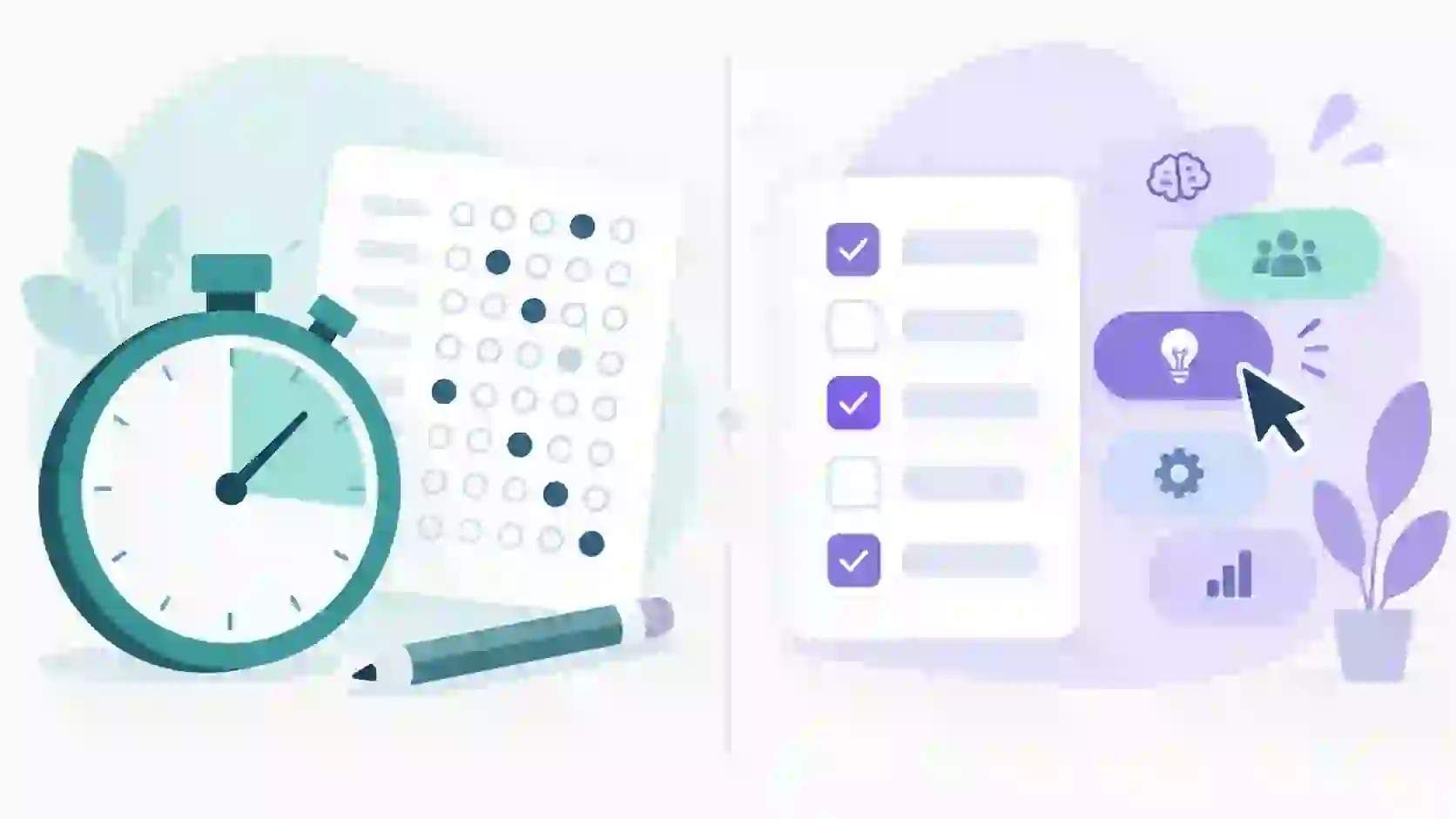
Predictive Index Test: How to Actually Prepare for the PI Cognitive and Behavioral Assessment
The Predictive Index test is really two assessments. Here's what the 12-minute Cognitive test and the untimed Behavioral checklist actually measure, score, and allow.
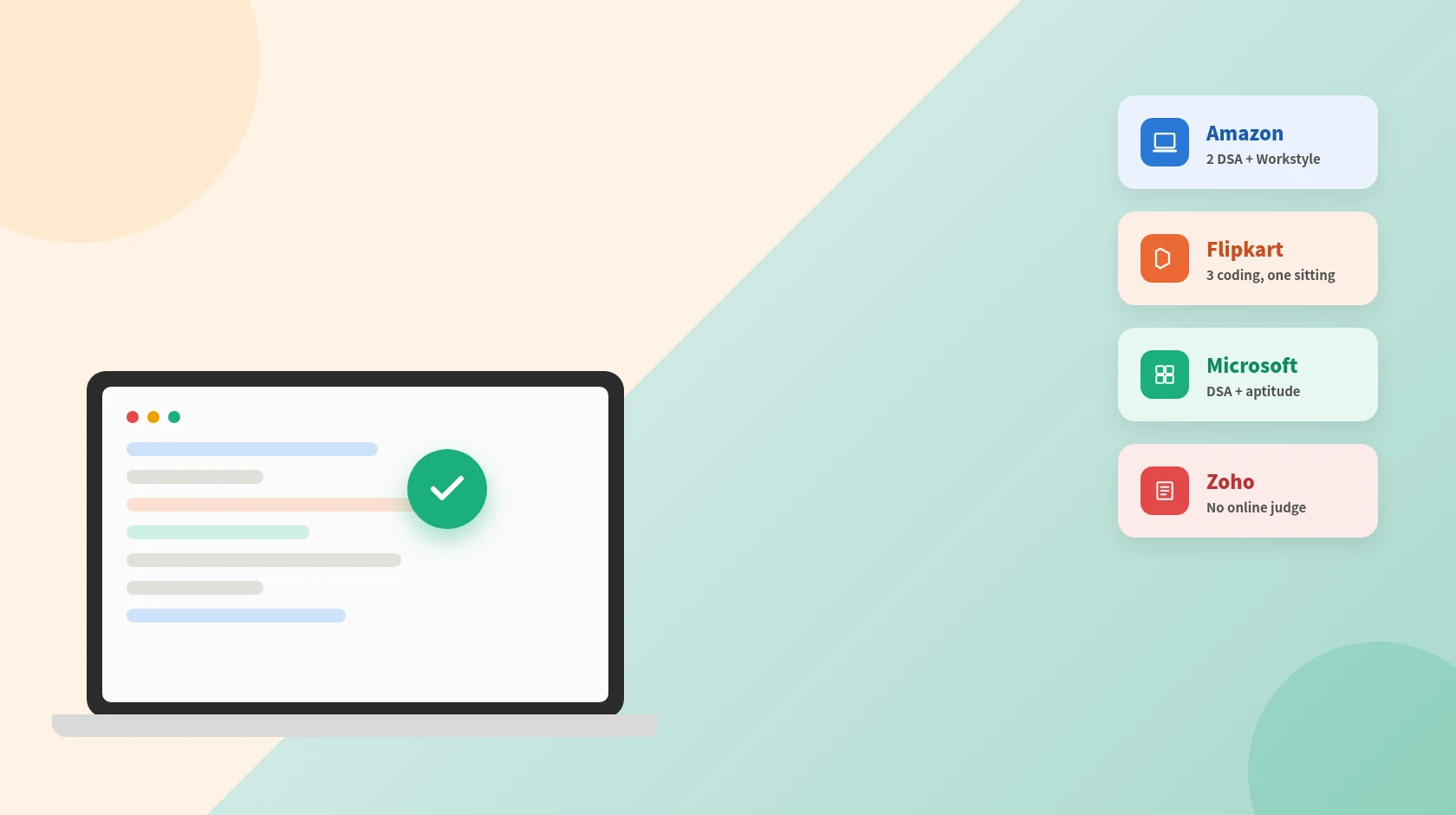
Off-Campus OA Prep for Product-Based Companies: Amazon, Flipkart, Microsoft, and Zoho Compared
Amazon, Flipkart, Microsoft, and Zoho run off-campus OA very differently. Here's what each one actually tests, and how to prepare for the one you'll face.