How Indian IT Professionals Can Use AI Interview Assistants to Land US Tech Roles
India's AI/ML hiring surged 49% in 2026, but US interview formats require different preparation. Here's how to use an AI interview assistant to bridge the gap.
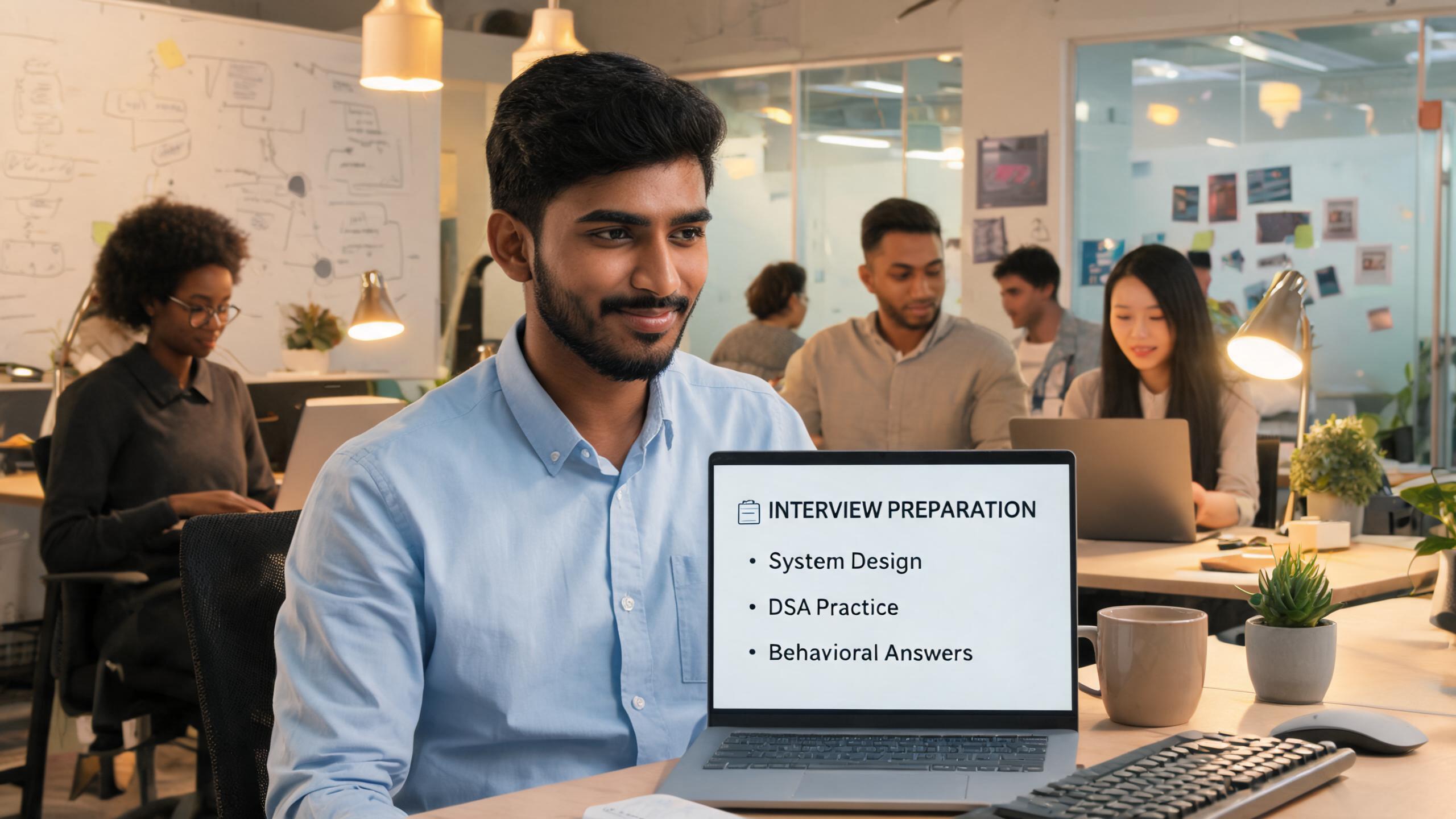
TL;DR: An interview AI assistant built for India's job market helps bridge the gap between domestic mass-hiring formats (TCS/Infosys aptitude rounds) and US company behavioral interviews. The biggest barrier isn't technical skill — it's cross-cultural framing and spoken English fluency under pressure. Real-time AI assistance can close that gap during live interviews.
India's white-collar hiring rose 12% year-over-year in early 2026, and AI/ML roles specifically surged 49% — with Indian MNCs growing their AI hiring by 82% in a single year (Naukri JobSpeak Index, Feb 2026). The job market is genuinely hot. And yet only 6.8% of Indian engineers can respond spontaneously in fluent spoken English, according to industry assessments. That specific gap — not skill, not knowledge, but real-time English communication under pressure — is where most US company interviews go wrong for otherwise qualified Indian candidates.
This guide covers how an interview AI assistant specifically addresses the India-to-global-tech pipeline, what to look for in a tool, and why the standard "generic AI interview prep" advice misses the mark for this market.
The Two Interview Worlds Most Articles About India IT Ignore
India has two entirely separate hiring tracks that require almost no overlap in preparation:
Track 1: Mass domestic hiring (TCS, Infosys, Wipro, Cognizant)
- NQT aptitude test: quantitative reasoning, verbal, logical reasoning, coding
- 1–2 easy DSA problems in a coding round
- HR interview: "Tell me about yourself," career goals, salary expectations
- Written essays (Wipro NLTH model)
- Processing thousands of candidates per cycle
Track 2: Global / FAANG / US startup hiring
- HackerRank or CodeSignal OA with medium-to-hard algorithmic problems
- System design round for senior roles
- 3–5 behavioral interviews using the STAR method (Situation, Task, Action, Result)
- Culture-fit deep dives with evidence-based storytelling
- Individualized multi-round process over weeks
Most India-facing interview prep content conflates these two tracks. An article about "TCS NQT preparation" is almost useless if your goal is a software engineering role at a US startup or a FAANG interview. The format, evaluation criteria, and communication style are completely different.
An interview AI assistant India candidates can use during global-track interviews is not the same tool you'd use for NQT aptitude prep. You're preparing for a completely different evaluation system.
The Spoken English Problem That Indian IT Interviews Face
Here's the honest version: spontaneous, fluent spoken English is a genuine differentiator in US-style interviews, and most preparation for Indian candidates underweights it.
The issue isn't vocabulary or grammar — Indian engineers often write and read English exceptionally well. The gap is in live, unrehearsed spoken response under interview pressure. Translating a technical achievement into a clear 90-second STAR story while maintaining eye contact and sounding confident is a different skill from writing about the same achievement on a resume.
Where an AI interview assistant helps here:
- Real-time answer prompting: When your mind blanks on "Tell me about a time you disagreed with your team lead," having a structured prompt appear on screen breaks the freeze
- STAR structure scaffolding: Tools like AceRound AI generate STAR-structured answers tailored to your resume and the job description — if you're unfamiliar with the STAR framework, our STAR method interview guide covers the structure in depth
- Mock practice with instant feedback: Repeated practice in realistic conditions builds the habit of speaking in structured English under simulated pressure
The goal isn't to read from a script — it's to reduce the cognitive load enough that your actual knowledge comes through clearly.
How to Translate Indian Project Experience into US Interview Language
This is the practical skill gap that almost no article addresses. Indian IT professionals typically describe their work in process terms. US interviewers evaluate impact terms.
Common Indian framing: "I worked on a large-scale banking project for HDFC with a team of 15 developers. We used Java Spring Boot and Oracle DB to build the transaction processing module."
US interview framing that lands: "I built the transaction processing module for a core banking system — specifically redesigned the database query layer that was creating 400ms latency spikes. After my changes, transaction processing time dropped to under 80ms for 99th-percentile loads, and the client's support tickets for timeout errors fell by 60% in the next quarter."
Same project. Completely different framing. The second version answers the question every US interviewer actually cares about: what did you specifically do, and what was the measurable outcome?
An interview AI assistant can help you find this framing on the fly. When you describe your project context into the tool before an interview, it can generate impact-framed answers based on your specifics — not generic templates.
FAANG Interview Preparation India: What Actually Differs
If you're preparing for FAANG or US startup interviews from India, these three areas deserve disproportionate attention compared to domestic Indian IT prep:
1. Behavioral interview depth US behavioral interviews go 3–4 levels deep with follow-up questions. "Tell me about a time you failed" will be followed by "What would you do differently?" and "How did that change your approach afterward?" Indian HR interviews rarely probe this deeply. Practice going beyond the initial answer.
2. System design calibration US system design expectations are highly calibrated by level. L4 Google and L5 Google require completely different depth. Indian candidates often either over-prepare (covering distributed systems for L4 roles) or under-prepare (treating system design as optional for senior roles). Understand your target level's expectations explicitly.
3. Culture-fit evaluation US companies, especially startups, evaluate cultural fit as a primary signal — not just competence. Questions like "What do you look for in a manager?" or "Describe a company culture where you thrive" are real data-gathering, not formalities. Indian candidates who treat these as throwaway questions often lose otherwise winnable offers.
Using an AI Interview Assistant for India's Global-Track Market
When evaluating interview AI assistant India options, look for these specific capabilities:
Real-time live assistance: The tool should work during the actual interview, not just in practice sessions. Real-time assistance during a live Zoom or Google Meet interview is what helps you when the pressure is highest and your most careful preparation doesn't cover the specific question asked.
STAR method generation from your resume: The tool should generate tailored behavioral answers based on your actual experience — not generic "here's how to structure a STAR answer" advice. You need it to pull from your specific projects and achievements.
Behavioral question coverage: Many tools focus exclusively on technical/coding interviews. For India-to-US-company interviews, behavioral rounds are often the deciding factor for candidates who've already cleared the technical screen.
Cross-platform desktop app: A browser-only tool is more likely to show on screen sharing. Desktop apps running at the OS level are harder to detect and more reliable in terms of audio capture.
AceRound AI covers all of these: real-time answer suggestions during live interviews, STAR-structured behavioral responses, and a desktop app for both Mac and Windows. At ₹1,299/month on India pricing (the US price is $39.90), it's significantly more accessible than US-priced alternatives that charge $149/month.
AI Interview Tool India: Detection Risk and What It Means for You
The 2026 data on AI interview assistance is more concrete than most articles acknowledge: 38.5% of candidates across 19,368 live interviews were flagged for AI assistance, according to Fabric's primary research. In technical roles, that figure hits 48%. For a full breakdown of how detection works, see our article on whether online interviews can detect cheating.
What this means practically:
- Using AI assistance during screening rounds for large tech companies (especially FAANG) carries real detection risk
- The risk is higher for technical rounds than behavioral rounds
- Behavioral eye-gaze patterns (looking consistently to the side, mechanical response pacing) are now behavioral biometric signals
- Coding-round assistance that generates exact code completions is higher-risk than real-time answer framing assistance
The honest framing: an interview AI assistant is most valuable as a preparation tool (mock practice, STAR answer development) and most risk-appropriate when used for behavioral rounds rather than automated technical assessments. Using AI assistance for live technical OAs is a different risk profile than using it for a Zoom behavioral interview at a startup.
For most Indian candidates navigating their first US-style interview cycle, the practice and preparation use case alone — particularly spoken English behavioral practice with feedback — justifies the tool.
FAQ
Is an AI interview assistant useful if my English is strong?
Yes — because the bottleneck usually isn't vocabulary, it's structure under pressure. Even fluent English speakers blank on STAR structure during live interviews. Real-time prompting helps you maintain the right structure when nerves interfere.
What's the difference between using AI for TCS/Infosys prep vs. US company prep?
For TCS/Infosys/Wipro aptitude rounds, AI tools are most useful for aptitude question practice. For US company interviews, the value shifts entirely to behavioral interview coaching, STAR method generation, and spoken English fluency practice.
Can I use AceRound AI during a video interview on my Indian internet connection?
AceRound runs as a desktop app with local audio processing, so it's less sensitive to connection bandwidth than browser-based tools. Standard broadband (15Mbps+) is sufficient.
Are Indian candidates at a disadvantage in FAANG behavioral interviews?
Not inherently — but the format mismatch is real. Indian domestic interviews don't train candidates in the depth of evidence-based behavioral storytelling that FAANG expects. That's a prep gap, not a skill gap. It closes quickly with deliberate practice.
How many rounds should I expect for a US startup vs. FAANG interview?
US startups: typically 3–4 rounds over 1–2 weeks (recruiter screen → technical screen → system design or case → founder/culture fit). FAANG: 5–7 rounds in a structured onsite or virtual loop, usually completed in one day, with separate evaluation committees.
What should I prioritize in the last 2 weeks before a US company interview?
Behavioral interview depth (practice going 3 questions deep on each story), system design calibration for your target level, and spoken fluency practice under timed conditions. Technical review matters less than you think if you've already cleared the OA.
Author · Alex Chen. Career consultant and former tech recruiter. Spent 5 years on the hiring side before switching to help candidates instead. Writes about real interview dynamics, not textbook advice.
Related Articles
Does TCS iON Detect AI or Cheating During the NQT Exam?
Does TCS iON detect AI during the NQT? What its remote proctoring monitors, and why the interview round after is a safer, prep-friendly stage.

Does BrightHire Record You? Yes — Here's What It Captures (2026)
Does BrightHire record your interview? Yes — video, audio, and an AI transcript, now part of Zoom since its 2025 acquisition. What's captured and how to opt out.
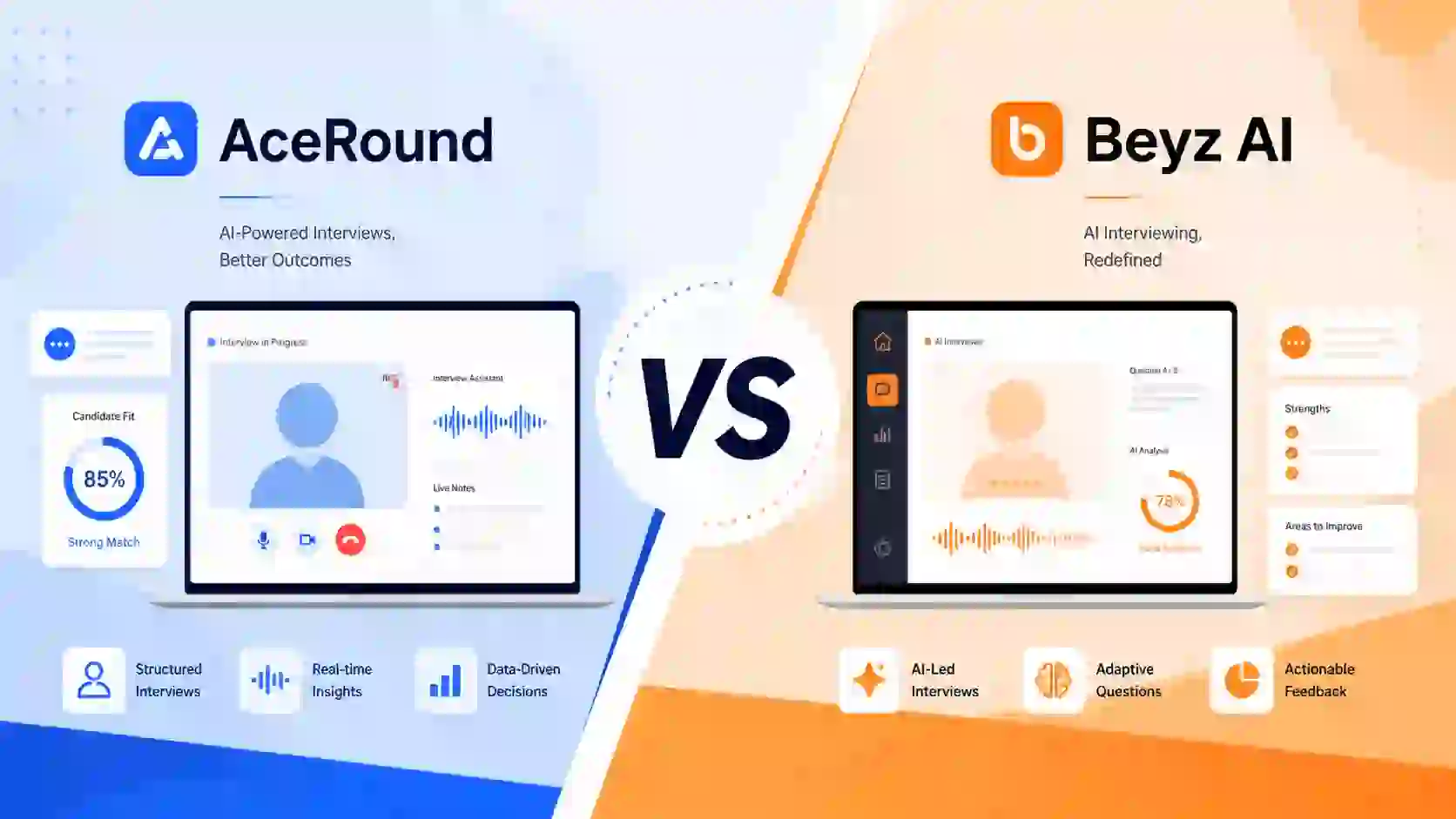
AceRound vs Beyz AI: Which Real-Time Interview Copilot to Trust?
AceRound vs Beyz AI compared: architecture, the pricing trap behind Beyz's $24.99 headline rate, a dedicated Beyz-detection tool, and unverified ratings.