Anthropic's AI Interview Policy Explained: Where Claude Is Banned, Where It's Required
Anthropic makes Claude, then bans it from most of its own interview. Here's the stage-by-stage AI policy, and why the take-home test keeps changing.
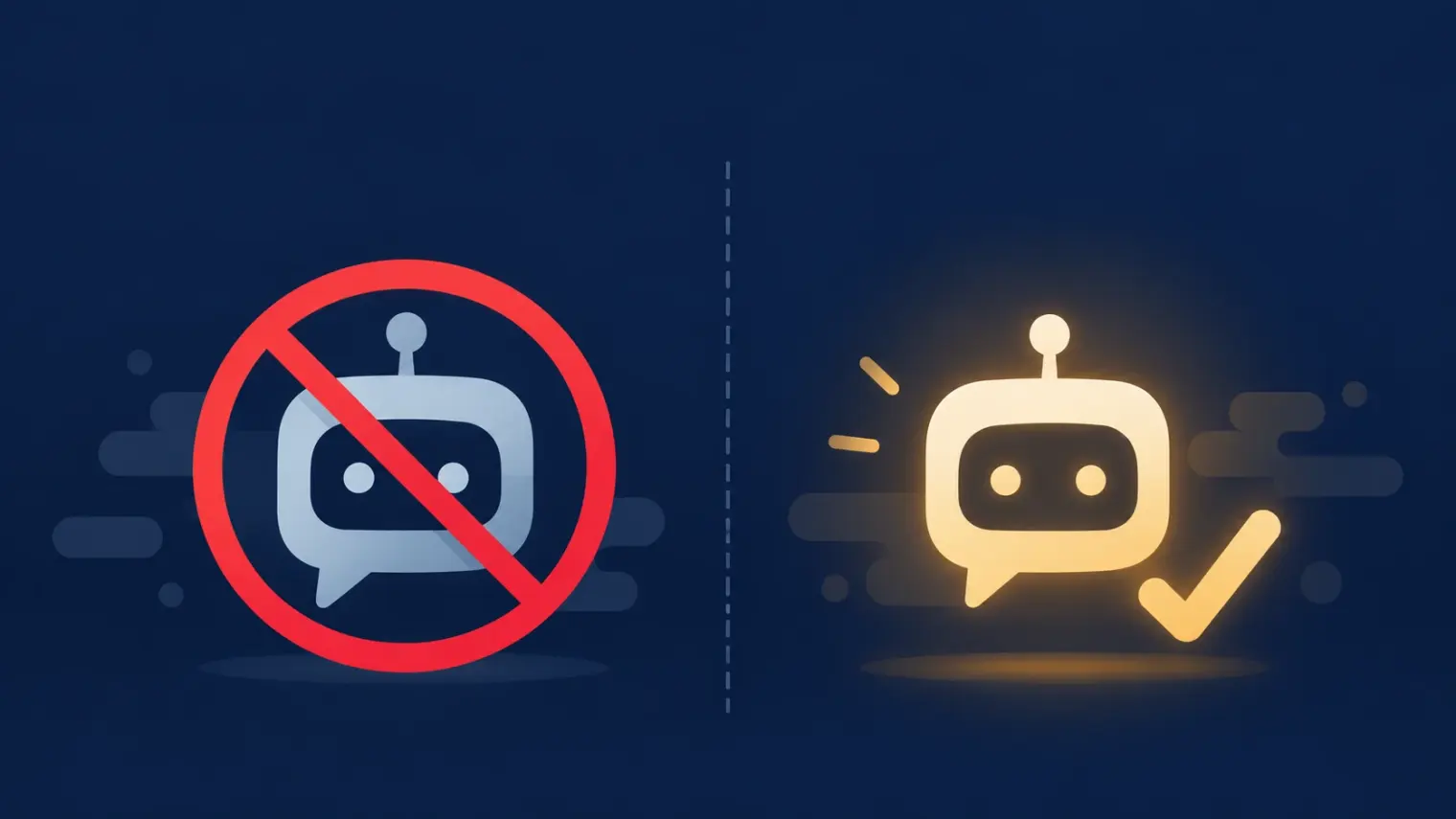
TL;DR: Anthropic's policy isn't one rule, it's five different ones depending on the stage. You're expected to use Claude on your application materials and interview prep. On the take-home assessment, it's conditional — allowed only when the instructions say so, and Anthropic's own team has admitted that in the cases where it is allowed, Claude now performs well enough to break the test as a signal. In the live technical screen and the values interview, outside AI is banned unless you're told otherwise, and the values round — no coding, no notes, no AI — is reportedly where the most candidates fail. Prep for the rounds that allow it before you walk into the ones that don't.
The company that makes Claude spent over a year telling job applicants not to use it. Anthropic banned AI tools from its hiring process in mid-2025, reversed most of that ban two months later, and by 2026 had landed on a policy so stage-dependent that candidates on Blind regularly ask which of the five rounds they're even allowed to open ChatGPT for. If you're prepping for an Anthropic interview, "can I use AI" isn't a yes-or-no question here — it's five separate answers, and getting one wrong in either direction (using it where it's banned, or not using it where it's expected) works against you.
What the Policy Actually Says, Stage by Stage
Anthropic's hiring process runs roughly five stages: application, prep, a take-home or live technical assessment, a technical/hiring-manager screen, and a values interview. The AI rule changes at nearly every one.
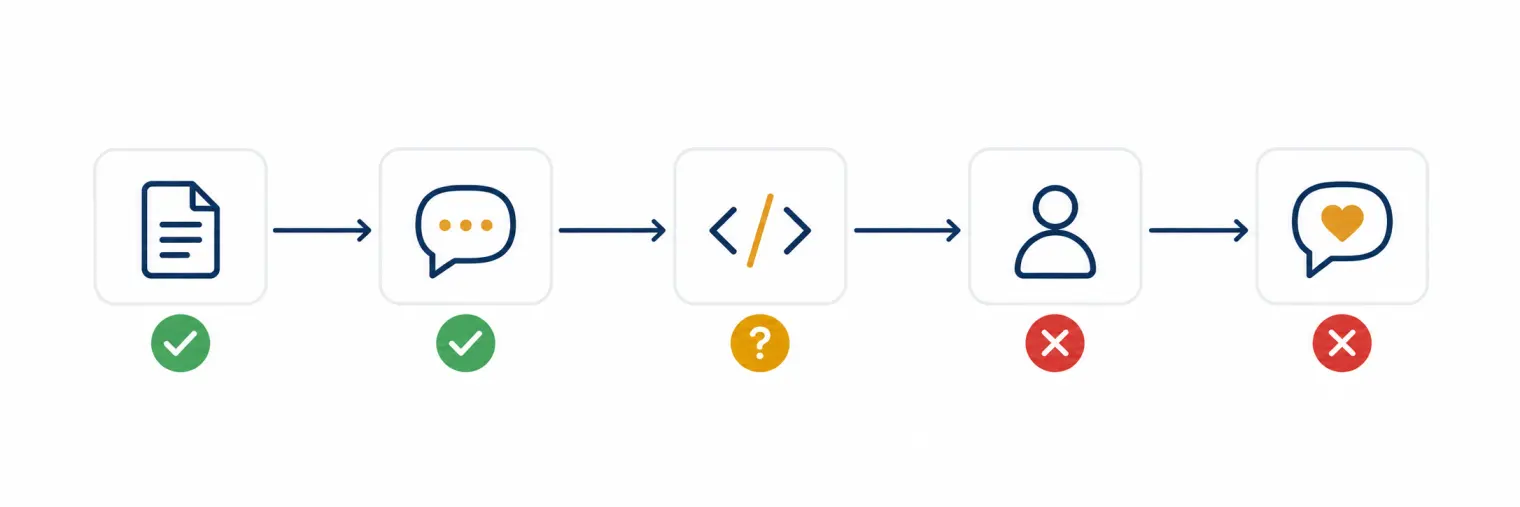
- Application materials (resume, cover letter, application questions): Write your own first draft, then Claude is fair game to refine it. This is stated policy, not a gray area.
- Interview prep: Using Claude to research Anthropic, rehearse answers, and prepare questions for your interviewer is explicitly endorsed.
- Take-home / technical assessment: Conditional. The default is you can't use AI tools unless the instructions in front of you say otherwise. Most candidates report a roughly 60-to-90-minute CodeSignal-style assessment with a single problem split into escalating levels — expect to build a small working system rather than solve an isolated algorithm puzzle either way.
- Hiring-manager / technical screen: A 45-to-60-minute conversation focused on engineering judgment, typically without live coding. No outside AI unless you're told otherwise.
- Values interview: No AI, no notes, evaluated as heavily as the technical rounds — and per multiple recruiter accounts, the stage where the most candidates fail.
The practical read: the two stages you have time to prepare in advance — your materials and your prep — are the ones where AI help is normal and expected. The two stages that happen live and in real time are the ones where it's off.
The Take-Home Test That Can't Stay Ahead of Claude
The most specific, most reported detail about Anthropic's process isn't a policy statement — it's an admission. In January 2026, TechCrunch reported that Anthropic's performance-optimization team has had to substantially redesign its take-home coding test after nearly every new Claude release since 2024, because the model keeps closing the gap with human applicants on a test where using it is allowed.
Team lead Tristan Hume described the problem directly: under the original time limit, Claude Opus 4 already outperformed most applicants. By the time Opus 4.5 shipped, it matched even the strongest candidates. That's not a minor calibration issue — it's the test's core premise breaking. If the model can produce a better answer than your best human candidate, the assessment stops measuring engineering skill and starts measuring whose Claude subscription is more current, which is useless for deciding who to hire.
This is worth sitting with if you're prepping: a take-home built around "you're allowed to use AI" is implicitly built around Anthropic assuming you'll use it well — verifying its output, catching where it's wrong, pushing past what a default prompt gets you — not around using it as a pass-through. Anthropic keeps rewriting the test specifically to widen that gap back out.
The Values Round Is Where the Real Filtering Happens
Ask candidates who've been through the process where they actually struggled and the technical rounds usually aren't the answer — the values interview is. It's a non-coding conversation evaluating fit with Anthropic's mission and working style, weighted as heavily as the coding rounds, with no AI and, per candidate accounts, no notes to lean on. Multiple recruiters have said it's the stage where the most otherwise-qualified engineers wash out.
That's created a real market: candidates report spending an average of roughly $4,600 on interview coaching specifically for this round, with company-specific mock sessions running $300 or more each. The demand makes sense once you separate what's being tested. A technical screen has a right answer you can grind toward. A values round is scored on how you think and communicate under a genuine, unscripted follow-up question — and that's a skill you build by practicing the actual back-and-forth under time pressure, not by reading a list of Anthropic's stated values the night before.
Why the Original Ban Didn't Last
Anthropic's first public stance, reported by Fortune in May 2025, was a blanket ban across the process — the reasoning being that hiring managers needed to see a candidate's real interest in the company and unassisted communication ability without a model smoothing it out. By July 2025, the company reversed most of that. The stated logic was practical: an AI ban is hard to actually enforce on materials nobody's watching you write, Anthropic already uses Claude throughout its own hiring pipeline (job descriptions, interview question design, candidate communication), and a company selling AI collaboration as a core skill has a weak case for telling applicants not to demonstrate it. The parts of the ban that survived — live interviews and the values round — are specifically the parts happening in real time, where a company can actually observe whether the words are coming from the candidate.
How to Actually Prepare for This
The stages where AI help is off the table are exactly the stages you can't out-tool your way through — which means the highest-leverage prep is rehearsing them cold, not finding a workaround.
Treat the values round like a timed interview, because it's scored like one. It's evaluated as heavily as your technical rounds but usually gets a fraction of the practice time. AceRound's mock interview mode runs an adaptive AI interviewer that follows up on what you actually say, under a real clock — useful specifically because the values round punishes rehearsed, generic answers, and the only way to stop giving them is to practice reacting to a question you didn't see coming.
If your take-home explicitly allows AI, use it like Anthropic is describing candidates using it — critically, not passively. Given that the company has said its own tool now matches strong human candidates on this exact test, the differentiator isn't whether you used Claude, it's whether you caught the part where its first answer was subtly wrong. If your assessment runs through a CodeSignal-style format, our CodeSignal interview guide covers the format specifics separately from Anthropic's own instructions on AI use, which you should follow over any generic advice, ours included.
Confirm the rule in writing before you assume it either way. Because the policy is genuinely stage-dependent and team-dependent, the safest move is asking your recruiter directly which parts of your specific loop allow AI assistance, rather than defaulting to what worked at a different company. For the broader landscape of which employers require, allow, or ban AI tools in interviews right now, our AI interview policy roundup breaks down how Google, Meta, and others compare.
Author · Alex Chen. Career consultant and former tech recruiter. Spent 5 years on the hiring side before switching to help candidates instead. Writes about real interview dynamics, not textbook advice.
Related Articles
Micro1's Zara AI Interview: What It Actually Tests (And Why Timing Gets Flagged)
Micro1's AI interviewer Zara has run 300,000+ interviews for remote roles. Here's why it flags response latency as a cheating signal, and what that means for AI prep.
Does CoCubes Detect Cheating During the Online Assessment?
CoCubes (an Aon platform) proctors off-campus drives with real AI monitoring — what it actually watches, what candidates report, and where prep helps.
Wonderlic Test in 2026: Is It Proctored, and Where Does AI Help Fit?
The Wonderlic comes in two formats: a proctored test and an unproctored take-home QuickTest. Here's what separates them and where outside help is possible.