AI Interviewer Follow-Up Questions: How Adaptive AI Interviews Work
AI interviewer follow-up questions aren't scripted — here's how Mercor, Apriora, and Ribbon generate them, what they're scoring, and how to prepare.
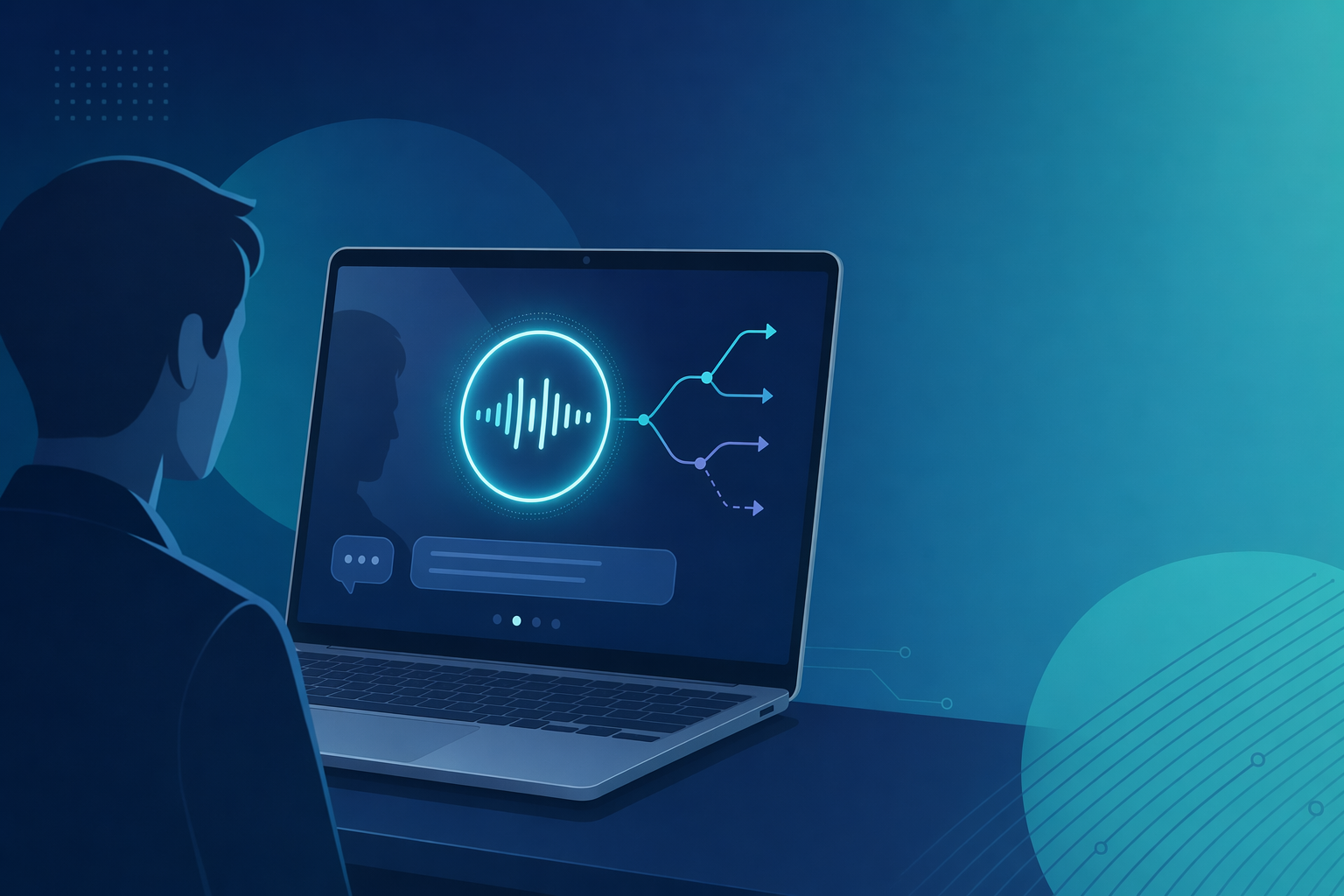
TL;DR: AI interviewer follow-up questions aren't pulled from a fixed list — platforms like Mercor, Apriora, and Ribbon generate them live from your previous answer, usually to test whether a claim you made holds up under detail. Your follow-up response can reveal more than your opening answer. Prepare by having specific, numbers-backed stories ready rather than rehearsed talking points, since vague answers are exactly what trigger a harder follow-up.
Halfway through describing a project, you pause to think — and the AI interviewer asks a follow-up question before you've finished your sentence. It's not a glitch. It's the part of an AI interview almost no prep guide actually explains: the system isn't reading down a script, it's deciding in real time whether your last answer needs a harder look.
Autonomous interviewers like Mercor, Apriora (built around an interviewer named Alex), and Ribbon now run a meaningful share of first-round screens, and all three share one mechanic candidates aren't warned about: adaptive follow-ups generated from what you just said, not from a question bank. Here's what's actually happening when that happens to you.
Follow-Ups Aren't Scripted — They're Generated From Your Answer
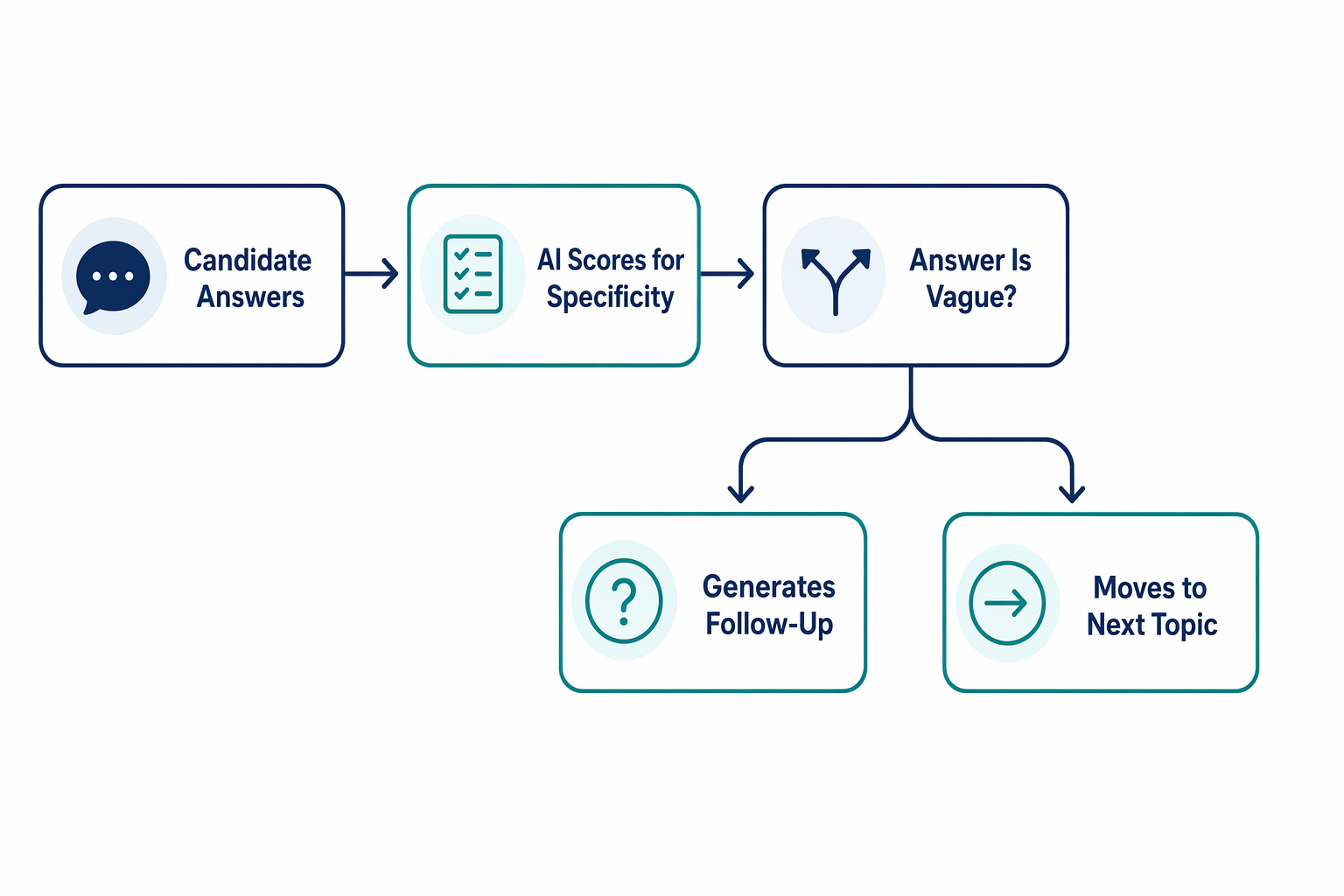
A traditional interview question list is fixed before you ever join the call. Adaptive AI interviewers work differently: the system asks an opening question, evaluates your answer against a scoring rubric, and only then decides what to ask next. If your answer is specific and consistent, the follow-up might just move you to the next topic. If it's vague, generic, or makes a claim without backing it up, the next question is built to test exactly that gap.
One clear way to think about it: your follow-up answer can reveal more than your opening answer did. The first answer tells the system what you claim. The follow-up tests how well that claim holds up under detail. That's a meaningfully different test than memorizing strong opening lines — the system is explicitly built to look past a well-rehearsed headline.
How the Adaptive Logic Actually Works, Platform by Platform
Apriora's Alex runs live, conversational interviews — not a recorded one-way video format — and generates its next question from your previous response in real time. Apriora co-founder Aaron Wang told CNBC that the system runs roughly 1,000 interviews a day and "adjusts its questions depending on candidate responses" — it's explicitly not a static questionnaire. Candidates consistently report a brisk, uninterrupted pace; that's a product characteristic of the conversational engine, not a reaction to how well you're doing.
Mercor, used heavily for AI-only screening and global contractor hiring, documents its own follow-up behavior directly: if the interviewer interrupts because it detected a pause, Mercor's own support docs tell candidates they can simply say they weren't finished and continue. That's a useful, underused tip — the interruption isn't a hard stop, it's a pause-detection guess that you can correct out loud.
Ribbon and similar voice/video interviewers follow the same general shape: score the answer against a rubric, then generate a targeted probe rather than advance mechanically through a fixed list.
The common thread across all three: the system is listening for specificity and consistency, not polish. A generic answer like "I'm a strong communicator who works well under pressure" almost guarantees a follow-up, because there's nothing concrete in it to verify.
Why the AI Sometimes Talks Over You
The most common candidate complaint isn't the questions themselves — it's timing. Adaptive interviewers rely on a pause threshold to detect that you've stopped talking, and a longer thinking pause can register as "answer complete," triggering the next question before you meant to hand the floor back. One candidate described the experience bluntly in a widely shared Medium account of an AI-conducted interview: the system "assumed I had answered and responded with a pre-programmed statement... there was no room to pause, think, or clarify."
If it happens to you, say so directly — "sorry, I wasn't finished" — and keep going. Most platforms, including Mercor by its own documentation, are built to let you resume rather than counting the interruption against you. The system misreading a pause is a known limitation of pause-detection logic, not a judgment on your answer.
How to Actually Prepare (Not "Beat") an Adaptive Follow-Up
This isn't about tricking a system built specifically to catch bluffing — that usually backfires within one follow-up question. What actually holds up:
- Have 3-4 real stories with numbers and decisions attached, not themes. "Cut onboarding time 40% by rebuilding the checklist flow" survives a follow-up asking who else was involved or what didn't work. "I'm good at process improvement" doesn't.
- Expect the follow-up and treat it as normal, not a warning sign. Adaptive systems are designed to probe most first answers at least once — it's standard behavior across the category, not a signal you're failing.
- Rehearse out loud. Since your follow-up answer needs to stay consistent with your first one under time pressure, practicing out loud — not just thinking through the story — is what keeps the details straight when you're pushed.
- If you don't know the answer, say so and pivot honestly. "I don't have that exact number, but here's the closest comparable outcome" scores better than inventing a detail that won't survive a second follow-up.
- Fix your environment before you start. A quiet room and one voice reduce the chance of an ambiguous pause or background noise triggering an unnecessary interruption or flag.
Practicing When There's No Human to Read Your Pace
The hardest part of facing an adaptive AI interviewer is that there's no human face giving you real-time feedback on whether you're rambling, repeating yourself, or about to get cut off. That's a specific, practical problem — and it's part of what AceRound AI was built to help with, surfacing structure prompts in real time during live interviews so you have something to anchor to besides silence. It won't script your follow-up answers for you, and it won't get past an adaptive system built to catch exactly that — the value is staying organized under a format that gives you zero nonverbal cues, not gaming the rubric.
If you're facing more than one autonomous AI interviewer this cycle, our guides to Mercor AI interview tips, Apriora AI interview tips, and Ribbon AI interview tips cover platform-specific behavior, and how to pass an AI interview covers the category more broadly. If you're wondering whether these systems record you while they're doing all this, do AI interviews record you covers what's actually captured.
FAQ
Will I know in advance that an AI will be interviewing me, not a person? You should be told, but plenty of candidates aren't. Surveys on AI-interview disclosure put the share of candidates who felt clearly informed upfront well under half. If your invite doesn't say who — or what — is conducting the interview, ask the recruiter directly before you log in.
Can I prepare for specific AI interview follow-up questions? Not word for word, since the follow-up is generated from your own answer. But you can prepare for the pattern: have 3-4 real stories with specific numbers and decisions attached, because that's what survives a follow-up. A vague opening answer is what triggers a vague, hard-to-answer probe in the first place.
What happens if I don't know how to answer a follow-up question? Say so plainly — "I don't have a specific example for that, but here's the closest thing I've done" — rather than inventing detail on the spot. Adaptive systems are built to catch inconsistency between your original claim and your follow-up, so an honest pivot scores better than a shaky improvisation.
Do AI interviewers penalize nervousness or accents? The rubric is built to score answer content and structure, not vocal delivery — but in practice, extended silence or heavy hedging can get flagged as an unclear answer, which triggers more follow-ups. That's a side effect of how the system decides what to probe, not a direct penalty for how you sound.
Why did the AI interviewer talk over me or cut off my answer? Most autonomous interviewers use a fixed pause threshold to detect that you've finished speaking, and a longer thinking pause can look like the end of your answer. If it happens, say clearly that you weren't finished and continue — most platforms let you resume rather than penalizing the interruption itself.
Is a follow-up question a bad sign, or does it mean I'm being screened out? Neither — it's closer to normal than not. Adaptive AI interviewers are designed to probe most answers at least once, regardless of how strong the initial response was, so a follow-up is standard behavior, not a rejection signal.
Author · Alex Chen. Career consultant and former tech recruiter. Spent 5 years on the hiring side before switching to help candidates instead. Writes about real interview dynamics, not textbook advice.
Related Articles
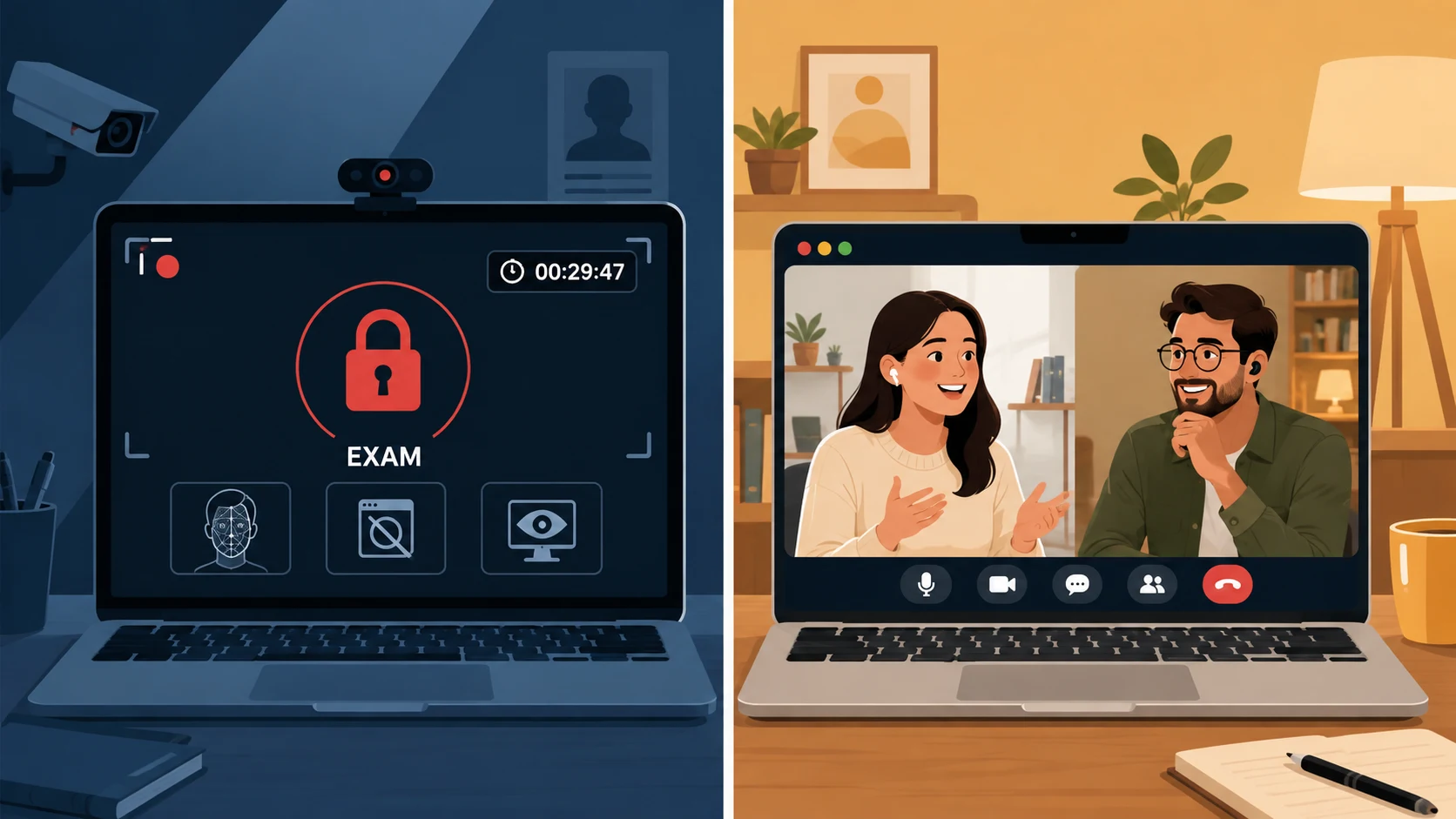
Does TCS iON Detect AI or Cheating During the NQT Exam?
Does TCS iON detect AI during the NQT? What its remote proctoring monitors, and why the interview round after is a safer, prep-friendly stage.

Does BrightHire Record You? Yes — Here's What It Captures (2026)
Does BrightHire record your interview? Yes — video, audio, and an AI transcript, now part of Zoom since its 2025 acquisition. What's captured and how to opt out.
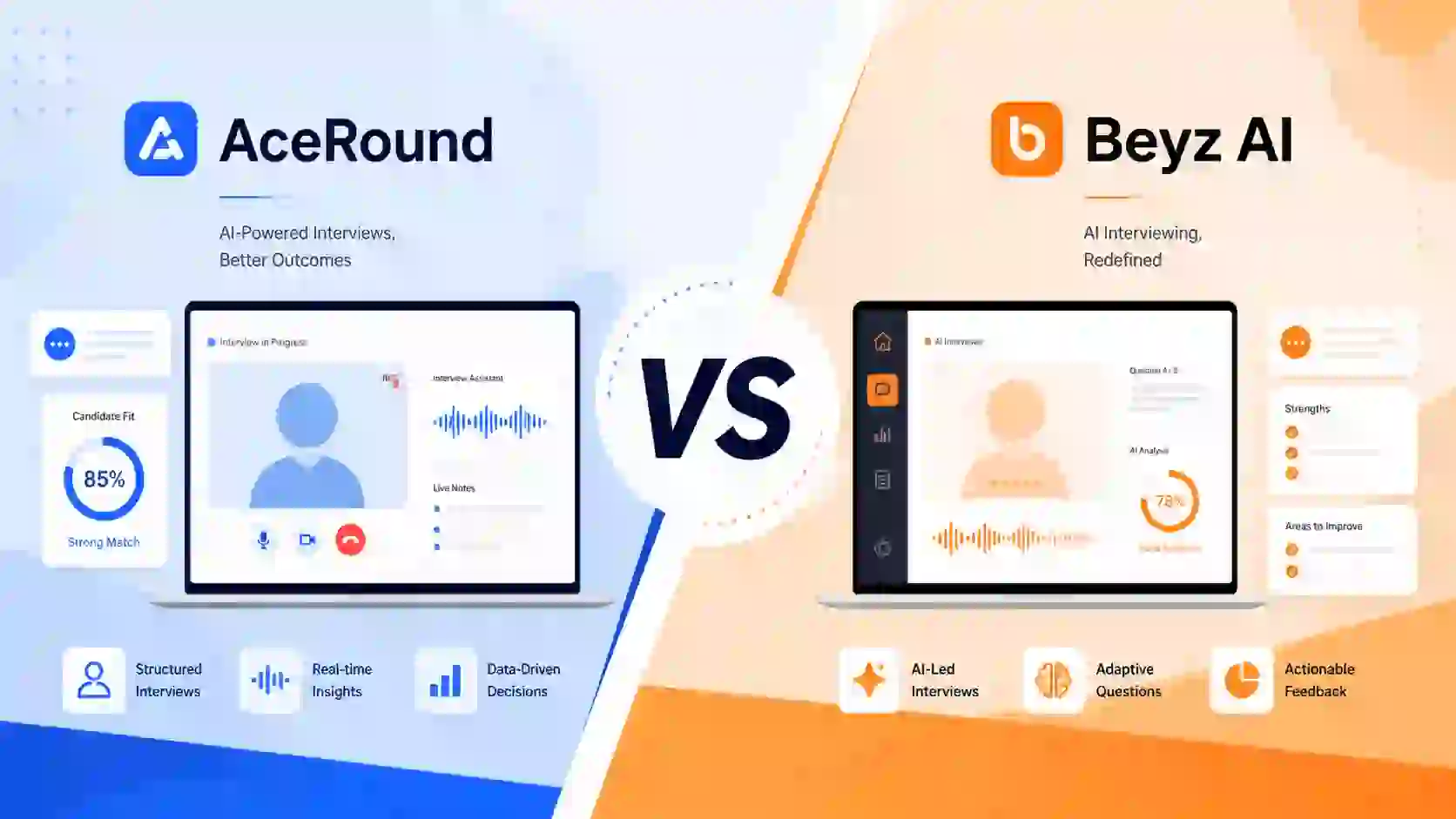
AceRound vs Beyz AI: Which Real-Time Interview Copilot to Trust?
AceRound vs Beyz AI compared: architecture, the pricing trap behind Beyz's $24.99 headline rate, a dedicated Beyz-detection tool, and unverified ratings.