What Is Your Management Style? How to Answer Without Reciting a Label
A memorized management-style label is why interviewers distrust this answer — how to read the room and handle the follow-up that actually tests you.

TL;DR: "What is your management style?" is a trap when you answer with a single memorized label — interviewers have heard "I'm collaborative" from every candidate and trust it less each time. The stronger answer names your default tendency, backs it with a specific story, and has a second example ready for the follow-up that actually tests you: "when did this style not work?"
An Ask a Manager reader once described a boss who "would talk endlessly about how hands-off and empowering his management style was" — while every person on his team was "desperately networking trying to get out." That gap between the story managers tell about their own style and what their reports actually experience is exactly why interviewers have grown skeptical of this question, and exactly why a rehearsed answer tends to backfire.
Nearly every guide to this question tells you the same thing: pick from a list of named styles — democratic, coaching, direct, delegator, pace-setter — say which one you are, back it with a STAR story. That advice isn't wrong, but it stops at the easy half of the question. The harder, more revealing half is what happens next: the follow-up, the panel that doesn't match your assumed style, or the interviewer who's heard "I'm a collaborative leader" so many times it no longer means anything.
Why a Style Label Alone Doesn't Land
The volume of "I'm a [style] manager" answers is the problem. Ask a Manager put it directly: self-reported style answers are unreliable because people describe the manager they intend to be, not necessarily the one their team experiences. An interviewer who has run dozens of these conversations has heard "collaborative," "hands-off," and "empowering" enough times that the label itself carries almost no information — what changes their read on you is the specific story and outcome attached to it.
That means the label you choose matters far less than most guides suggest. What actually differentiates candidates is naming a real situation, the specific thing you did, and a result someone else could verify — not the adjective you picked to describe yourself.
Read the Job Description Before You Pick a Style
Here's what most advice on this question skips entirely: the "right" style to lead with isn't fixed — it should shift based on what the job posting and the round are actually signaling. A startup JD emphasizing "ownership" and "moves fast" is asking for delegator/autonomy language. A JD built around "mentorship" and "growth culture" wants a coaching example. A structured enterprise JD heavy on "process" and "cross-functional alignment" rewards a more consultative, process-aware framing. A turnaround or crisis-hire posting is often looking for someone comfortable being more directive.
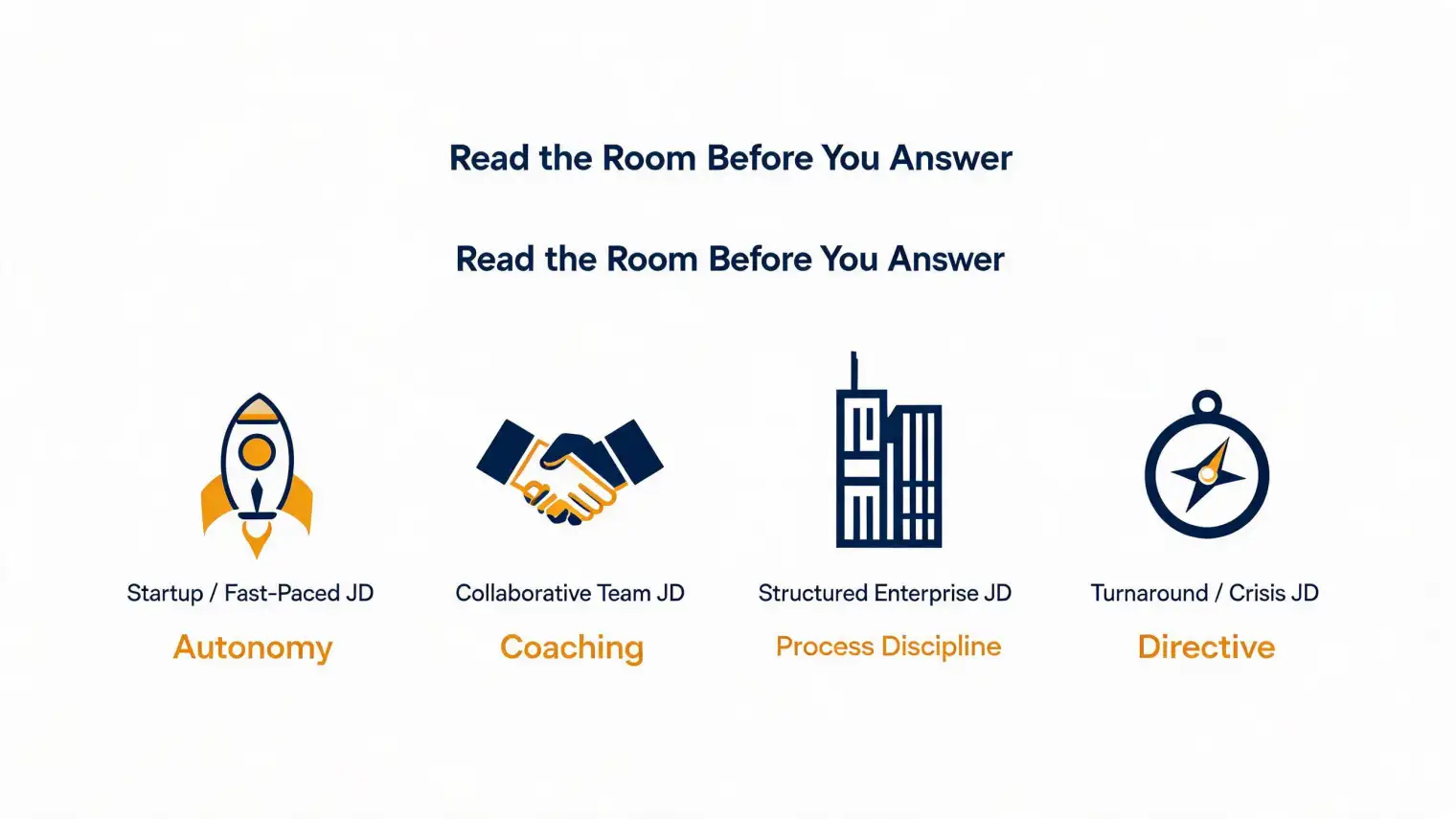
This isn't about inventing a style you don't have — it's about leading with the real example from your history that best matches what this specific team needs, instead of defaulting to whichever story you rehearsed most.
The Follow-Up That Actually Tests You: "When Did This Style Fail?"
Experienced interviewers increasingly ask a version of: "Can you give an example of when your usual approach didn't work, and what you did differently?" This is the question that separates a memorized answer from a real one, and most candidates have nothing ready for it because they only prepared the success story.
Have a genuine second example: a time your default style — say, hands-off and autonomy-driven — didn't work for a specific person, like a new hire who needed more structure than you were giving them, and you noticed and adjusted. The content that lands here isn't "I don't really have a weakness in this area" — it's proof that you actually pay attention to whether your approach is working, not just that you have a philosophy you're attached to.
Tailor the Answer to the Round, Not Just the Company
The same question means something different depending on who's asking it:
- Recruiter screen — wants a quick, coherent signal that you have a management philosophy at all. Keep it to 60-90 seconds, one clear example.
- Hiring manager / EM round — wants the operational detail: how you actually run 1:1s, give feedback, handle a specific underperforming or high-performing report.
- Skip-level or panel round — often testing whether your story is consistent with what your direct hiring manager already said about you, and whether you can talk about people-management judgment at a slightly more strategic altitude.
- Cross-functional panel — cares less about your team-management style and more about how you manage stakeholders who don't report to you at all — a different muscle worth having a separate example for.
Reciting the exact same paragraph in every round is a common tell that the answer was memorized rather than lived.
A Framework That Beats a Fixed Style: Situational Leadership
If you want one framework to organize your thinking instead of a static list of style archetypes, the Hersey-Blanchard Situational Leadership model is useful precisely because it rejects the idea of one best style — it argues effective managers match their approach (telling, selling, participating, or delegating) to how much direction and support a specific person needs at a specific time. Naming this kind of adaptive logic, even briefly, signals more sophistication than picking one label and defending it as your permanent identity. It also lines up with Gallup's research on tens of thousands of managers, which found that great managers don't share a single standardized style — they adapt per person.
Cultural Differences: When "Naming Your Style" Doesn't Translate
This question carries different assumptions depending on where you're interviewing. It's most native to Western, especially US, hiring culture, where confidently branding your own approach is expected and rewarded. In more hierarchical or consensus-driven business cultures, self-branding a personal "style" can read as slightly immodest, and the more natural framing leans on demonstrated outcomes, process discipline, and team harmony rather than a personal leadership label. If you're interviewing with a multinational or Western-headquartered company from a culture where this framing feels unnatural, it's worth explicitly practicing the "name a style, back it with a story" structure rather than assuming your usual way of discussing management will land the same way.
How Real-Time AI Help Changes When the Panel Context Shifts
The hardest version of this question isn't the first time you're asked it — it's the fourth time, in a different round, when the interviewer's face tells you your rehearsed paragraph isn't landing and you need to pivot mid-answer. That's the moment a real-time AI interview copilot like AceRound is actually useful: not writing your management philosophy for you, but surfacing the STAR structure and a reminder of your "style didn't work" backup story the instant a live interviewer asks the follow-up you didn't rehearse. It can't invent a management track record you don't have — the substance still has to be yours — but it can help you say it clearly when the context shifts faster than your prepared script. For more on how live interview follow-ups get handled in the moment, see our guide on describing a time you led a team, and if you're prepping for the engineering-manager-specific version of this loop, our engineering manager interview guide covers the full round structure this question sits inside.
FAQ
How would your direct reports describe your management style? This is the same question from a different angle, and interviewers ask it precisely because a self-description can be flattering while a team's actual experience differs. Answer with a specific behavior your reports would recognize — "they'd say I give direct feedback fast instead of letting things fester" — rather than a trait ("supportive," "approachable") that's unfalsifiable and generic.
Can you give an example of using a different management approach than usual? This follow-up is checking whether you actually adapt or just repeat one script. Have a second, contrasting story ready — one where your default style would have failed and you deliberately did something else, like stepping in more directively with a struggling new hire even though your default is hands-off with experienced people.
How do you handle team members who don't respond well to your usual style? Name the mismatch honestly and describe what you changed — more structure and shorter feedback loops for someone who needs clarity, more autonomy and less check-in for someone who feels micromanaged. The answer that lands is "I noticed it wasn't working and adjusted," not "everyone eventually adapts to how I manage."
Why do interviewers distrust generic answers like "I'm a collaborative manager"? Because every candidate says it, and hiring managers have been burned by people who described themselves as collaborative or hands-off while their actual reports were struggling or quietly job hunting. A style label with no example attached is unverifiable, so interviewers weight concrete stories and named outcomes far more heavily than the adjective you choose.
What if I've never officially managed anyone? Reframe around leading without formal authority — a project you drove, a junior teammate you mentored, a cross-functional initiative where people followed your lead voluntarily. Name the approach you used in that specific instance rather than claiming a fully formed management philosophy you haven't had the chance to test yet.
Is there one "best" management style to say in an interview? No — and claiming one universal style is itself a red flag to experienced interviewers. Gallup's research on tens of thousands of managers found that strong managers adapt their approach per person and situation rather than applying one standardized style; the strongest answer names your default tendency and then shows you can flex off it when a person or situation needs something different.
Author · Alex Chen. Career consultant and former tech recruiter. Spent 5 years on the hiring side before switching to help candidates instead. Writes about real interview dynamics, not textbook advice.
Related Articles
OpenAI's AI Interview Policy: Banned, Required, or Team-Dependent
OpenAI sells AI coding agents, then bans most candidates from using one. Here's the round-by-round policy, including the new agentic round that flips it.
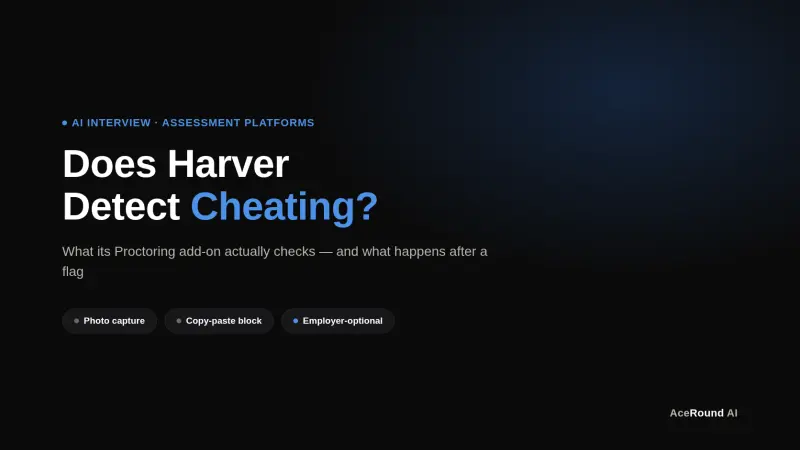
Does Harver Detect Cheating? What Its Proctoring Actually Checks
Does Harver detect cheating on its pre-employment assessments? A candidate look at Harver's Proctoring add-on, what gets logged after a flag, and what happens next.

Micro1's Zara AI Interview: What It Actually Tests (And Why Timing Gets Flagged)
Micro1's AI interviewer Zara has run 300,000+ interviews for remote roles. Here's why it flags response latency as a cheating signal, and what that means for AI prep.