How to Answer 'What Motivates You?' in a Job Interview (With Real Examples)
The honest guide to answering 'what motivates you' in any job interview — including what to say when you're a career changer or recently demotivated.

TL;DR: "What motivates you?" is a values alignment question disguised as small talk. Interviewers want to know if your drivers map to the actual work — not whether you sound enthusiastic. The answer that works: one specific motivator, a concrete example where it showed up, and a direct tie to the role you're applying for. Under 90 seconds.
You're in round two. The interview has gone well. Then the interviewer leans back slightly and asks: "So — what motivates you?"
Your brain does three things simultaneously: runs through a list of answers that sound too fake, eliminates everything involving money (you know you're not supposed to say that), and tries to remember if you rehearsed this one.
Most candidates freeze or over-explain. Neither works. Here's what actually does.
What Interviewers Are Actually Trying to Learn
This question isn't about enthusiasm. Interviewers asking "what motivates you" are making a prediction: will this person stay engaged in the actual day-to-day of this role, or will they get bored, burn out, or leave in eight months?
They're looking for three things:
Self-awareness: Do you know what drives you? Candidates who can't answer this question specifically usually can't identify when they're struggling either — which makes them harder to manage.
Role fit: Does your motivator connect to what this job actually requires? Saying "I'm motivated by deep solo research" in an interview for a sales role sends a signal the interviewer will remember.
Authenticity: Is this a rehearsed line or something real? Interviewers hear generic answers constantly. A specific, slightly imperfect answer reads as more credible than a polished non-answer.
The underlying framework here is Self-Determination Theory from psychology: the motivators that drive sustained performance are autonomy (control over your work), competence (getting better at something), and relatedness (contributing to people around you). An answer that maps to at least one of these lands better than an answer about "passion" or "hard work."
How to Answer "What Motivates You?" — The Formula
The structure that consistently works is four parts, in under 90 seconds:
1. Name your primary motivator specifically. Not "I'm motivated by challenge" — that's a category, not an answer. "I'm most motivated when I can see a direct line between something I built and a measurable outcome" is specific enough to be useful.
2. Give a short example where that motivator showed up. This is the proof layer. It doesn't need to be from your most impressive role. It needs to be true and recent. One or two sentences maximum.
3. Name what happens when that motivator is absent. This one is counterintuitive, but it adds credibility. "When I'm doing work where I can't see the impact, I find myself disengaging" shows self-awareness without being negative about any employer.
4. Connect it to this role. Briefly. "That's part of why this role appealed to me — the emphasis on product metrics in the job description mapped directly to how I work best." One sentence. You're not writing a cover letter.
Total time: 60–90 seconds. If you're running longer, you're adding filler.
What Motivates You Examples (By Situation)
Generic examples are everywhere. Here are three situations that career guides almost never address.
If You're a Career Changer
The trap: your past work doesn't obviously match your stated motivators. You say "I'm motivated by building products" but you spent six years in finance.
The honest version: "My work in finance was analytical and detail-heavy, which I was good at — but I kept finding myself most engaged when I was building internal tools or working on process improvements that other people actually used. That's what led me toward product work. The motivator was always there; the role just wasn't fully using it."
This works because it explains the career change without apologizing for the previous path.
If You're Recently Demotivated
The trap: you left (or are leaving) your current job because your motivators weren't being met. The honest answer surfaces this, which feels risky.
The reframe: you don't need to say "my job demotivated me." You can say: "I realized over the past year that the work that energizes me most involves close collaboration with technical teams, and my current role is fairly siloed. I've been deliberate about looking for environments where cross-functional work is built into how teams operate, not just a special occasion."
This is true, explains what you're looking for, and doesn't bad-mouth anyone.
If Autonomy or Remote Work Is a Real Motivator
Post-2024, many candidates are genuinely motivated by flexibility, async work, and the autonomy that comes with remote-first environments. This is real, and you don't need to hide it.
The key is framing it around how you do your best work, not around convenience: "I do my best thinking in focused blocks without interruption — I find that I'm more productive when I own my environment and schedule. I've built habits around deep work that I don't get to use in office-first settings." This is honest without sounding like "I want to stay in my pajamas."
Use this framing only if the role actually supports it. Don't say this in an on-site interview for a role that requires daily in-person collaboration.
Not sure how to frame your specific situation? AceRound AI can help you build and practice answers to behavioral questions like this one in real time — and give you instant feedback on whether your answer sounds specific or generic.
Industry-Specific Language: Why "Impact" Means Different Things
The same word lands differently depending on who's in the room.
At a tech startup or product company: "impact" is a natural word — shipping features, growing metrics, seeing adoption. Be specific about scale and speed. "I like seeing something go from zero to a thousand users in the first quarter" works here.
At a large enterprise: "impact" often triggers skepticism because everyone says it. Frame it in terms of scale and collaboration instead: "I'm motivated by problems that require coordinating across teams — the kind of work where you have to bring five stakeholders to the same page before anything ships."
At a nonprofit or mission-driven org: "impact" is fine but expected. What sets you apart is connecting your personal motivation to the organization's specific mission, not just "helping people" generically: "The specific population your organization works with — first-generation college students — has personal relevance to me. That makes the work feel grounded rather than abstract."
In finance or consulting: Lead with intellectual challenge and precision, not impact. "I'm motivated by the pressure of being right — working on problems where being wrong has real consequences forces me to do my best thinking."
Follow-Up Questions and How to Handle Them
After you give your answer, many interviewers will probe. The three most common follow-up directions:
"Can you give me a more recent example?" They want to know if the motivator is still current. Have a story from the last 12–18 months ready. If your best example is from five years ago, that's a yellow flag you need to address directly: "Most of my best examples from this are from my last role — I've been in a transition period over the past year, but the pattern is consistent."
"What happens when you're working on something that doesn't motivate you?" This is a resilience check. The right answer acknowledges the reality without catastrophizing: "I've found that even work I find less engaging is fine for a stretch if I understand why it matters. What I've learned to avoid is extended periods where I can't see the purpose. When that happens, I try to raise it early rather than just grinding through disengaged."
"How do you stay motivated when the work gets repetitive?" Practical answer: describe an actual tactic you use. "I tend to gamify repetitive tasks — set micro-goals or time-box chunks — which keeps me focused even on work I wouldn't choose if I had a choice." Specific tactics are more convincing than principles.
Common Mistakes That Kill Otherwise Good Answers
These patterns come up consistently in real interviews:
Naming money without a second motivator. Candidates know not to lead with salary, so they say things like "I want a role where performance is rewarded" — which interviewers immediately decode as the same thing. Money is a real motivator. The problem isn't mentioning it; it's having nothing else. Add a second driver.
Picking a motivator that contradicts the role. Saying "I love deep, focused solo work" in an interview for a client-facing account manager role. The hiring manager notes this and doesn't mention it to you.
Generic altruism with no story. "I love helping people" is the most common answer for any customer-facing role. It's not wrong — it's just useless. The interviewer hears it thirty times a week. You need the example.
Mirroring the company's mission back verbatim. Candidates research the company and repeat its own language: "I'm motivated by disrupting the way people connect with healthcare." Interviewers recognize their own marketing copy and flag it as hollow flattery rather than genuine alignment.
Answering what motivates you to leave your current role instead of what motivates you generally. These are different questions. Keep the answer forward-facing.
FAQ
What motivates you to do a good job?
The most useful answer here connects work ethic to craft rather than external accountability. "I care about the quality of what I put out — there's a certain level of work I consider acceptable and I find it genuinely uncomfortable to ship below that." This reads as intrinsically driven, which is what the question is actually asking.
What motivates you the most?
Pick one thing, not three. Multiple motivators dilute each other. "What motivates me most is the moment when a hard problem clicks — when something that felt blocked becomes clear. I deliberately seek out work where that happens frequently." One motivator, stated clearly, is more memorable than a list.
What brings out the best in you?
This variant usually invites a more environment-focused answer: "Clear ownership and fast feedback loops bring out my best. When I know exactly what I'm responsible for and can see the results quickly, I work at a different level than when those things are murky."
Why did you choose our company specifically?
This overlaps with "what motivates you" but is a separate question — it's asking about external alignment rather than internal drivers. Answer with specifics about the company's stage, product, or team culture that maps to your motivators, not just generic praise.
What are you passionate about — is this the same question?
Interviewers use "what are you passionate about" and "what motivates you" somewhat interchangeably, but there's a subtle difference: passion implies intensity and depth, motivation implies sustained drive. For "what are you passionate about interview" answers, slightly more emotional language is appropriate. For "what motivates you," keep it grounded in work outcomes. Both benefit from the same structural formula: specific, example, connection to role.
How do I practice answering this before my interview?
Record yourself answering out loud — not in writing. Most people discover that their written answer sounds fine but their spoken answer is either too long, too flat, or different in emphasis. Tools like AceRound AI can give real-time structured feedback on behavioral question answers, including flagging vague language and missing examples. More traditional prep: behavioral interview questions guide covers the full set of behavioral questions you're likely to face in the same interview. For the psychology behind autonomy, competence, and relatedness, see the Self-Determination Theory overview. For a hiring-side view of structured interview prompts, SHRM's interview questions library is a useful reference.
Author · Alex Chen. Career consultant and former tech recruiter. Spent 5 years on the hiring side before switching to help candidates instead. Writes about real interview dynamics, not textbook advice.
Related Articles
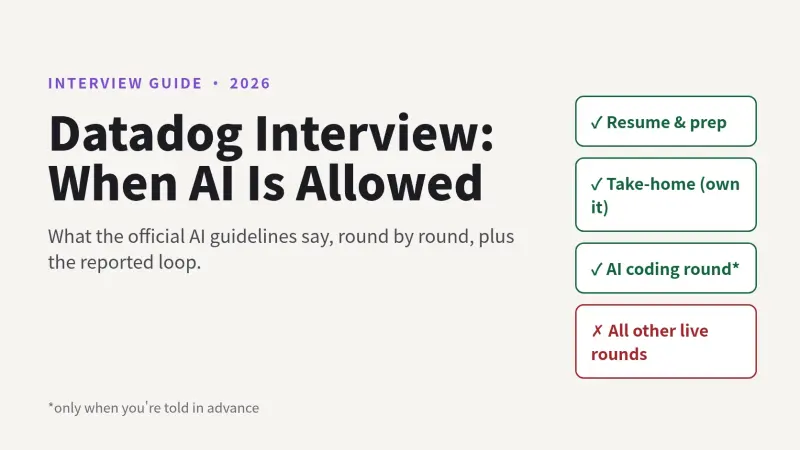
Datadog Interview Process (2026): What's Allowed With AI, Round by Round
Datadog publishes its AI rules for candidates. Here's what they allow, what they ban, the reported loop, and how to prep for the project deep dive.
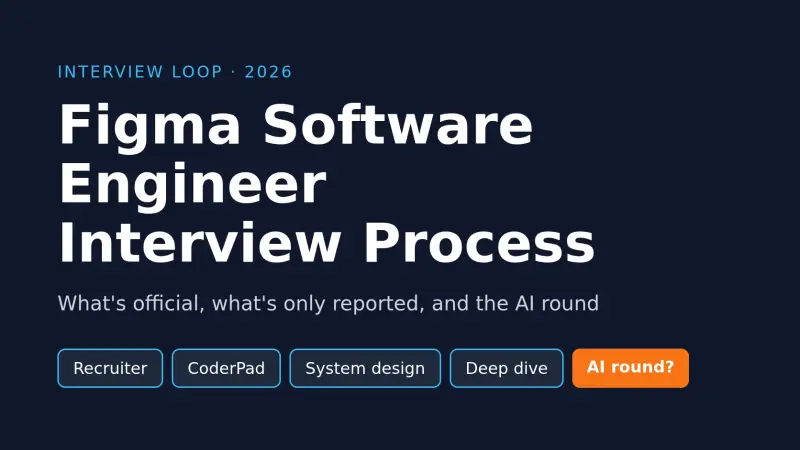
Figma Software Engineer Interview Process (2026): What's Reported
Figma publishes no interview rubric. Here's the loop candidates report, the product-flavored coding and design rounds, and what's known about an AI round.
Oracle and PayPal Fresher Interview Process in India: What Candidates Reported, Year by Year
Oracle India's test moved from aptitude plus core CS to HackerRank with a REST API task. PayPal's cut-offs and platform also differ. Posts compared.