Does HackerRank Detect Cheating in 2026? Copy-Paste, Tabs & AI
Does HackerRank detect cheating? Learn what copy-paste, tab changes, code replay and AI checks reveal, what employers enable, and what standard tests cannot see.
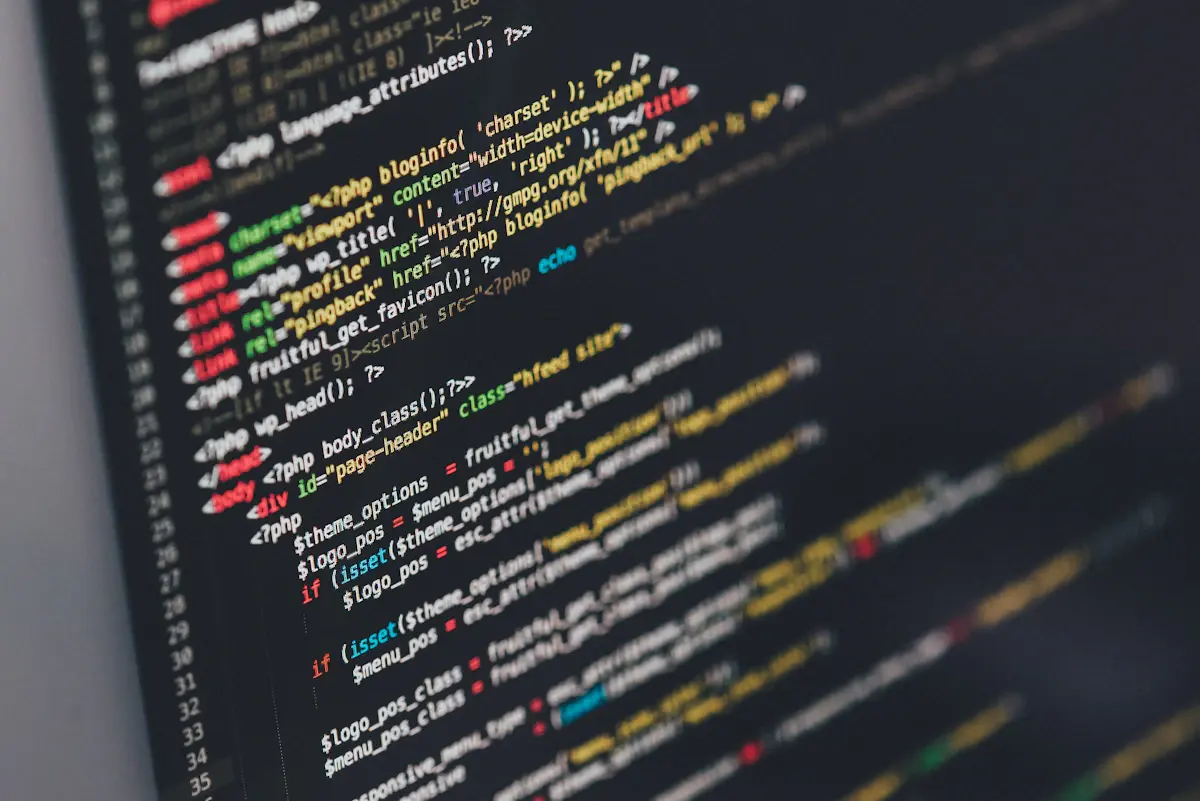
TL;DR: Yes, HackerRank can detect cheating signals such as code similarity, paste events and tab changes. Webcam, Secure Browser and AI plagiarism checks depend on employer configuration. A flag is a review signal, not an automatic rejection, and a standard test cannot see your clipboard, second device or off-camera notes.
A similarity score by itself is not an automatic disqualification. A recruiter can review the code replay alongside other signals and decide what it means. That recruiter-reviewed, not algorithm-decided, distinction is in HackerRank's own Plagiarism Best Practices documentation and is easy to miss in short search answers.
Here's how the system works, what specific behaviors it flags, and where it reliably falls short.
How HackerRank Plagiarism Detection Works
HackerRank runs two detection engines in parallel, and they catch different things.
The MOSS engine (Measure of Software Similarity, developed at Stanford) compares submitted code structurally. It looks at how code is organized — variable naming patterns, loop structures, function decomposition — not just raw text similarity. You can change variable names and add comments; MOSS usually doesn't care.
The ML plagiarism model is HackerRank's proprietary layer. It looks at behavioral signals alongside code structure, such as how code was typed and when large blocks appeared. Public documentation does not provide enough detail to reproduce the model or independently verify an accuracy figure.
One important caveat from HackerRank's own documentation: "It isn't possible to identify what source the candidate used." The system can flag that code looks similar to other submissions or externally available solutions, but it cannot confirm whether you looked at another person's code, used an AI, or simply wrote similar code independently — because those can look identical.
For a broader view of how different platforms approach monitoring, the online interview detection breakdown covers HireVue, Zoom, and OA platforms side by side.
What HackerRank Proctoring Monitors During Your Test
HackerRank's monitoring is session-level, not screenshot-granular. Here's what the proctoring layer actually captures:
Tab and window switching: A configured test can log when you leave the HackerRank browser tab, with timestamps for the session timeline. The meaning of a switch depends on the rest of the session and the employer's review process.
Webcam snapshots: If the recruiter enables Proctor Mode, HackerRank can capture periodic webcam images or images tied to configured events. The cadence and visibility depend on the test setup.
Copy-paste detection: The platform logs when text is pasted into the code editor, flagging the timestamp and volume of the paste event.
Code replay: Recruiters can review how a solution was entered, including edits and rewrites. A replay is context for a human review, not proof of where a candidate got an idea.
What HackerRank proctoring does NOT do:
- Record your screen outside the browser tab
- Access your clipboard contents
- Detect secondary devices or wireless earpieces
- See physical notes off-camera
The Secure Browser mode is a separate product offering that adds more restrictions (blocked right-click, disabled browser extensions), but standard HackerRank tests don't use it unless the recruiter specifically purchases and configures it.
Does HackerRank Detect Copy-Paste?
Yes - but the detection is about event and pattern analysis, not clipboard-content inspection.
When you paste text into the HackerRank editor, the platform can log the event. It does not need to capture what was in your clipboard or where it came from; it can record that a block appeared instantly rather than being typed. The exact fields depend on the assessment configuration.
That paste event, combined with the code replay, is where the problem actually surfaces. A recruiter reviewing a code replay who sees 150 lines appear in 3 seconds — with no prior attempts or debugging — will ask the same question any hiring manager would ask: "Show me how you'd approach this problem from scratch."
The practical implication: copy-pasting external code isn't caught by a detection algorithm. It's caught by a human reviewer watching the code replay and running a follow-up technical interview. That follow-up is where the gap becomes obvious.
Preparing for HackerRank with real practice is the one approach that makes detection less relevant. AceRound AI gives you live coding guidance and answer structuring during technical interviews - not code replacement, but coaching that helps you explain every line you write. It does not replace an assessment submission. Try it free.
The Specific Thresholds That Trigger a Plagiarism Flag
HackerRank's official plagiarism documentation discloses the thresholds, which vary by difficulty:
| Question Difficulty | Similarity Threshold | Minimum Line Count |
|---|---|---|
| Easy | 90% | 10 lines |
| Medium | 80% | 10 lines |
| Hard | 75% | 10 lines |
These numbers explain why false positives exist at scale. For sorting algorithms, graph traversal, and other textbook implementations, the "correct" solution in any given language often exceeds 75% structural similarity to other correct solutions — particularly when multiple candidates have studied from the same preparation resources.
The 10-line minimum is meaningful: a short utility function that matches won't trigger a flag. A full solution to a medium-difficulty problem almost certainly will if it came from a shared source.
Can You Cheat on HackerRank Without Getting Caught?
Technically: yes, some methods are harder to detect than others. Practically: the risk calculation most candidates make is wrong.
Methods that are difficult for automated detection to catch:
- Using a second device to look up solutions (not logged)
- Physical reference materials (notes, printed resources)
- Verbal assistance from another person in the same room
- Paraphrasing a solution significantly before typing it
Methods that are reliably detected or flagged for review:
- Copy-pasting large code blocks from external sources
- Submitting code that's structurally near-identical to public GitHub solutions
- Typing patterns inconsistent with your stated experience level (e.g., flawless 300-line solution in 4 minutes)
- Repeated tab switches to the same external domains
The part most articles miss: a HackerRank assessment may be followed by a technical interview. That interview often includes "walk me through your solution" or "how would you modify this for edge case X?" If you cannot do that, a borrowed solution creates a new problem even if no automated flag appears.
For candidates applying to companies like TSMC (which uses HackerRank as a screening stage), Samsung Korea, or GAFA offices in Japan, the follow-up technical bar is high enough that a borrowed solution creates more risk in the interview than it removes in the OA.
What Happens After a Flag — The Recruiter Review Process
This is the part the fear-based articles always skip.
When HackerRank flags a submission for plagiarism, the recruiter receives a report. That report includes:
- The similarity score and which other submissions matched
- A side-by-side code comparison
- The full code replay
- The behavioral log (tab switches, copy-paste events)
The recruiter then decides — not an algorithm. HackerRank's own guidance to recruiters explicitly says to consider context: did multiple candidates with no connection submit similar code? (This happens routinely with standard algorithm implementations.) Does the candidate's code replay show consistent problem-solving behavior?
At most companies, a single plagiarism flag without other supporting evidence results in either a manual code review or an additional interview question to verify understanding — not an automatic rejection.
HackerRank false positives are common specifically because:
- Standard algorithm implementations have high inherent similarity
- Candidates from the same bootcamp or using the same prep resource write structurally similar code
- Popular open-source solutions circulate widely before companies can update their test banks
The practical takeaway: if you're flagged, you're not automatically disqualified. If you're falsely flagged, the follow-up interview is your opportunity to demonstrate understanding. If you can't, the flag wasn't technically false.
For a practical guide on preparing for HackerRank assessments legitimately — covering the question types, time management, and debugging approach — the HackerRank interview preparation guide covers the full OA format.
The Risk-Free Approach: Actually Knowing the Material
The candidates who spend the most energy on detection evasion are also the ones who are most exposed in follow-up interviews. That's not a moral observation — it's a practical one.
HackerRank tests exist because recruiters need a filter. HackerRank does not publish a general false-positive rate, so the useful preparation standard is simpler: write the code yourself and be able to explain it.
AceRound AI works differently from code-generation tools. It's a real-time interview copilot that gives you structural guidance during live interviews and practice sessions — helping you develop the ability to reason through problems, not just produce answers. For candidates preparing for HackerRank-gated roles at international tech companies, the distinction matters: you need to pass the OA and the interview that follows.
The free AI mock interview practice is the fastest way to find the gaps between what you know and what you'd need to know to comfortably explain your solution under interview pressure.
FAQ
Does HackerRank tell you if you failed a plagiarism check? HackerRank does not promise a candidate notification when a submission is flagged. What happens next depends on the employer's review process, which may include a follow-up question or interview.
Does HackerRank detect cheating via AI tools like ChatGPT or Copilot? HackerRank has an AI plagiarism detection feature for Coding questions specifically. It analyzes code structure for patterns consistent with AI generation. It does not cover SQL or other question types. The feature must be enabled by the recruiter — it's not on by default.
Does HackerRank detect copy-paste and tab switching? HackerRank can log paste events in the code editor and tab changes in the session timeline. Recruiters interpret those entries with the code replay and the rest of the assessment; a single event is not an automatic verdict.
Can HackerRank see your second monitor or other tabs? A standard browser test does not report secondary monitors, second devices or off-camera notes. Proctor Mode changes what the configured camera can capture, but it still does not turn a webcam into a scan of the whole room.
What is HackerRank's false positive rate? HackerRank does not publish a general false-positive rate. Similarity can occur in standard algorithm implementations, so a recruiter may review the code and ask the candidate to explain it rather than treating the score as a verdict.
Does TSMC's HackerRank test use Proctor Mode? TSMC (台積電) uses HackerRank for its technical screening, but does not publicly disclose which monitoring features it enables. Based on reports from candidates who have completed TSMC OAs, the code replay feature is active — meaning a human reviewer can watch exactly how you wrote your solution. That's the most consequential monitoring feature for candidates, regardless of Proctor Mode configuration.
If flagged on a HackerRank test at one company, does it affect other companies? A flag belongs to the employer's assessment workflow. Do not assume that it creates a cross-company blacklist; ask the recruiter how that employer stores and reviews assessment records.
Author · Alex Chen. Career consultant and former tech recruiter. Spent 5 years on the hiring side before switching to help candidates instead. Writes about real interview dynamics, not textbook advice.
Related Articles
American Express's AI Interview Rules: What Amex Allows and Bans for Candidates
Amex published a candidate AI guide: research and practice are fine, live AI in any interview is not, unless the interviewer says so. Here's the full list.
Sonar's AI Interview Rules: Required in One Round, Banned in the Rest
Sonar published a candidate guide that splits AI use by stage: coding tests banned, the technical interview built around it. Here's what each round allows.
Dell and HPE Fresher Interview Process in India: HirePro Tests and Project-Heavy Rounds
Dell and HPE campus drives as candidates describe them: HirePro tests, CGPA cut-offs, funnel sizes, technical and HR rounds, and where posts disagree.