Why Do You Want to Work Here? Craft a Real Answer With AI Help
Stop giving generic 'I admire the company culture' answers. Here's how to use AI to build a specific, memorable response to this classic interview question.

TL;DR: The reason most "why do you want to work here" answers fall flat isn't structure — it's lazy research. This guide shows you how to dig up company-specific details that make your answer memorable, and how AI can help you connect those details to your own story in under 20 minutes.
Most candidates spend 45 minutes on this question. They read the company's About page, skim the Glassdoor reviews, and construct something like: "I've always admired Acme's commitment to innovation and people-first culture."
That answer is the interview equivalent of a form letter. Interviewers hear it 10 times a day. And they flag it — not as dishonest, but as unprepared.
Here's the thing: the research problem isn't that candidates are lazy. It's that they don't know what to look for. This guide fixes that.
What the Interviewer Is Actually Checking
Before you build an answer, understand what's being evaluated:
1. Did you actually research us? Generic answers fail because they could apply to any company. Specific answers — "I read about the engineering blog post on your new recommendation system" — signal genuine interest.
2. Will you stay? Hiring is expensive. If your reason for wanting the job is "it sounded interesting," that's a red flag for short tenure. Interviewers want a connection between your career goals and what this company specifically offers.
3. Do you understand the role? The best answers tie back to the actual work. Not "I love marketing" but "the go-to-market challenge you're facing in Southeast Asia is the exact kind of problem I've been building toward."
Knowing this, a strong answer needs three things: something specific about the company, something honest about your own goals, and a bridge connecting them.
The Research That Actually Works
This is where 90% of guides fail. They say "research the company" without explaining how to find the details that make an answer specific.
Go beyond the About page:
- Engineering/product blog: For tech companies, reading 2–3 recent blog posts gives you concrete technical decisions they've made. You can reference these directly.
- Recent earnings calls or press releases (public companies): Shows you understand their business priorities, not just their brand narrative.
- LinkedIn: recent hires and team changes: If they just built out an AI team, that's context. If the role you're interviewing for was just created, that's a signal.
- Glassdoor reviews — but read selectively: Skip the 1-star rants. Look for specific, recurring comments (positive and negative). They reveal the real culture.
- Reddit and niche forums: Search
[company name] site:reddit.com. You'll find frank opinions from current and former employees that no PR team has touched.
The 20-minute research sprint:
Set a timer. In 20 minutes: read 1–2 blog posts or news articles, check their LinkedIn for recent announcements, skim 5–10 Glassdoor reviews. That's enough to have 2–3 specific things to mention. You don't need to know everything.
How AI Helps You Build the Answer
Once you have raw material from research, AI is genuinely useful — not for generating your answer, but for stress-testing it.
Paste in your draft, ask for a critique:
"Here's my draft answer to 'why do you want to work here' for [company]. What sounds generic? What's the weakest point? What specific detail would strengthen it?"
You'll get sharper feedback in 30 seconds than from most friends or career coaches who don't want to hurt your feelings.
Use AI to connect your experience to their priorities:
"The company is expanding into Southeast Asian markets. My background is in [X]. Help me build a 2-sentence bridge connecting my experience to their expansion challenge."
This isn't the AI writing your answer — it's the AI helping you find the angle you would have missed at 11pm the night before your interview.
Simulate the follow-up questions:
After you have a draft, ask AI to play interviewer and drill the follow-ups:
- "What specifically appeals to you about that product direction?"
- "You mentioned our culture — what have you heard that resonates with you?"
These follow-ups catch thin answers. Better to be caught by AI at home than a hiring manager in the room.
For live interview support, tools like AceRound AI can surface relevant company talking points in real-time during the interview itself — useful when nerves make you blank on the research you spent an hour doing.
Answers for Specific Situations
When you genuinely don't know much about the company
You have two options: do the research (see above) or be honest about what you do know and lead with a question.
One approach that actually works: "I've been learning about your company over the past few days. What I've found is [X and Y]. But I'd love to hear directly from you — what's the thing you think distinguishes this team that wouldn't show up in a job listing?"
This turns a potential weakness (limited company knowledge) into a show of genuine curiosity. It works best in later-stage interviews, not initial screens.
When the real reason is salary or desperation
You're allowed to need money. You're not required to say it. But "I need income" is not the right answer either.
The honest middle ground: find something about the role or company that you actually find interesting — even if it's small — and lead with that. "I've been following your work on [specific area] and this role gives me a chance to do that kind of work while also being a good fit for where I am in my career." That's authentic without being either sycophantic or uncomfortable.
For startups vs. large companies
Startups want to hear that you've thought about the risk. "I've thought about the stage you're at — Series B, building out the GTM team — and that's exactly the kind of challenge I want to be part of right now" lands better than "I love startup culture."
Large companies want specificity about the team or product group, not the company overall. "I'm interested in the infrastructure platform group specifically, because [reason]" shows you understand the scale of the organization and aren't just excited about the logo.
For career changers
If you're switching industries, name the switch directly. "I'm moving from [industry A] to [industry B] because [specific reason tied to their work]. I'm drawn to this company specifically because [concrete example of alignment]." Trying to hide the career change leads to an awkward elephant-in-the-room dynamic.
What Not to Say
A few answers that will hurt you regardless of how naturally they come out:
- "You have great benefits/work-life balance" — This tells them you're here for the perks. Every company claims this anyway.
- "I've always been a fan of the brand" — Unless you can get specific, this is filler.
- "I heard it's a great place to work" — Secondhand impressions don't convey genuine interest.
- "My friend referred me" — Referrals are fine. Making that the reason you want to work there is not.
The test: could your answer, with the company name swapped, work for a competitor? If yes, it's too generic.
FAQ
How long should my answer be?
Aim for 60–90 seconds when spoken aloud. Two to three specific sentences, not a paragraph reciting everything you found in research. Hiring managers interrupt or zone out after 2 minutes on any single question.
Should I mention I'm interviewing elsewhere?
Not in this answer. This question is about your interest in this company. Mentioning competitors makes you sound like you're waiting to see who pays more. Save competitive context for offer negotiation, not first-round interviews.
What if I don't actually want this job but need the practice?
Fine — but don't go through the motions. Treat it as a real rehearsal. A weak answer here tanks interviews you actually care about later.
Can I ask the interviewer a question in response?
Yes — and it can be strategic. "Before I answer, could you tell me a bit about how this team is positioned within the broader org?" gives you live context to reference in your answer. Most interviewers appreciate the curiosity. Don't overdo it — answer the question, don't dodge it.
Does the answer need to be different for every company I apply to?
Yes. The core structure can stay the same; the specific details must change. If you're sending the same answer everywhere, you're doing it wrong and interviewers will notice.
How does AI help if I still blank in the actual interview?
Preparation reduces blanking, but doesn't eliminate it. If you're prone to nervousness, having 2–3 concrete "anchors" — a specific product feature, a recent announcement, a blog post you read — gives you something to grab onto when the pressure spikes. Tools like AceRound AI can surface these anchors in real-time if you're using it during a video interview.
Author · Alex Chen. Career consultant and former tech recruiter. Spent 5 years on the hiring side before switching to help candidates instead. Writes about real interview dynamics, not textbook advice.
Related Articles
Interviewing While Employed: How to Actually Prepare With Zero Time
Job searching while employed means near-zero prep time, not just staying discreet. Here's a 20-minute prep script, plus what the counteroffer statistics actually show.
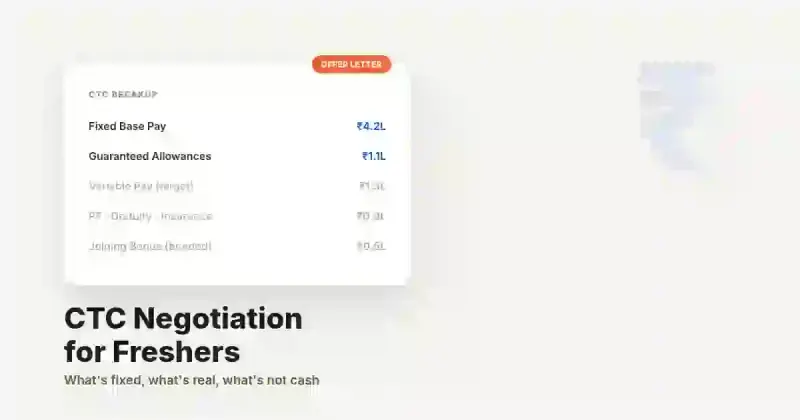
CTC Negotiation for Freshers in India: What's Actually Negotiable
Most fresher CTC negotiation advice ignores that TCS, Infosys, and Wipro set fixed pay bands. Here's what's really negotiable, and where lowball offers hide.
Service-Based or Product-Based? Deciding When You Have Both Live at Once
TCS offer in hand, product company interview next week — here's the actual decision framework, not another generic service vs product comparison table.