Backend Developer Interview AI: How to Actually Prepare for Technical Rounds
A practical guide to using AI for backend developer interview prep — system design, REST API, microservices, production scenarios, and region-specific tips for 2026.
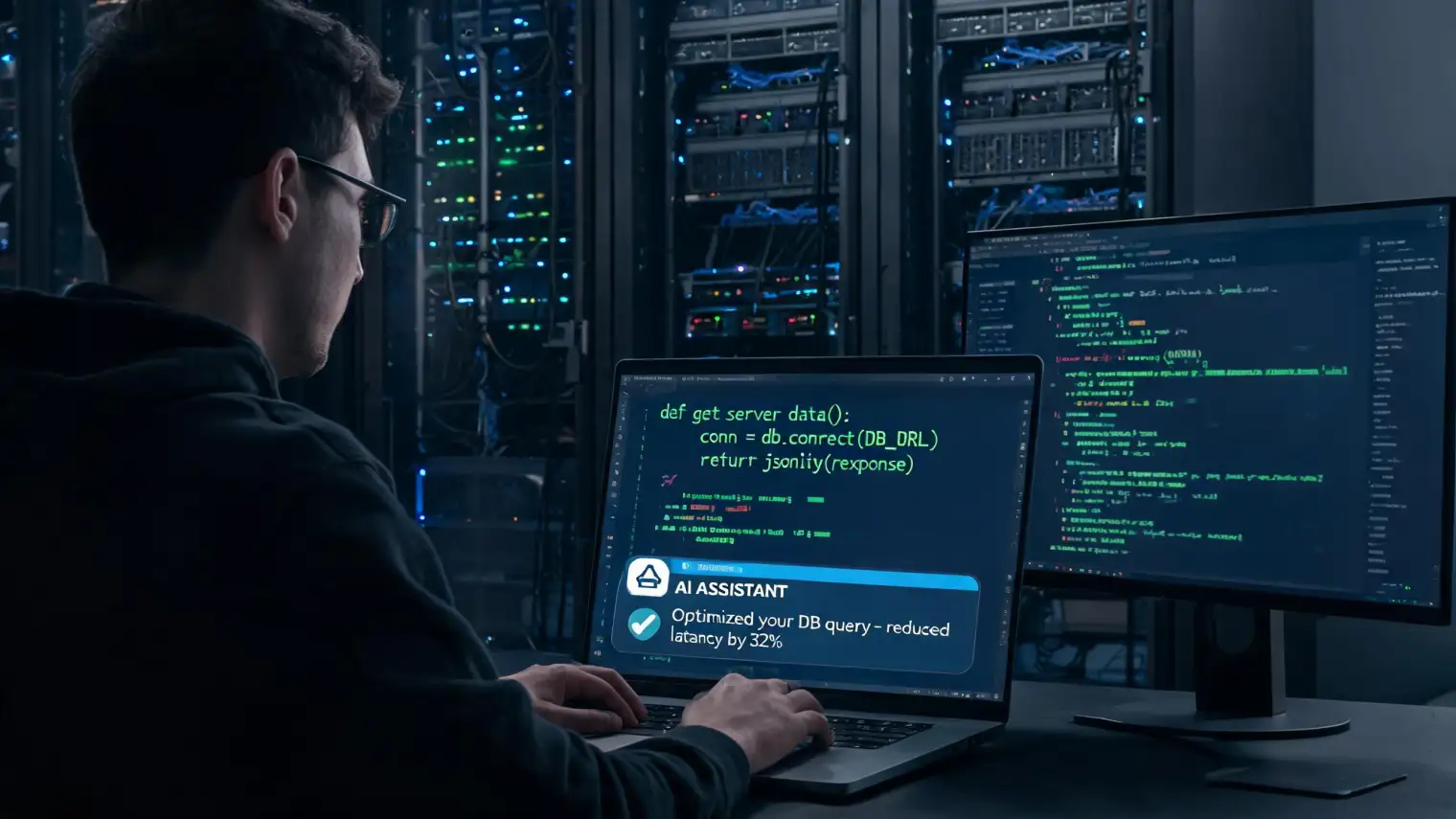
TL;DR: Most backend developer interview prep focuses on LeetCode algorithms. Most backend interviews fail on production scenarios — what happens when your database hits 100% CPU at 3 AM, or your API response time jumps from 100ms to 5 seconds. This guide covers the full picture: backend interview question types, how AI tools can simulate realistic scenarios, and what the interview actually looks like by region and by stack.
You've solved 150 LeetCode problems. You can reverse a linked list in your sleep. And then you sit down in a senior backend engineer interview at a Series B startup and the first question is: "Your API response time jumped from 100ms to 5 seconds. Walk me through your 60-second diagnostic checklist."
You freeze. Not because you don't know — you've handled this before — but because you've never practiced explaining it under pressure to a stranger with a scorecard.
That's the backend developer interview gap that most prep advice doesn't address.
Why Backend Interviews Are Harder Than Most Candidates Expect
Backend engineering interviews test multiple layers simultaneously: algorithm fluency, system design reasoning, operational knowledge, and behavioral communication. Candidates who over-index on one dimension — usually algorithms — find themselves blindsided by the others.
The viral post "I Failed 17 Senior Backend Interviews" resonated with thousands of developers not because the author lacked technical skill, but because they'd never practiced the production scenario format: a realistic system under stress, and you explain your reasoning in real time.
There's also a language and framework dimension that generic advice ignores. Backend interview questions look meaningfully different depending on whether you're interviewing at a Japanese web company (Ruby on Rails, take-home test, emphasis on how you explain your reasoning), a Brazilian fintech (Java + Spring Boot, transaction management and ACID guarantees), or a Korean e-commerce platform (Go + distributed systems, algorithm-heavy HackerRank screen first).
Server-side developer interview tips that work for FAANG in San Francisco may actively mislead you if you're interviewing at Mercari in Tokyo or a fintech in São Paulo.
The 4 Types of Backend Developer Interview Questions
1. Algorithm and Data Structure Tests
These usually appear as the first gate — an online assessment via HackerRank, Codility, or a timed screen share. The goal is to filter candidates who can't write correct code under pressure.
The level varies considerably. Enterprise companies and Japanese firms often use easier assessments focused on practical implementation. FAANG-adjacent companies and Korean chaebol-adjacent tech roles can reach LeetCode Hard territory.
How to prep: 60–80 problems, focused on arrays/strings, hashmaps, trees, and graphs. Don't over-prepare here at the expense of the other three categories. LeetCode Medium fluency is sufficient for 90% of non-FAANG backend roles.
How AI helps: Use an AI tool to simulate timed problem-solving with verbal explanation. The ability to narrate your approach as you code is a separate skill from getting the right answer — and it matters a lot in interviews where the interviewer is watching live.
2. System Design Interview
This is where senior backend interviews are won or lost. You'll be asked to design a URL shortener, a rate limiter, a message queue, an authentication system — something with real distributed systems constraints.
The structure interviewers expect: clarify requirements → back-of-envelope capacity estimates → high-level architecture → component deep-dive (database schema, caching strategy, API contracts) → trade-offs and failure modes.
Most candidates skip directly to drawing boxes. They forget the requirements clarification phase, which is where interviewers are already scoring you on structured thinking.
How AI helps with system design: An AI tool can act as your interviewer and push back on your design choices in real time — "what happens to your design if write throughput spikes 10x?" — which is exactly the pressure-test format that system design interviews use. Practicing with a real-time AI interview helper is significantly more useful for system design than reading architecture blog posts.
3. REST API and Backend Architecture Questions
These backend interview questions test your practical knowledge: HTTP status codes, authentication patterns (JWT vs. session cookies, OAuth flows), pagination strategies, idempotency keys, versioning approaches, and error handling conventions.
Common questions:
- "What's the difference between 401 and 403?"
- "How would you design an idempotent payment API?"
- "Walk me through how you'd version a public API without breaking existing clients."
- "When would you use a message queue instead of a synchronous API call?"
REST API interview questions appear across seniority levels but the depth expected increases sharply at senior+ levels. Junior candidates get tested on HTTP basics; senior candidates get tested on trade-offs and failure modes.
How to prep: Build a reference list of the 20 most common REST API interview questions and write out your answers once. Explaining these conversationally takes practice — writing the answer once helps you find where your reasoning is fuzzy.
4. Behavioral and Production Scenario Questions
This is the category that catches experienced engineers off guard. Behavioral questions assess judgment, communication, and how you handle real operational situations.
Production scenarios are a specific variant: "Your database is showing 100% CPU utilization. What's your 60-second checklist?" or "You pushed a deployment and error rates jumped to 15%. How do you respond?"
These questions have no single right answer — interviewers are scoring the quality of your reasoning and the structure of your response. Candidates who've handled incidents but never articulated their process struggle here.
How AI helps: A backend coding test AI or interview simulator can walk you through production scenario questions and help you structure your incident response into a format that scores well on behavioral rubrics. The goal is to train yourself to think out loud clearly, not just get the right answer.
How AI Tools Actually Help with Backend Developer Interview Prep
There's a difference between using AI to generate a list of backend interview questions (low value — any article does this) and using AI as an active practice partner (high value — it responds to what you actually say).
AI interview tools are most effective for backend prep in three scenarios:
Simulating production crisis questions. An AI can present you with a realistic system failure scenario and follow up based on your answer — "you checked query performance, what's next?" — which is how these questions actually unfold in real interviews.
System design pressure-testing. After you describe your architecture, an AI can probe weak points: "your caching layer solves read latency, but what happens during a cache stampede?" The back-and-forth is what builds system design fluency.
Behavioral answer sharpening. For the standard behavioral questions — conflict with a coworker, project that failed, time you made a technical call that turned out wrong — an AI can tell you whether your answer is specific enough or too vague to score well. For the framework, see our STAR method guide.
Tools like AceRound AI are designed specifically for this real-time practice format, giving you immediate feedback on whether your answers are landing the way you intend.
Stack-Specific Prep: Backend Interviews by Region
The generic "prepare for backend interviews" advice assumes you're interviewing at a US tech company. Here's what actually changes by region.
United States
Heavy emphasis on LeetCode-style algorithm screens first, then a system design round, then behavioral. FAANG companies run 5–7 round processes. Python, TypeScript/Node.js, Go, and Java are the dominant backend languages. AI tools are increasingly allowed at some companies (Meta, for example) — interviewers now assess reasoning quality, not just whether you can produce working code.
Japan
Most non-FAANG Japanese companies don't run algorithm marathons. Interviews focus on practical implementation in the company's architectural style — often a take-home assignment, sometimes a live coding session on a realistic CRUD feature. The emphasis is on explaining how and why you made each decision, not speed. Java (enterprise), Ruby on Rails (web companies like Cookpad and Money Forward), and Go (high-performance services like Mercari) are the dominant stacks. International companies in Japan (LINE, PayPay) use HackerRank or Codility, matching global patterns.
Korea
Coupang-style processes dominate tech hiring: a HackerRank algorithm screen → multiple technical video rounds → a system design round. Algorithmic rigor is comparable to US FAANG. Java, Go, and Python are most common. Candidates are expected to explain time and space complexity in real time during live coding sessions.
Brazil
Java + Spring Boot is the dominant backend stack in enterprise and fintech (Brazil has the largest fintech hub in Latin America). Python is rising for data and ML workloads. Local Brazilian companies are less algorithm-heavy than US companies — they lean toward portfolio review and practical take-home assignments. For US or EU remote roles, expect a more standard algorithm + system design structure. For Spring Boot interviews, know DI, transaction management, and Spring Security cold.
Vietnam
Node.js + Express, Python/Django, Java/Spring, and Go are the top four backend stacks in Vietnamese job postings. For foreign company roles (increasingly common with FDI from Samsung, Intel, and US tech firms), expect English proficiency to be tested alongside technical skills. Practical coding tests and architecture discussions are common. The job market is growing rapidly — over 260 backend engineering roles were posted in Vietnam as of late 2025.
China (zh-cn)
LeetCode culture is intense, especially for BAT (Baidu, Alibaba, Tencent) and ByteDance. Java is the dominant enterprise language; Go is heavily adopted for microservices at large internet companies. Algorithm difficulty ranges into Hard territory regularly. Overseas Chinese candidates applying to US companies should note that US interviews at Chinese-founded companies (TikTok, DoorDash) often run longer processes with more algorithm rounds than US-founded peers.
Microservices Interview Preparation: What Senior Roles Actually Ask
Microservices interview preparation is a specific subset that appears mostly in senior and staff engineer interviews. The questions aren't about defining microservices — that's table stakes. They're about operational trade-offs.
Common senior-level microservices interview questions:
- "How do you handle distributed transactions across services without two-phase commit?"
- "Walk me through your approach to service discovery in a dynamic deployment environment."
- "How do you design for graceful degradation when a dependent service goes down?"
- "What's the difference between choreography and orchestration in a saga pattern, and when do you use each?"
- "How do you debug a latency issue when the problem could be in any of six services?"
These questions don't have clean right answers. Interviewers are evaluating whether you've operated distributed systems under real conditions, not whether you've memorized a definition.
How to prep: For each of these questions, write out the incident or system that informs your answer. Real production experience, even imperfect, is more credible than a textbook response. If you lack experience with a specific pattern (like sagas), study the trade-offs from a practitioner's perspective — not just the theory.
FAQ
Your API response time jumped from 100ms to 5 seconds. What do you check?
Start with recent deployments — what changed in the last hour? Check downstream service health: database query times, external API latency, cache hit rates. Then look at infrastructure: CPU, memory, connection pool exhaustion. If a specific endpoint is affected, check for N+1 query patterns or missing indexes that might have been exposed by a data volume increase. This sequencing matters — you want to rule out deployment issues first because they're the fastest to roll back.
Production database shows 100% CPU. What's your 60-second checklist?
Identify which queries are running (SHOW PROCESSLIST in MySQL, pg_stat_activity in Postgres). Look for runaway queries, lock contention, or unusual query patterns. Check if a missing index was recently dropped or a query plan changed. If it's a spike pattern, look for a batch job or reporting query that ran at an unusual time. Kill blocking queries if necessary, then investigate root cause with slow query logs.
Can I use AI tools during live coding interviews?
It depends entirely on the company. Some companies (Meta in certain contexts) have explicitly said AI use is permitted. Others treat it as cheating. If not explicitly told either way, ask the interviewer before the session starts — "Is it okay if I use AI assistance for this?" is a reasonable question. For practice purposes, using AI tools to prepare is always appropriate; during the actual interview, follow whatever guidelines you're given.
I've been using LeetCode and Pramp but I still froze on system design. What's missing?
LeetCode builds algorithm fluency; Pramp builds speaking fluency. System design requires a third thing: fluency under challenge. When an interviewer says "that won't scale" or "what happens if that service goes down," you need to be able to respond without resetting. Practice with tools that give you follow-up pushback, not just questions. Doing mock system design interviews with a real person or an AI that asks follow-ups closes this gap faster than studying more architecture articles.
How important are behavioral questions for backend roles?
More important than most engineers expect. Companies that run structured interviews (see our Greenhouse ATS guide) score behavioral responses on the same rubric as technical ones. A weak behavioral round can eliminate a strong technical candidate. Prepare three to five strong stories from your actual work experience — conflict, failure, complex cross-functional problem, impact you're proud of — and practice telling them with specifics.
What backend languages should I know for interviews in 2026?
Python is the most versatile (top choice for AI/ML-adjacent roles globally). TypeScript/Node.js overtook Python on GitHub in August 2025 and is dominant for full-stack and API-heavy roles. Java remains dominant in enterprise and in Korea and Brazil. Go is the language of performance-critical services at scale (used heavily at Mercari, ByteDance, Alibaba, Cloudflare). Match your language prep to the companies and regions you're targeting.
Author · Alex Chen. Career consultant and former tech recruiter. Spent 5 years on the hiring side before switching to help candidates instead. Writes about real interview dynamics, not textbook advice.
Related Articles
OpenAI's AI Interview Policy: Banned, Required, or Team-Dependent
OpenAI sells AI coding agents, then bans most candidates from using one. Here's the round-by-round policy, including the new agentic round that flips it.

Does Harver Detect Cheating? What Its Proctoring Actually Checks
Does Harver detect cheating on its pre-employment assessments? A candidate look at Harver's Proctoring add-on, what gets logged after a flag, and what happens next.

Micro1's Zara AI Interview: What It Actually Tests (And Why Timing Gets Flagged)
Micro1's AI interviewer Zara has run 300,000+ interviews for remote roles. Here's why it flags response latency as a cheating signal, and what that means for AI prep.